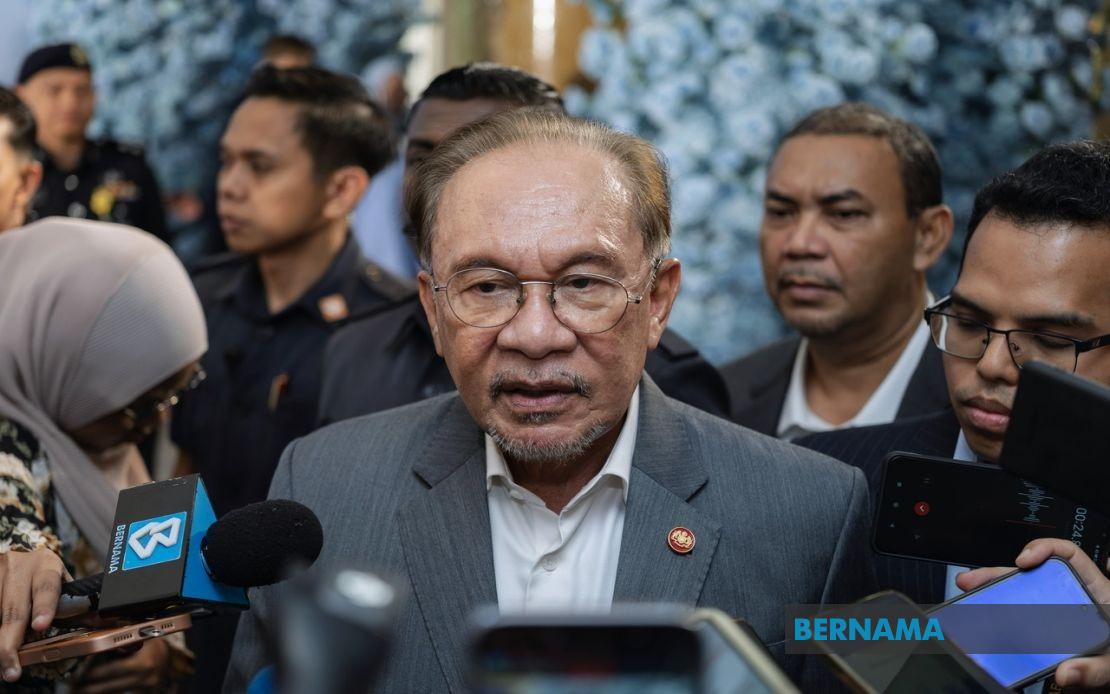
Prime Minister Datuk Seri Anwar Ibrahim acknowledged on July 15 that he has not yet been fully informed about the circumstances that led four Melaka DAP representatives to abandon their positions in the state administration, though he indicated that senior coalition officials would soon address the situation.
Speaking as both national leader and chairman of Pakatan Harapan, Anwar said the ruling coalition's top echelon would investigate and respond to the departures in due course. His comments came after reporters pressed him on whether he had received any formal update from the relevant parties involved in the crisis.
The four departing assemblymen—Allex Seah Shoo Chin from Kesidang, Low Chee Leong from Kota Laksamana, Leng Chau Yen from Banda Hilir, and Kerk Chee Yee from Ayer Keroh—announced their immediate resignation from the Melaka state government on July 14. Their sudden exit marked a significant rupture within the coalition's Melaka branch, forcing questions about internal party cohesion at a moment when the broader Pakatan Harapan alliance faces mounting scrutiny.
The quartet's withdrawal came directly after the Melaka State Legislative Assembly approved constitutional amendments that would permit the appointment of nominated state assemblymen. This procedural change appears to have triggered the crisis, suggesting underlying tensions between the DAP representatives and their coalition partners over governance structures and representation in the Melaka administration. The constitutional shift represents a departure from the elective principle that has traditionally governed state assembly membership, raising concerns about democratic accountability in the state legislature.
Interestingly, even as Anwar acknowledged the lack of briefing, he had already publicly called on the Melaka DAP contingent to reconsider and postpone their withdrawal decision. His appeal emphasised that the departing assemblymen should prioritise the development agenda and public welfare over internal partisan disputes. This positioning suggests the Prime Minister recognises the political damage that such departures can inflict on coalition unity, particularly as Pakatan Harapan seeks to consolidate its governing position.
The timing of this withdrawal carries broader implications for Melaka's political stability and for Pakatan Harapan's credibility nationally. Melaka has long been a proving ground for coalition governance, and any signs of disarray there reverberate across the country. The loss of four DAP representatives from the state government could alter the balance of power within the Melaka administration, potentially strengthening other coalition components or creating vacuums that opposition parties might exploit.
The constitutional amendments that triggered the exodus warrant closer examination. By enabling nominated assemblymen rather than relying solely on electoral mandates, the Melaka legislature has introduced a mechanism that could shift internal political dynamics and accountability structures. Such appointed positions historically raise concerns among reform-minded lawmakers who view them as potential avenues for patronage rather than merit-based governance. The DAP representatives' protest against this change reflects a principled stance on democratic representation, though it simultaneously exposes fractures within the ruling coalition itself.
For Malaysian political observers, the incident underscores persistent tensions between coalition partners over how state governments should be administered and which parties should hold particular portfolios or influence. The DAP, as a primarily urban-based, reform-oriented party, often finds itself at odds with more traditionalist coalition members over governance approaches. These philosophical differences, when they erupt into public disputes like the Melaka situation, can undermine voter confidence in Pakatan Harapan's ability to govern effectively and present a united front.
Anwar's measured response—acknowledging the gap in his knowledge while promising swift action—reflects the delicate balancing act required of national leadership when managing coalition disputes. Publicly rebuking the departing assemblymen might alienate DAP voters and party leaders, yet appearing indifferent could suggest weakness or lack of control. His call for reconsideration followed by a promise of follow-up action attempts to thread this needle, positioning the Prime Minister as a statesman attempting to preserve coalition unity rather than a partisan warrior.
The broader Southeast Asian context matters too. Coalition-based governments across the region frequently experience similar internal schisms, and how federal administrations navigate these crises often determines their longevity and effectiveness. Pakatan Harapan's performance in managing this Melaka conflict will send signals to other state-level coalition partners about whether the national leadership takes internal grievances seriously or merely performs damage control.
Moving forward, the resolution of this dispute will depend on whether Anwar's promised follow-up generates genuine dialogue between DAP and other coalition partners, or whether it merely papering over fundamental disagreements about governance philosophy. The four assemblymen's principled stand against appointed representation suggests this is not merely a personality clash but rather a substantive policy disagreement. Resolving such differences typically requires either constitutional compromise or acceptance that certain coalition partners have fundamentally incompatible visions for how state government should function.
For Melaka residents, the immediate consequence of this withdrawal is administrative disruption and potential policy delays as the state government recalibrates. The longer-term significance lies in whether this episode marks a temporary turbulence in coalition governance or signals deeper fractures that could eventually contribute to Pakatan Harapan's unravelling. Anwar's response over the coming weeks will therefore be closely watched not only by Melaka stakeholders but by political observers across Malaysia and the region.

