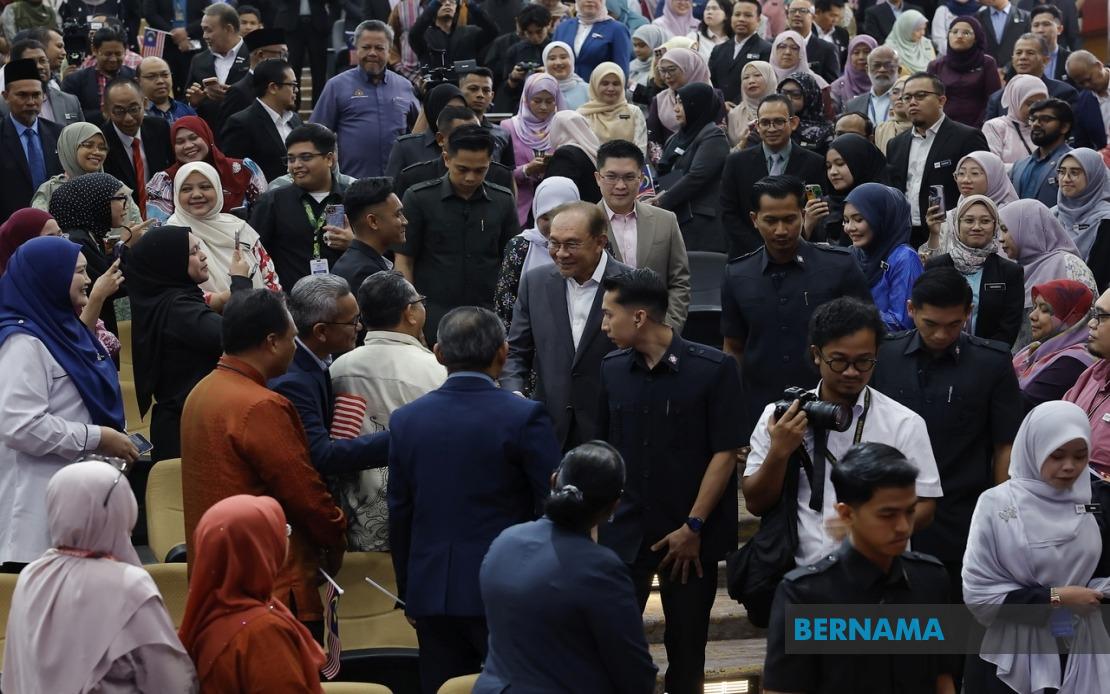
Prime Minister Datuk Seri Anwar Ibrahim has reiterated the importance of deepening students' command of Bahasa Melayu as a comprehensive language of learning, whilst simultaneously advocating that young Malaysians gain proficiency in other languages with significant economic and strategic value. Speaking at an Education Ministry gathering in Putrajaya on July 28, Anwar underscored that this dual-language approach represents not a contradiction but rather a coherent national strategy to preserve cultural identity whilst equipping citizens for global competition.
The Prime Minister's remarks address a longstanding tension in Malaysian education policy: the need to maintain Bahasa Melayu's constitutional status as the national language whilst recognising that economic opportunities increasingly depend on multilingual capability. Anwar's framing attempts to sidestep this historical debate by presenting the two objectives as mutually reinforcing rather than competing priorities. His emphasis on Bahasa Melayu mastery as "a language of knowledge" signals a shift toward treating the national language not merely as a symbolic unifier but as an essential academic foundation comparable to English or Mandarin.
Over his three-year tenure, Anwar has tasked the Education Minister with ensuring that every child in Malaysia achieves genuine proficiency in Bahasa Melayu without exception. This universal approach reflects recognition that disparities in language mastery often correlate with broader educational inequalities and subsequent economic opportunities. By framing the objective in terms of achievement rather than maintenance, Anwar suggests that current standards may be insufficient and that deliberate intervention is necessary to elevate performance across the system.
Crucially, Anwar's vision encompasses all educational pathways within Malaysia's plural schooling ecosystem. National schools, religious institutions, international schools, and vernacular schools would all fall within the scope of strengthened Bahasa Melayu instruction. This comprehensive mandate is particularly significant given that vernacular schools, particularly Chinese-medium institutions, have historically received less emphasis on Bahasa Melayu proficiency. The inclusion of international schools indicates recognition that even students in English-centric curricula must maintain command of the national language.
The Prime Minister explicitly rejected framing the promotion of Bahasa Melayu as antagonistic toward other languages. His acknowledgement that multilingual proficiency constitutes a national strength addresses concerns from minority communities and international school operators who have sometimes interpreted language-in-education policies as exclusionary. By positioning linguistic diversity as an asset rather than a threat to national unity, Anwar attempts to build consensus across Malaysia's various educational constituencies.
English occupies a distinct position in Anwar's articulation, reflecting its unquestioned status as the dominant language of international business, science, and technology. However, his explicit mention of Mandarin Chinese, Tamil, and Arabic indicates strategic awareness of regional economic dynamics and diaspora connections. Mandarin proficiency opens access to China's massive economy; Tamil connects to South Indian markets and intellectual traditions; Arabic links to Gulf Arab trading partners and Islamic knowledge networks. This selective emphasis reveals pragmatic calculation alongside ideological positioning.
For Malaysian educators and policymakers, Anwar's approach signals that language education will continue receiving significant policy attention and resource allocation. Schools must now operationalise a framework that treats Bahasa Melayu as foundational for all students whilst creating genuine pathways to proficiency in additional languages rather than relegating these to optional enrichment. This demands curriculum restructuring, teacher training investment, and assessment mechanisms that measure multilingual competence rather than treating languages as isolated subjects.
The implications for Southeast Asia are noteworthy. As regional integration accelerates through ASEAN frameworks and trade agreements, nations increasingly compete to develop multilingual workforces. Malaysia's approach—anchoring linguistic identity in Bahasa Melayu whilst aggressively promoting economic languages—mirrors strategies employed by Singapore and Vietnam, though Malaysia's plural education system creates distinctive implementation challenges. The success of Anwar's vision will partly determine whether Malaysia can maintain linguistic cohesion whilst producing graduates competitive in regional labour markets.
Implementation will prove significantly more complex than rhetorical commitment. Vernacular schools, particularly those emphasising mother-tongue instruction, may experience tension between Anwar's Bahasa Melayu expectations and existing curriculum priorities. International schools may resist what they perceive as nationalisation of their syllabuses. Rural schools often lack qualified teachers capable of delivering rigorous instruction in multiple languages. These practical obstacles suggest that translating Anwar's policy vision into classroom reality will require sustained funding, careful stakeholder management, and willingness to adapt implementation to local contexts.
The timing of Anwar's emphasis coincides with broader global conversations about linguistic diversity amid English-language dominance. Malaysia's experience—seeking to strengthen indigenous language prestige whilst ensuring international competitiveness—carries lessons for other post-colonial nations navigating similar pressures. Whether Anwar's framework can genuinely elevate Bahasa Melayu mastery whilst expanding multilingual capacity remains an open question requiring monitoring across subsequent education budgets and assessment results.

