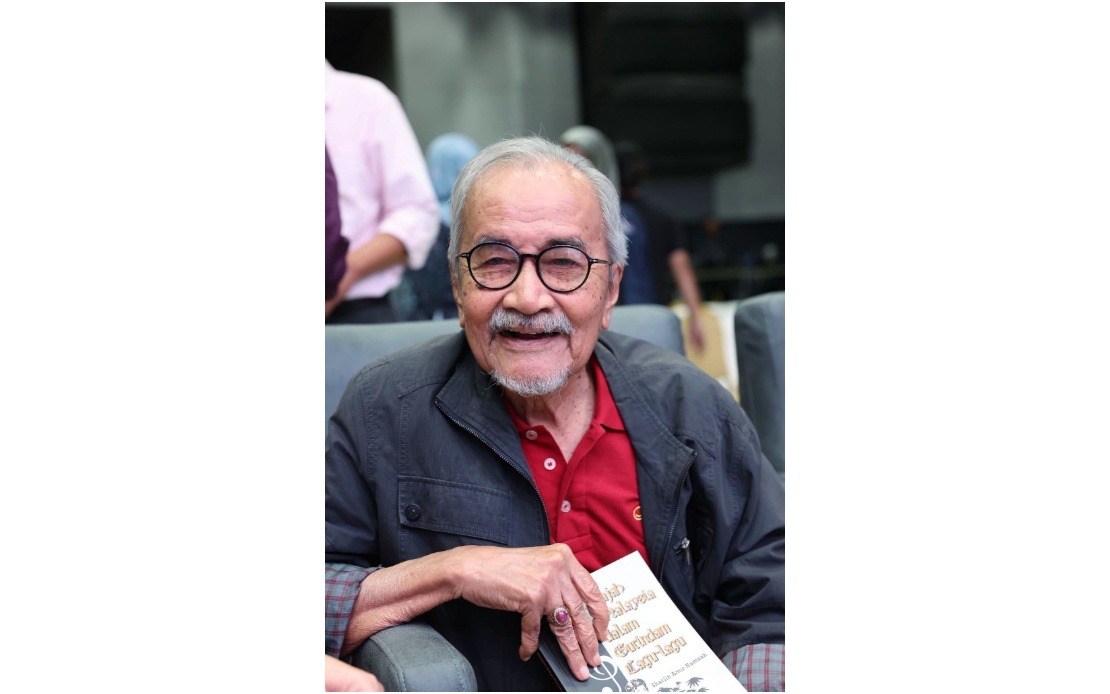
Prime Minister Datuk Seri Anwar Ibrahim marked the 87th birthday of Datuk Rahim Razali with public commendations for the veteran filmmaker and cultural custodian, underscoring the significance of his career spanning more than six decades in Malaysia's creative landscape. The gesture, shared on social media, represents the government's acknowledgment of cultural contributors whose work transcends entertainment to embody national values and artistic excellence.
Anwar's tribute characterised Rahim as an intellectual anchor in the Malaysian arts ecosystem, whose prolific body of work has consistently explored themes of human dignity, cultural authenticity and patriotic sentiment. The Prime Minister expressed confidence that these thematic threads woven through Rahim's films will continue to resonate with and guide emerging generations of creative practitioners, suggesting that the filmmaker's influence extends beyond his lifetime as a foundational resource for future artistic endeavours.
Born on July 3, 1939, in Batu Gajah, Perak, Rahim Razali represents a distinctive era of Malaysian cinema when filmmakers viewed their craft as inseparable from cultural discourse and nation-building. His career trajectory reveals the breadth expected of serious cultural workers during the formative decades of independent Malaysia—a period when the boundaries between directing, acting, writing and public commentary remained deliberately fluid rather than compartmentalised as they increasingly are today.
Rahim's directorial and acting credits include numerous films that have become reference points in Malaysian cinema historiography, most notably Matinya Seorang Patriot, which explores ideological conviction and sacrifice. Beyond the silver screen, his contributions to sports journalism and broadcast media demonstrate a commitment to public discourse across multiple platforms, reflecting a generation of intellectuals who understood cultural work as inherently political and nation-serving.
The recognition of such figures holds particular resonance within Southeast Asian contexts where cinema and performing arts have historically functioned as repositories of collective memory and identity formation. Unlike purely commercial entertainment industries, Malaysia's mid-twentieth-century film sector was conceived partially as an instrument of cultural preservation and social cohesion during periods of significant national transition.
Rahim's multiple accolades at the Malaysian Film Festival, including Best Director and Best Male Actor honours, document critical and peer recognition within the industry itself. These institutional validations distinguish his work from mere commercial success, positioning him within a lineage of serious artists whose evaluations rest on technical mastery, thematic substance and cultural significance rather than box-office performance alone.
The Prime Minister's invocation of health, longevity and continued strength acknowledges the physical and intellectual vigour required to sustain cultural contributions across six-plus decades. This phrasing suggests awareness that figures of Rahim's stature represent living repositories of historical knowledge, artistic technique and cultural memory—institutional assets whose preservation benefits the nation as a whole.
For Malaysian readers, particularly those engaged with arts policy and cultural administration, the Prime Minister's public recognition signals governmental interest in heritage preservation and creative continuity. At regional levels, such tributes establish cultural lineage and demonstrate how individual careers connect to broader narratives of Southeast Asian artistic development during post-independence consolidation periods.
Rahim Razali's career also illustrates the evolution of Malaysian creative industries through dramatic technological and economic transformation. A filmmaker who began work in an era of limited distribution channels and government-subsidised production has navigated the arrival of television, home video, satellite broadcasting and digital platforms—each transition requiring artistic and commercial recalibration while maintaining thematic and aesthetic coherence.
The timing of such public recognitions also reflects evolving governmental attitudes toward cultural heritage. As Southeast Asian nations increasingly recognise creative industries as economic drivers and soft-power assets, figures like Rahim whose work predates and transcends commercial calculations become particularly valuable for policy frameworks seeking to distinguish between cultural heritage preservation and contemporary entertainment production.
Rahim's contributions extend beyond his individual films to influence the institutional development of Malaysian cinema itself. Directors, screenwriters and actors working during subsequent decades learned from his technical approaches, thematic preoccupations and professional integrity, creating a cascade of influence difficult to quantify but culturally substantial. In this sense, his birthday recognition acknowledges contributions that have fundamentally shaped how Malaysian storytellers approach their craft.
For younger audiences and international observers of Malaysian cinema, such tributes provide contextual frameworks for understanding contemporary film production. They signal that current achievements in Malaysian cinema rest upon foundations laid by earlier practitioners whose commitment transcended commercial constraints and governmental fashions, establishing enduring artistic standards.

