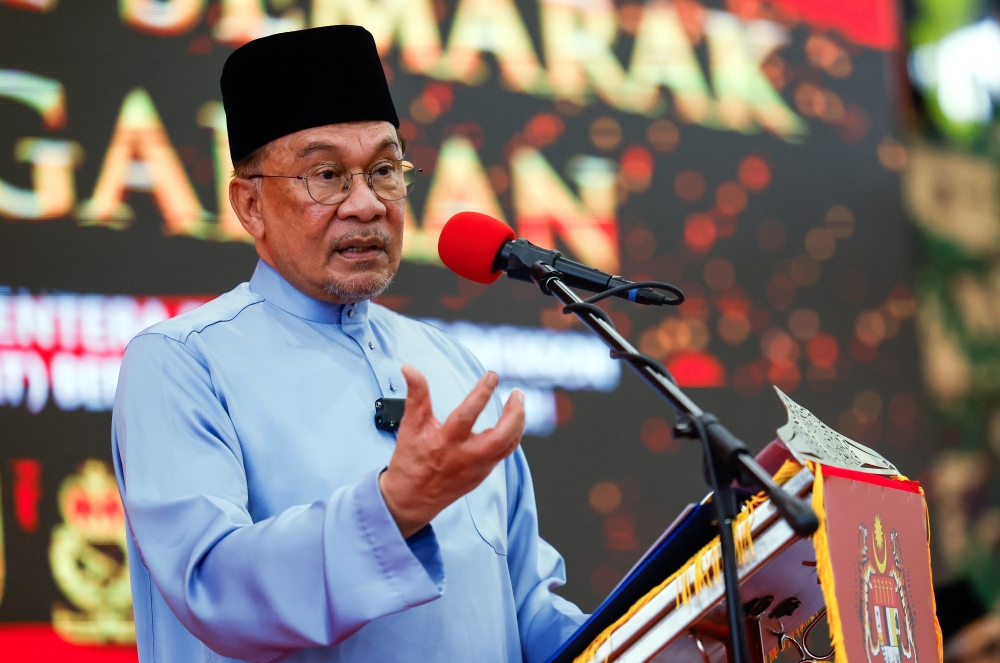
Prime Minister Anwar Ibrahim has mounted a defence of the government's decision to withhold the Royal Commission of Inquiry report on Lembaga Tabung Haji, contending that releasing the document would spark public anxiety and potentially unleash a wave of withdrawals that could imperil the institution's stability. Addressing reporters in Port Dickson on July 24, Anwar elaborated on the rationale behind maintaining confidentiality around findings that have captured intense scrutiny from lawmakers and civil society observers demanding transparency.
The PM's comments underscore a fundamental tension in governance between the impulse to shield sensitive institutions from market shocks and the public expectation of accountability when state bodies commission formal inquiries into institutional failures. Tabung Haji, which manages savings and investments for Malaysian Muslims preparing for the Hajj pilgrimage, occupies a position of considerable social significance—holding deposits from hundreds of thousands of ordinary Malaysians who entrust their life savings to the fund. The wealth at stake, combined with the deeply personal nature of Hajj preparations, creates a volatile environment where unfavourable revelations could prompt simultaneous withdrawal demands that might exceed available liquidity.
Anwar's argument aligns with a longstanding principle in financial regulation whereby disclosure of certain information is calibrated to prevent self-fulfilling crises. Central banks and financial supervisors globally often operate with discretion over timing and scope of institutional disclosures precisely to forestall panic-driven bank runs or mass redemptions. However, this doctrine has faced increasing challenge from transparency advocates who contend that withholding critical information from citizens and their elected representatives ultimately erodes trust and enables the perpetuation of poor governance. The competing imperatives have crystallized into a substantive policy question in Malaysia: whether the preservation of institutional stability justifies indefinite non-disclosure of findings that may illuminate past mismanagement.
The Tabung Haji situation gains particular resonance against Malaysia's recent institutional history. The fund has navigated significant controversies in recent years, including investment losses and management questions that have prompted parliamentary inquiries and media investigations. The commissioning of an RCI represented an effort to conduct systematic, formal examination of institutional practices and governance failures. The very existence of such an inquiry signals acknowledgment that concerns warranted high-level official investigation—yet withholding its conclusions from public view invites inference that findings are sufficiently damaging to necessitate suppression, potentially undermining confidence more than timely disclosure might achieve.
Anwar's position also reflects broader challenges confronting the Malaysian government as it endeavours to restore institutional credibility following the 1Malaysia Development Berhad scandal and related episodes of financial misgovernance. The new administration has campaigned on transparency and anti-corruption platforms, raising public expectations that official inquiries will culminate in disclosure and accountability measures. Strategic silence around the Tabung Haji RCI report thus sits uneasily alongside reformist rhetoric, creating an apparent disconnect between stated commitments to open governance and operational secrecy around a sensitive but ultimately public institution.
From a financial stability perspective, Anwar's concern about withdrawal cascades deserves serious weight. Tabung Haji manages resources that represent the accumulated religious savings of ordinary Malaysians, many of whom depend on the fund for Hajj financing and retirement security. If the RCI identified structural deficiencies or suggested that assets were at risk, public disclosure could reasonably generate protective withdrawal behaviour that would stress the fund's liquidity position. Financial institutions operate on the confidence that deposits will remain substantially stable, and that confidence is fragile when institutional integrity is questioned. In this sense, the PM is articulating a legitimate operational consideration rather than mere obfuscation.
Yet the logic of confidentiality carries hidden costs. Information withheld from the public and parliament remains available to those with official access, creating asymmetric knowledge that can enable advantageous decision-making by insiders. Senior officials and politicians privy to RCI findings can adjust their own financial positioning or policy recommendations based on information denied to ordinary Tabung Haji contributors. Additionally, indefinite confidentiality invites speculation and rumour-mongering, which often proves more corrosive to institutional confidence than candid disclosure accompanied by remedial action plans. The gap between what is known officially and what is publicly stated becomes a credibility liability.
International precedent suggests alternative approaches that balance disclosure with stability. Regulatory bodies worldwide have developed frameworks for releasing institutional inquiry reports in redacted or phased forms, protecting commercially sensitive details or ongoing investigations while conveying substantive findings to stakeholders. Similar approaches might permit the government to disclose key conclusions and recommendations from the Tabung Haji RCI while deferring certain operational details. Such middle-ground solutions would acknowledge legitimate stability concerns while addressing legitimate transparency expectations.
The question of disclosure also implicates parliamentary oversight. Members of parliament represent constituents who hold Tabung Haji deposits and possess democratic entitlement to information about public institutions affecting their constituents' finances. Withholding the RCI report from parliament constrains legislators' capacity to conduct informed oversight and raises constitutional questions about whether the executive can appropriately restrict parliamentary access to official inquiries into state bodies. The PM's framing emphasizes public stability rather than parliamentary privilege, but the two concerns are intertwined in democratic governance structures.
Moving forward, the government faces mounting pressure to resolve the disclosure question through some mechanism that satisfies multiple stakeholders. Continuing indefinite secrecy risks compounding reputational damage, as persistent non-disclosure suggests findings are too problematic to divulge—a perception that may ultimately prove more destabilizing than measured, contextualised release of the RCI conclusions. The challenge lies in crafting a disclosure approach that acknowledges genuine operational sensitivities while respecting public rights to information about institutions entrusted with their savings.

