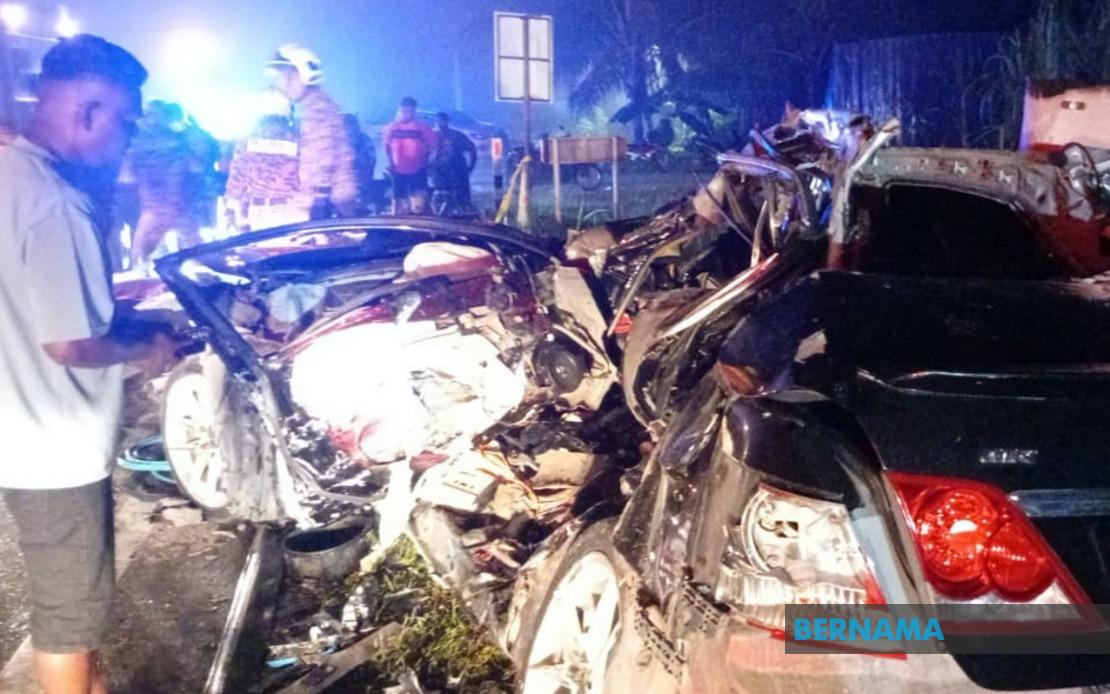
Prime Minister Datuk Seri Anwar Ibrahim has conveyed his deepest sympathies to the families of six individuals who lost their lives in a tragic traffic collision along Jalan Karak Lama in Bentong, Pahang, in the early hours of the morning. Through a statement posted on X, the Prime Minister and his wife, Datuk Seri Dr Wan Azizah Wan Ismail, expressed their profound sorrow at the incident, emphasising the emotional toll such preventable tragedies inflict on grieving families and the broader community.
The fatal crash, which occurred at approximately 4 am, involved a Toyota Vios carrying six occupants that collided with a one-tonne lorry near Klink Desa Jambu Rias while both vehicles travelled on Jalan Karak Lama in the direction of Temerloh. All six passengers in the car perished at the scene of the accident. The victims have been identified as V. Mugilan, 25, the vehicle's driver, along with passengers K. Dineshvaran, 22, K. Alaganathan, 21, A. Kanabati Raja, 19, S. Kiisven, 17, and M. Paranthaman, 16. The lorry operator, a 31-year-old man, sustained serious injuries and was conveyed to hospital for treatment.
According to preliminary investigations conducted by police authorities, the Toyota Vios was traversing the stretch of Jalan Karak Lama while descending a hill as it made its way from Kuantan towards Kuala Lumpur. Investigators believe the vehicle unexpectedly crossed into the opposing traffic lane before striking the incoming lorry, resulting in the catastrophic collision. The circumstances surrounding the vehicle's deviation—whether caused by driver fatigue, mechanical failure, adverse weather conditions, or other factors—remain subjects of ongoing police inquiry.
In his public statement, the Prime Minister reinforced a critical message about the importance of road safety consciousness across Malaysian society. His remarks underscored that such tragic incidents should serve as sobering reminders to all road users about the grave consequences of inattention, recklessness, or complacency behind the wheel. Anwar expressed hope that the injured would experience swift and complete recovery, while praying that the bereaved families would find strength during their time of grief.
The incident highlights a persistent concern within Malaysia's transportation safety framework. The Jalan Karak Lama corridor, which serves as a vital route connecting the east coast with the capital region, experiences substantial traffic volumes daily. Winding sections and elevation changes characterise portions of this highway, presenting particular hazards during periods of reduced visibility or when drivers are fatigued—conditions not uncommon during early morning travel.
The age profile of the victims is particularly distressing, with five of the six deceased being teenagers or in their early twenties. This demographic dimension raises questions about factors that may have contributed to the accident, including driver experience, vehicle maintenance standards, and whether any form of substance influence played a role. Authorities will likely examine these variables as investigations progress.
For Malaysian road safety advocates, such incidents reinforce longstanding concerns about the effectiveness of current enforcement mechanisms and public awareness campaigns. While Malaysia has implemented various initiatives aimed at reducing road fatalities—including speed enforcement technologies, improved signage, and periodic safety drives—the continuing occurrence of mass-casualty accidents suggests that additional measures may be warranted. The concentration of deaths in a single vehicle points to the critical importance of proper vehicle maintenance, appropriate speed management on challenging terrain, and driver alertness.
The Prime Minister's intervention, while primarily ceremonial in nature, reflects the gravity with which the government regards traffic safety. Such high-level acknowledgment of road tragedies can serve to elevate public consciousness about the stakes involved in highway travel and may catalyse renewed attention to enforcement and infrastructure improvements. Beyond expressions of sympathy, policy-level responses often follow major incidents, potentially including enhanced patrols in high-risk areas or technological upgrades to hazardous stretches of highway.
Regionally, Malaysia's road safety record remains a concern within Southeast Asia, with annual fatality rates that exceed those in several comparable economies. The Bentong crash exemplifies how quickly routine journeys can transform into catastrophe, underscoring the universal vulnerability of all road users regardless of vehicle type or journey purpose. For families and communities affected by such tragedies, the path toward recovery extends far beyond physical healing to encompass emotional and psychological adjustment.
Moving forward, the detailed police investigation will provide valuable data regarding the precise causation of the collision. Such findings can inform targeted interventions—whether directed at driver behaviour modification, infrastructure enhancement, or vehicle safety standards—that might prevent comparable incidents. Meanwhile, highway users are advised to exercise heightened caution on mountainous sections of major routes, particularly during early morning hours when fatigue-related risks are elevated and visibility may be compromised.

