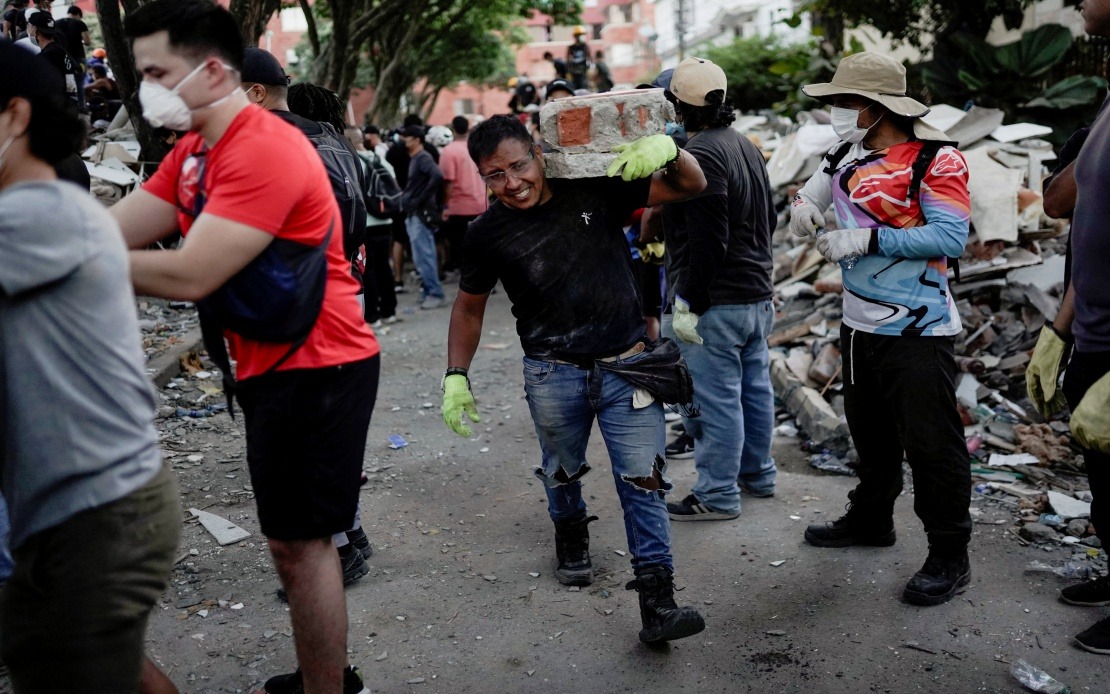
Prime Minister Datuk Seri Anwar Ibrahim has conveyed Malaysia's deepest condolences to the people of Colombia following the catastrophic earthquake that struck the nation's western region, underscoring the government's commitment to standing alongside affected nations during moments of humanitarian crisis. In a statement shared on his Facebook page, Anwar expressed profound sadness over the natural disaster, which registered a magnitude of 7.4 and ranks among the most powerful seismic events to have impacted Colombia in recent decades, leaving a devastating toll of over 100 lives lost.
The earthquake, which occurred on Monday with its epicentre located in the Chocó region, unleashed widespread destruction across several populated areas including the major cities of Cali, Pereira, and Manizales. The scale of the disaster prompted an immediate international response, with governments worldwide acknowledging the severity of the situation and offering assistance. Anwar's message reflected Malaysia's position as a responsible member of the global community, emphasizing shared humanitarian values that transcend geographical boundaries and cultural differences.
In his formal statement, the Prime Minister articulated Malaysia's commitment to solidarity with the Colombian people during this period of acute hardship and uncertainty. The expression of support extended beyond mere diplomatic courtesy, acknowledging the profound human suffering that accompanies natural disasters of such magnitude. Anwar specifically recognized the emotional anguish experienced by families who have lost loved ones, extending compassionate wishes to all those whose lives have been disrupted by the catastrophic event.
A significant portion of Anwar's message focused on recognizing the extraordinary efforts of rescue personnel and volunteer organizations working tirelessly to locate survivors in challenging conditions. The ongoing aftershocks that continued to shake the affected regions presented additional dangers and complications for search and rescue operations, yet these teams persisted in their dangerous work. The Prime Minister's acknowledgment of their sacrifice underscored the Malaysian government's appreciation for the frontline workers who risk their own safety to save others during such emergencies.
The prayer for swift recovery of the injured and the safe discovery of missing persons reflected the humanitarian dimension of Malaysia's diplomatic engagement. Natural disasters strip away political differences and reveal the common human concerns that unite nations across the world. By explicitly wishing for the Colombian people's strength and resilience in the challenging period ahead, Anwar projected an image of Malaysia as a compassionate nation that recognizes the long recovery journey that follows major natural disasters.
For Malaysian readers, this diplomatic gesture holds significance in understanding how the nation positions itself within the international community during crises. Malaysia, situated in a seismically active region and vulnerable to various natural disasters including earthquakes, demonstrates through such statements its recognition of shared vulnerability and mutual responsibility. The empathy extended to Colombia reflects principles that the Malaysian government would expect to receive should similar catastrophes strike Malaysia.
The 7.4-magnitude earthquake that struck Colombia represents a reminder of the unpredictable forces of nature that can strike any nation regardless of its development status or preparedness level. The Chocó region, where the epicentre was located, is one of Colombia's most vulnerable areas, with infrastructure and economic conditions that complicate disaster response and recovery efforts. The widespread destruction across multiple cities indicates the earthquake's tremendous force and the broad geographical area affected by the seismic activity.
From a regional perspective, Southeast Asian nations have historically experienced significant earthquakes and understand the complex challenges involved in managing such disasters. Malaysia's formal acknowledgment of Colombia's crisis reflects regional experience and solidarity among countries that face similar natural hazards. The statement also serves as an implicit reminder to Malaysian society of the importance of disaster preparedness and the need for continued investment in early warning systems and emergency response infrastructure.
Anwar's message concluded by affirming Malaysia's alignment with the broader international community's collective wishes for Colombia's recovery and stabilization. This framing positions Malaysia within a larger narrative of global cooperation and mutual support during humanitarian emergencies. The diplomatic overture, while conventional in many respects, reinforces the principle that natural disasters create moments when national interests align around shared human concerns, transcending political considerations and commercial interests that typically characterize international relations during normal circumstances.

