%22%2F%3E%3C%2Fpattern%3E%3C%2Fdefs%3E%3Crect%20width%3D%22100%25%22%20height%3D%22100%25%22%20fill%3D%22url(%23ph4oatfg)%22%2F%3E%3Crect%20width%3D%22100%25%22%20height%3D%22100%25%22%20fill%3D%22url(%23ph4oatfp)%22%2F%3E%3Ctext%20x%3D%2250%25%22%20y%3D%2250%25%22%20text-anchor%3D%22middle%22%20dominant-baseline%3D%22central%22%20fill%3D%22rgba(255%2C255%2C255%2C0.95)%22%20font-family%3D%22Georgia%2C%20'Times%20New%20Roman'%2C%20serif%22%20font-weight%3D%22700%22%20font-size%3D%22320%22%20letter-spacing%3D%22-0.02em%22%3EPM%3C%2Ftext%3E%3C%2Fsvg%3E)
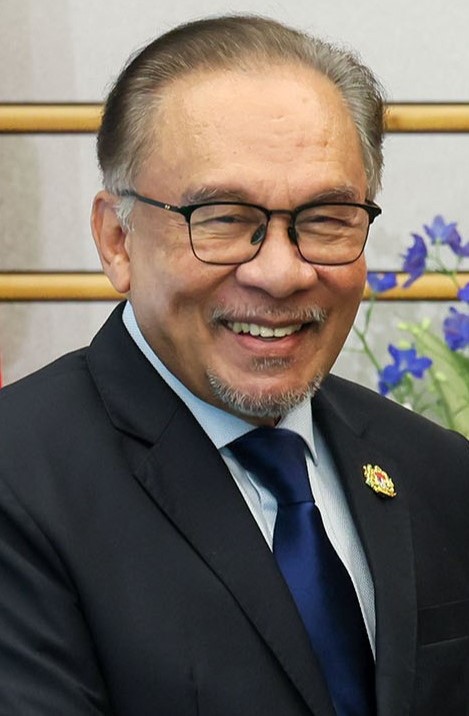
Prime Minister Datuk Seri Anwar Ibrahim has extended Malaysia's sympathies to the family and citizens of Timor-Leste following the death of former president Francisco Guterres, who passed away this week at Prince Court Hospital in Kuala Lumpur after receiving intensive medical care. The late statesman was 71 years old at the time of his death.
Anwar used a Facebook post to deliver the official condolence message, reflecting on Guterres' significant place in the Southeast Asian nation's history. The Prime Minister acknowledged that Guterres belonged to the generation of leaders whose struggles and sacrifices had directly shaped Timor-Leste's emergence as an independent nation. His life embodied the values of freedom and democratic governance that remain central to the country's national identity.
Guterres' political journey spanned several decades and multiple roles of increasing responsibility within his country's governance structures. He emerged as a prominent figure within Timor-Leste's resistance movement, where he earned the widely recognised nom de guerre Lú-Olo before transitioning into formal political office. This background in clandestine resistance work gave him credibility among the population and positioned him as a natural choice for high office once independence was achieved.
Following Timor-Leste's independence, Guterres served as President of the National Parliament, a position that allowed him to shape early legislative frameworks for the fledgling democracy. He subsequently ascended to the nation's highest office, serving as Head of State and President of the Republic from 2017 until 2022. His presidential tenure occurred during a critical period for the nation as it consolidated democratic institutions and navigated complex economic and social challenges inherent to post-conflict state-building.
Anwar's statement emphasised the respect and affection with which Guterres would be remembered in Malaysia, signalling the importance of bilateral relations and shared values between the two Southeast Asian neighbours. The gesture reflects Malaysia's recognition of Guterres' contribution not only to his own nation's development but to regional stability and cooperation more broadly. Timor-Leste, as a younger member of the Association of Southeast Asian Nations, has increasingly become an important partner in regional affairs, and the passing of such a prominent historical figure carries significance for the entire region.
Guterres' life intersected with broader historical currents that shaped Southeast Asia in the late twentieth and early twenty-first centuries. His involvement in the independence struggle placed him alongside other pioneering figures who fought against colonial and occupying powers to establish sovereign democratic states. The resistance movement in which he participated became legendary in regional anti-colonial narratives, and his transition from clandestine activist to elected official represented the kind of transformation that lends legitimacy to post-conflict political systems.
The timing of Guterres' death in Kuala Lumpur, while receiving advanced medical treatment at a private healthcare facility, suggests the kind of cross-border cooperation in health services that has become increasingly common among ASEAN nations. This practical dimension of regional engagement often operates quietly behind formal diplomatic channels, yet it represents genuine bonds of cooperation and mutual support between member states.
Guterres' five-year presidency concluded in 2022, allowing him to serve the constitutionally mandated single term that characterises Timor-Leste's presidential system. His departure from office occurred during a period of relative democratic consolidation, and his commitment to constitutional limits on executive power reinforced institutional norms that remain fragile in younger democracies. The respect with which he appears to have accepted the constitutional succession process contrasts with democratic backsliding observed in some regional contexts.
The passing of Guterres also marks the loss of a living link to Timor-Leste's independence struggle, a generation whose direct memory of occupation and resistance is becoming increasingly rare. As former liberation struggle figures age, the intellectual and moral authority they carry passes into history and institutional memory. Their deaths often prompt reflection on how younger generations will maintain commitment to democratic principles and national sovereignty that such figures embodied through sacrifice and struggle.
Malaysia's formal expression of mourning signals the consistency of diplomatic relations between Kuala Lumpur and Dili despite periodic regional tensions and competition for maritime resources. The courteous exchange of condolences represents the baseline of interstate relations, yet the substance of Anwar's message—highlighting Guterres' democratic commitment and nation-building efforts—suggests deeper appreciation for the specific values he represented. Such acknowledgment of shared regional interests in democratic governance and stability provides foundation for continued cooperation on economic, security, and social dimensions.
Guterres' legacy in Timor-Leste will likely be interpreted and reinterpreted by successive generations as the nation continues its developmental trajectory. His symbolic importance as a bridge between the independence struggle and contemporary governance structures ensures his place in the country's historical narrative. For regional observers, his life exemplified the long arc of Southeast Asian decolonisation and the particular challenges of constructing functional democracies following traumatic conflicts and foreign occupation.