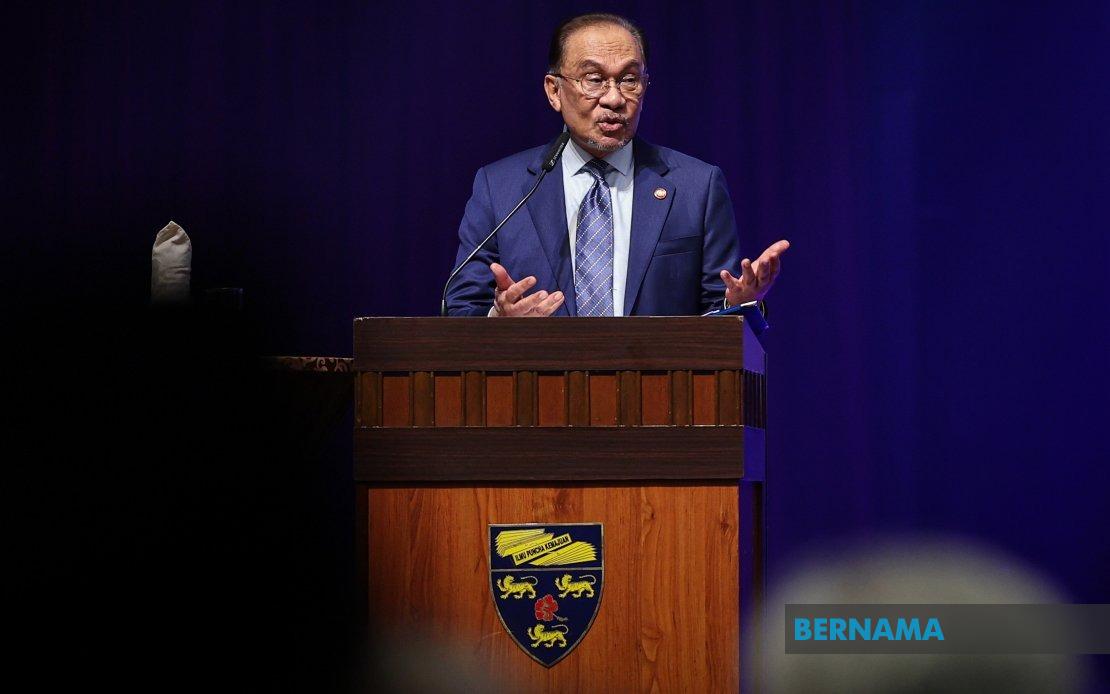
Prime Minister Datuk Seri Anwar Ibrahim has stepped in to provide financial assistance to Rosli Abdullah, a 52-year-old gravedigger in Kuala Terengganu who has been fighting mouth cancer for three years. The RM2,000 donation was delivered through the Prime Minister's Department Implementation Coordination Unit, with the contribution intended to help defray mounting medical expenses as Rosli faces urgent surgery ahead.
The cash handover took place at the Flat Batas Baru surau, where Azhar Abd Hamid, deputy director of the Terengganu Federal Development Department's coordination unit, presented the funds on behalf of the Prime Minister. Azhar disclosed that the contribution represents the first tranche of support, with additional assistance being mobilised through the e-Kasih welfare programme after officials discovered that Rosli was not previously enrolled despite meeting the eligibility criteria.
Rosli's health situation has become increasingly dire in recent months, according to accounts from the surau's management. The swelling in his mouth and right cheek has rendered him unable to speak for the past month, creating severe communication barriers. Most alarmingly, the progression of his condition has left him unable to consume solid food for two weeks, forcing him to rely entirely on liquid nutrition delivered through a feeding tube—a stark illustration of how the disease has compromised his basic bodily functions.
The gravedigger's medical journey has been marked by repeated surgical interventions without sustained relief. He underwent two previous operations, yet the cancer has recurred with aggressive momentum. The Sultanah Nur Zahirah Hospital in Kuala Terengganu has since referred his case to the Universiti Sains Malaysia Hospital in Kubang Kerian, Kelantan, where more specialised treatment is available. This transfer to a tertiary care facility signals the complexity and seriousness of his condition, requiring expertise beyond what regional facilities can currently provide.
Rosli's vulnerability is compounded by his solitary circumstances. He has lived at the Flat Batas Baru surau for more than three decades, residing there alone without family support or domestic attachments. Beyond his primary occupation digging graves at the surau, he had previously supplemented his meagre income by undertaking cleaning duties around the premises. However, his deteriorating health has completely incapacitated him from performing any work, cutting off his already limited income streams entirely.
Mohd Radzali Mohamad, the surau's deputy chairman, painted a portrait of abandonment and dependency. He emphasised that Rosli now depends entirely on the charity and goodwill of the mosque management for his survival and sustenance. The surau has become not merely his residence but his lifeline—the only institution standing between him and destitution. This arrangement underscores how vulnerable individuals without family networks can fall through cracks in Malaysia's social safety net, surviving only through the compassion of their immediate communities.
Recognising the magnitude of Rosli's needs, the surau's management committee has established a dedicated fundraising initiative to cover his escalating medical and surgical expenses. However, collections to date have fallen substantially short of what is required for his comprehensive treatment. The RM2,000 from the Prime Minister's Department represents meaningful assistance, yet it is but a fraction of the total financial burden that lies ahead. For a man with no income and no family safety net, even this contribution provides critical breathing room.
The registration into the e-Kasih programme offers hope for more systematic support going forward. This targeted welfare scheme, designed to identify and assist the neediest segments of Malaysian society, should provide Rosli with regular assistance—assuming the promised enrolment materialises without bureaucratic delays. The recognition that he meets e-Kasih criteria despite having been overlooked previously raises questions about how effectively existing welfare systems identify vulnerable individuals in urban centres like Kuala Terengganu.
Rosli's case illuminates the precarious existence of informal sector workers in Malaysia who lack formal employment structures, pension contributions, or employer-sponsored health coverage. Gravediggers, despite performing essential community services, operate at the very margins of the economy with minimal job security or benefits. When health crises strike, such workers face catastrophic financial consequences that can rapidly deplete whatever modest savings they possess. The intersection of informal employment, serious illness, and social isolation creates a perfect storm of vulnerability that often goes unnoticed until dramatic intervention becomes necessary.
The Prime Minister's direct engagement with this case, rather than relegating it to routine welfare channels, suggests heightened awareness of such hardship stories within government circles. However, it also highlights a potential systemic gap: the reality that reaching those in direst need may require personal intervention by senior officials rather than functioning through standard administrative mechanisms. For Malaysia to ensure comprehensive social protection, robust systems must exist to identify and support individuals like Rosli proactively, rather than through occasional charitable gestures triggered by chance awareness.
Looking ahead, Rosli's recovery will depend on successful completion of his specialist surgery at the Kelantan facility, coupled with adequate post-operative care and rehabilitation. The combination of the Prime Minister's donation, his imminent e-Kasih registration, and the surau's fundraising efforts should provide the financial scaffolding necessary for treatment. Yet his case will remain a sobering reminder of how quickly serious illness can reduce an independent worker to complete dependence, and how Malaysia's most vulnerable citizens often require interventions that extend beyond normal administrative structures to access the safety net ostensibly designed to protect them.

