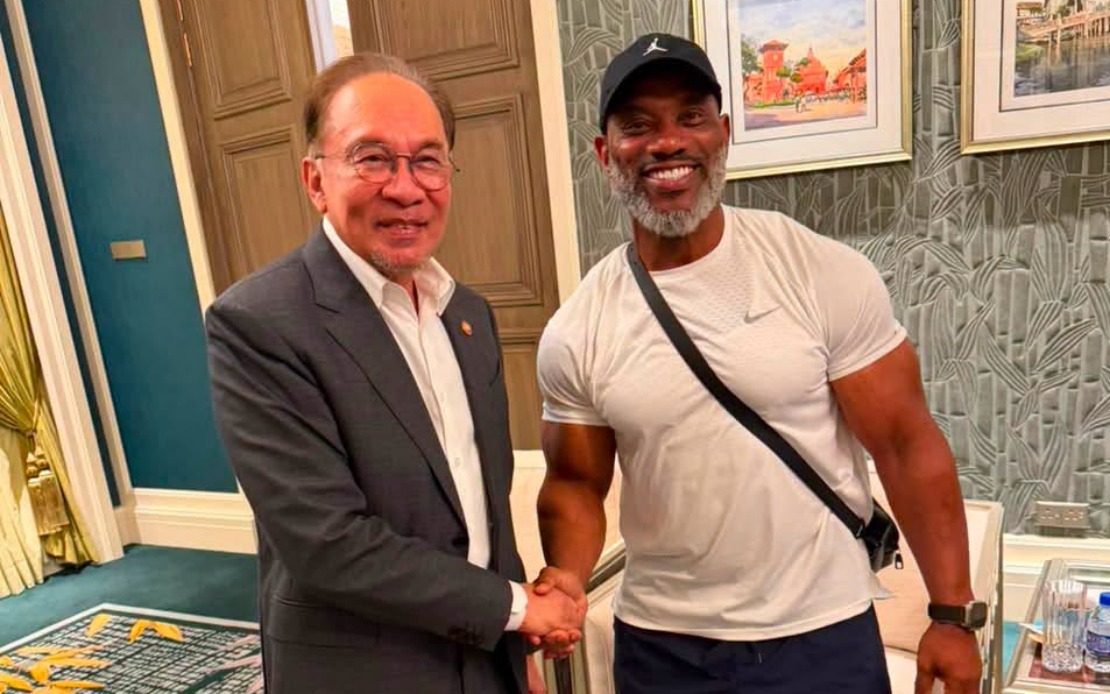
Prime Minister Datuk Seri Anwar Ibrahim expressed his enthusiasm after meeting renowned bodybuilder Dexter Jackson, sharing details of the encounter through a Facebook post that revealed both his admiration for the fitness icon and his self-deprecating sense of humour. The meeting between Malaysia's political leader and the international sports figure underscores the appeal of fitness and wellness culture among high-profile personalities across different sectors, reflecting broader societal interest in health and athletic achievement.
Jackson, now 56 years old, remains one of the most decorated athletes in professional bodybuilding history, having claimed the title of Mr Olympia in 2008 and Masters Mr Olympia in 2012. Beyond these marquee championships, his most impressive distinction lies in his unparalleled record at the Arnold Classic, where he has captured the title nine times—a feat that stands as the most victories by any competitor in that prestigious competition's history. This accumulation of titles over an extended career demonstrates remarkable longevity and consistency in one of sport's most demanding disciplines.
In his social media post, the Prime Minister highlighted Jackson's credentials with evident respect, noting the bodybuilder's status as a world-renowned figure in his field. The gesture of documenting the meeting through a photograph and public post reflects contemporary political communication strategies, where leaders increasingly use direct social media engagement to share personal moments and humanise their public personas. This approach resonates particularly with Malaysian audiences who engage actively on digital platforms.
Anwar's closing remark—that meeting Jackson had inspired him to consider returning to the gym—delivered the message with tongue-in-cheek humour that many observers found refreshingly candid. The comment suggested that despite the demands of high office, the Prime Minister maintains an interest in personal fitness and wellness, values that align with Malaysia's broader public health messaging around active lifestyles and preventive healthcare.
The encounter carries subtle implications for Malaysia's international engagement and soft power. By publicly celebrating and meeting with globally recognised figures from diverse fields, the nation's leadership demonstrates openness to the world and engagement with international communities beyond traditional diplomatic channels. Bodybuilding, whilst niche in some contexts, commands a passionate global following, and Jackson's prominence in that world makes him a figure of genuine international stature.
Dexter Jackson's career trajectory offers instructive lessons for Malaysian audiences interested in athletic excellence and dedication. His sustained performance across multiple decades in professional bodybuilding—competing successfully from his early career through his 50s—illustrates the possibilities of longevity in sport when combined with disciplined training, nutrition, and recovery protocols. Such examples carry educational value for Malaysians pursuing fitness goals across all age groups.
The Prime Minister's willingness to publicly engage with fitness culture also signals tacit endorsement of health and wellness priorities within government circles. Malaysia has been working to address obesity and lifestyle-related health conditions, particularly among younger populations, and leadership visibility around fitness and athletic achievement can reinforce public health messaging and normalise health-conscious choices across society.
Whilst the meeting itself represents a brief personal encounter, it exemplifies how contemporary political figures navigate multiple spheres of influence and interest. Anwar's decades-long career has involved diverse engagements across business, law, religion, and now sports culture, reflecting a multifaceted approach to leadership and public communication. The ability to connect authentically across these different domains enhances political capital and broadens appeal beyond narrow constituencies.
For Malaysia's fitness industry and bodybuilding community, international visits by athletes of Jackson's calibre attract attention to the sport locally and may inspire increased participation and investment in competitive bodybuilding programmes. Such visits often catalyse interest in coaching development, facility improvements, and athlete support systems, potentially strengthening Malaysia's competitive standing in regional and international bodybuilding competitions.
The broader context of this meeting sits within Malaysia's ongoing efforts to position itself as a hub for international events and a destination of choice for high-profile visitors across all sectors. From sporting competitions to cultural exchanges and business forums, attracting internationally recognised figures enhances the nation's global profile and creates opportunities for meaningful cultural and professional exchange.
AsMalaysia continues navigating its place within regional and global contexts, these informal diplomatic moments—where political leaders engage with international personalities from non-traditional sectors—contribute to the nation's soft power positioning. They suggest a Malaysia that is globally connected, culturally open, and interested in excellence across multiple domains, from athletics to public service.

