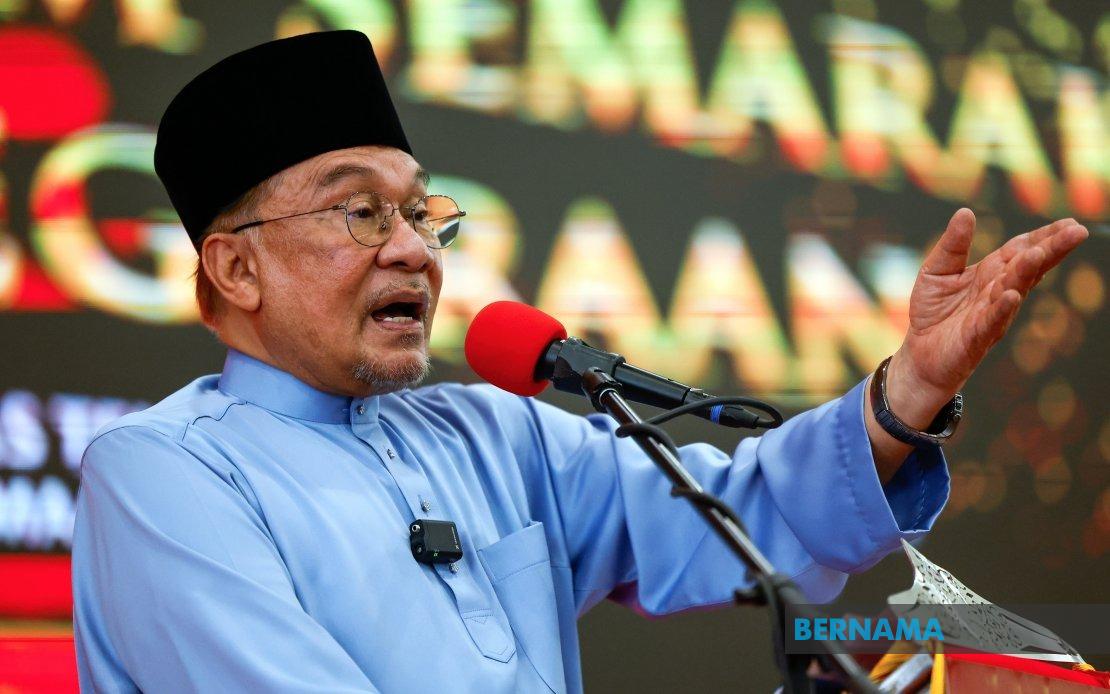
Prime Minister Datuk Seri Anwar Ibrahim is deploying his political capital across Negeri Sembilan on Monday in a determined final push for Pakatan Harapan as the coalition counts down to the state election this Saturday. The comprehensive itinerary reflects PH's strategy of maintaining momentum during the critical closing stages of campaigning, with the Prime Minister's personal engagement aimed at consolidating voter support in key constituencies and energising the party machinery.
Anwar's schedule commences with an afternoon community engagement session in the Chennah constituency located in Jelebu, where constituents will have direct access to interact with the Prime Minister over tea. This grassroots-focused approach is followed by the Temu Anwar programme hosted at the Islamic Dakwah Centre Hall in Paroi, providing a platform for dialogue on issues affecting Muslim communities in the state. Such programmes underscore PH's effort to reach diverse demographic groups through tailored engagement formats that address community-specific concerns and priorities.
The evening commitments extend PH's outreach into Negeri Sembilan's substantial Indian community, with Anwar scheduled to attend a dinner gathering at Klana Resort. This reflects the coalition's recognition that maintaining support among key voting blocs remains crucial, particularly given Malaysia's multiethnic composition and the importance of retaining coalition cohesion across different community lines. The strategic placement of such events during final campaign days demonstrates calculated efforts to address potential voter concerns or consolidate wavering support.
The campaign schedule culminates in two high-visibility rallies designed to capture maximum public attention during evening and night-time hours when voters are more accessible. The Betaria Business Centre in Seremban will host proceedings at 9 pm, followed by a shift to the Desa Cempaka Night Market site in Nilai at 10.30 pm. These late-evening gatherings serve dual purposes: they allow working voters to participate without weekday employment conflicts, whilst the night market venue taps into informal community spaces where residents congregate, potentially reaching demographics less likely to attend formal political functions.
Accompanying Anwar in this campaign blitz are several senior coalition figures whose presence amplifies PH's political weight in the state contest. Negeri Sembilan Menteri Besar Datuk Seri Aminuddin Harun, contesting the Linggi seat, brings the incumbent administrative legitimacy of state leadership to campaign proceedings. DAP secretary-general Anthony Loke Siew Fook, competing for Chennah, represents the Democratic Action Party's strategic positioning in the state. Amanah president Datuk Seri Mohamad Sabu and PKR vice-president Datuk Seri Amirudin Shari provide additional senior representation, whilst communications director Datuk Seri Fahmi Fadzil ensures media amplification of campaign messages.
Pakatan Harapan's electoral strategy in Negeri Sembilan positions the coalition as contesting all 36 state assembly seats, with internal seat allocations reflecting power dynamics within the three-component alliance structure. PKR fields the largest contingent with 16 candidates, whilst DAP contributes eleven and Amanah provides nine. This distribution demonstrates PKR's primacy within the PH framework in Negeri Sembilan, consistent with Anwar's leadership position as both Pakatan Harapan chairman and PKR president, allowing him to leverage intra-coalition relationships during the campaign period.
The scale of competition across the state underscores the elections' significance within Malaysia's broader political landscape. With 103 candidates contesting 36 seats, the contest represents a fragmented political environment where PH must navigate not only traditional opposition competition but also splinter movements and independent candidates. The voter registration of 867,151 ordinary voters creates an electorate substantial enough to generate meaningful representation of statewide preferences, though the concentration of voters in specific constituencies may create uneven campaign intensity across different regions.
Campaigning regulations impose strict timeframes that shape political strategy during election periods. With the official campaign cessation scheduled for 11.59 pm on Friday, PH's intensive schedule on Monday reflects recognition that effective campaign deployment requires sustained messaging and public presence across several days. Anwar's personal participation throughout multiple events across geographically dispersed locations—from Jelebu to Paroi to Nilai—demonstrates the political premium placed on prime ministerial visibility, suggesting internal coalition calculations that his participation significantly influences voter behaviour.
The Negeri Sembilan state election carries implications beyond the state itself within Malaysia's federal political structure. The state represents an intermediate-sized electorate where coalition performance can serve as a barometer for broader voter sentiment regarding the Anwar-led government, now in its second year of governance. Results may influence perceptions of PH's electoral viability ahead of potential future federal elections, making Monday's campaign activities part of a longer-term political calculation regarding government legitimacy and opposition credibility across the federation.
For Malaysian voters and political observers, Anwar's intensive engagement pattern illustrates how incumbent governments mobilise leadership resources during state-level contests. The Prime Minister's decision to personally undertake such demanding schedules, rather than delegating entirely to state-level leaders, signals PH's assessment that this contest carries strategic importance. The breadth of event types—community teas, religious centre gatherings, ethnic community dinners, and night market rallies—demonstrates sophisticated campaign design attempting to reach voters across socioeconomic strata and demographic categories simultaneously.
The campaign finale sequences reflect calculated judgements about voter accessibility and media coverage. Morning and afternoon sessions target retirees and informal workers, whilst evening and night-time events capture working professionals and families. Market-based rallies particularly appeal to traders and small business owners, constituencies important for economic stability messaging. This temporal and spatial diversity in campaign scheduling maximises the Prime Minister's influence across heterogeneous voter populations within the limited timeframe available before polling commences on Saturday.

