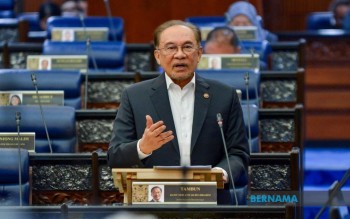
Prime Minister Datuk Seri Anwar Ibrahim has made clear that Malaysia's government will adopt an uncompromising stance towards any potential corruption or fraudulent conduct related to the Retirement Fund (Incorporated), commonly known as KWAP, and its substantial investment in eFishery, an aquaculture technology start-up. Speaking in Parliament this week, Anwar underscored the seriousness with which the administration views the protection of retirement savings belonging to Malaysian workers, even as initial assessments have not uncovered evidence of misconduct in the disputed transaction.
The Prime Minister, who concurrently holds the Finance Ministry portfolio, disclosed that he has engaged directly with KWAP's senior management to ensure their complete cooperation with the ongoing investigation. This personal intervention signals the heightened political sensitivity surrounding the investment and reflects broader public concerns about how state-linked retirement institutions deploy worker contributions. Anwar's comments came during parliamentary question time when he fielded enquiries about the government's approach to safeguarding pension fund returns amid global economic headwinds and geopolitical instability.
Even though preliminary documentation available to his office does not suggest fraudulent elements were present in the transaction, Anwar has directed the Malaysian Anti-Corruption Commission (MACC) to conduct a thorough examination of the entire investment approval process. This approach reflects a methodical rather than reactive posture—acknowledging that surface-level reports may not capture systemic weaknesses in governance or decision-making procedures. The emphasis on examining both the investment decisions themselves and the deliberations of the investment panel that recommended them indicates the government's intent to fortify institutional safeguards against future lapses.
The eFishery investment has emerged as a focal point of debate about how Malaysia's retirement funds allocate capital to emerging technology ventures. The aquaculture technology sector represents a strategic bet on food security and agricultural innovation in Southeast Asia, but the concentration of retirement savings into single high-risk ventures raises legitimate questions about portfolio diversification and risk management. For Malaysian workers whose livelihoods depend on prudent stewardship of these funds, the investigation carries direct personal significance beyond abstract questions of governance.
Anwar's intervention reflects an implicit acknowledgment that public confidence in retirement fund management requires more than technical compliance with regulations. The explicit commitment to zero tolerance sends a reassuring signal to contributors that the government takes its fiduciary obligations seriously, while simultaneously pressuring institutional leadership to maintain the highest standards of transparency and accountability. This approach seeks to balance the need for legitimate scrutiny with the recognition that investment in growth sectors remains necessary to generate adequate returns for pensioners.
The investigation's scope encompasses not merely the final investment decision but the entire procedural chain, from initial due diligence through board approval. This comprehensive examination will likely examine whether the investment committee possessed adequate expertise in technology ventures, whether risk assessments were conducted with sufficient rigour, and whether alternative investment options received equal consideration. Such granular analysis helps establish whether institutional processes functioned as intended or whether structural deficiencies enabled poor decision-making regardless of intentional wrongdoing.
The context surrounding retirement fund investments has become increasingly fraught in Southeast Asia, where several major scandals have eroded public confidence in pension administrators. Malaysia's two primary retirement vehicles—the Employees Provident Fund (KWSP) serving the broader workforce and KWAP serving government employees—collectively manage hundreds of billions of ringgit contributed by millions of workers. Any suggestion of mismanagement, however minor, risks triggering broader anxiety about the security of these massive pools of capital.
Senators pressing Anwar on the matter raised fundamental questions about how the government ensures retirement funds remain insulated from political pressure or commercial interests, and what specific mechanisms exist to protect contributor money across different investment cycles. These enquiries reflect genuine uncertainty among parliamentary members about the adequacy of current oversight structures. Anwar's response emphasised institutional cooperation and independent investigation rather than immediately dismissing concerns, a measured approach that respects legitimate parliamentary oversight while maintaining government authority.
The eFishery case illustrates broader tensions within Malaysia's investment strategy. Government-linked institutions are expected to support domestic innovation and technological advancement, yet this developmental imperative must not compromise the primary obligation to preserve and grow workers' retirement savings. Striking this balance requires robust institutional governance that prevents mission creep, where strategic policy objectives inadvertently compromise fiduciary responsibilities. The MACC investigation will likely inform future policy about how much discretion retirement funds should exercise in venture investments.
For Malaysian workers and retirees, the implications extend beyond this single transaction. The government's response to the eFishery matter establishes precedent for how seriously it takes retirement fund governance and what consequences institutional leaders face if standards slip. A thorough investigation that identifies genuine problems and implements remedial measures would strengthen confidence in the broader pension system. Conversely, any appearance that investigations are cursory or conclusions predetermined would deepen existing scepticism about institutional independence and accountability.
The political significance of Anwar's statement lies partly in demonstrating that even strategic investments and developmental priorities remain subject to scrutiny when workers' retirement money is at stake. This messaging serves multiple audiences: reassuring contributors that safeguards exist, pressuring fund managers to maintain rigorous governance, and signalling to commercial entities seeking pension fund investments that any irregularity will trigger investigation regardless of political connections. The unqualified commitment to investigating investment decisions, not merely final outcomes, suggests the government recognises that preventing future problems requires understanding how institutions arrive at decisions.

