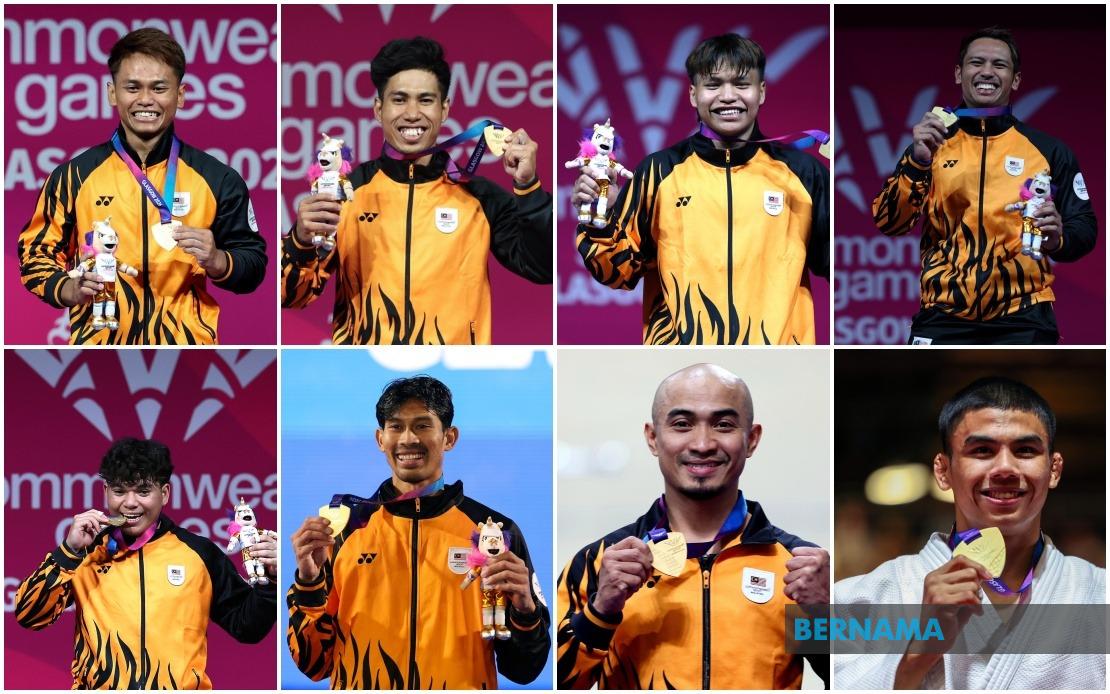
Prime Minister Datuk Seri Anwar Ibrahim has extended his congratulations to the entire Malaysian sporting contingent following the conclusion of the 2026 Commonwealth Games in Glasgow, Scotland, where the delegation concluded its campaign in 10th position with a combined haul of 16 medals. Through a social media message released on the evening of August 3, the Prime Minister highlighted the exceptional determination displayed by Malaysia's athletes throughout the international competition.
Anwar's commendation extended beyond the athletes themselves to encompass the broader support ecosystem that underpins Malaysian sporting endeavours. He specifically acknowledged the contributions of coaching staff, administrative officials, and the technical support personnel whose work behind the scenes proved instrumental in preparing and sustaining the contingent throughout the Games. This recognition underscores the growing understanding among Malaysia's political leadership that medal-winning performances result from coordinated effort across multiple layers of institutional support.
The Prime Minister's statement also incorporated a gesture of gratitude toward the Malaysian public, acknowledging the spiritual and emotional backing that citizens provided to the contingent through prayer and well-wishes. This inclusive framing reflects a conscious effort to position national sporting achievement as a collective endeavour rooted in community participation and national pride, rather than the exclusive domain of elite athletes. The invocation of religious sentiment, through the phrase "Alhamdulillah," also signals respect for the spiritual dimensions of Malaysian society and the role faith-based motivation plays in supporting national aspirations.
Malaysia's 10th-place finish at the Glasgow Games represents a respectable mid-tier performance within the Commonwealth Games hierarchy, where traditional sporting powers such as Australia, England, and Canada typically dominate medal standings. The achievement of 16 medals—a combination of gold, silver, and bronze—demonstrates that Malaysia retains competitive capabilities across multiple sporting disciplines despite resource constraints that some developing economies face in preparing athletes for major international competitions.
The Glasgow Commonwealth Games themselves marked a significant moment for the global sporting calendar, as the quadrennial event continued its established tradition of bringing together athletes from Commonwealth nations to compete across diverse sporting codes. For Malaysia, participation in such competitions serves multiple objectives beyond medal acquisition: the Games provide crucial international exposure for emerging athletes, facilitate knowledge exchange among coaches and sports administrators, and generate valuable data on performance standards relative to comparable nations in the region and beyond.
The timing of Anwar's public acknowledgment reflects the importance that Malaysian governance now places on athletic achievement as a component of soft power projection. Commonwealth Games success, while less prominent than Olympic performances, nonetheless contributes to international perceptions of Malaysian capability and national vitality. Southeast Asian sports rivalries, particularly with neighbouring Thailand, Singapore, and Indonesia, ensure that Commonwealth Games results carry domestic political resonance and influence public discourse around sporting investment and national identity.
Malaysia's sporting infrastructure has undergone significant evolution in recent years, with increased government allocation toward elite athlete development and expanded facility construction. The Glasgow campaign provides a data point by which to assess whether these investments are translating into competitive improvements. The 10th-place finish, occurring midway through the medals table, suggests Malaysia occupies a stable but not dominant position within Commonwealth sporting ranks—a plateau that may invite scrutiny regarding optimization of resource deployment in pursuit of higher medal targets.
The recognition extended to support staff and coaching personnel carries particular significance within Malaysian sports governance. International evidence demonstrates that coaching quality, technical expertise, and systematic athlete development programmes correlate strongly with competitive outcomes. By specifically crediting these elements in his statement, Anwar implicitly endorsed the human capital investment approach to sports improvement, rather than attributing results solely to athlete natural talent or individual determination.
From a regional perspective, Malaysia's Glasgow performance occurs within the broader context of Southeast Asian sports development. The nation competes in multiple international sporting forums where it faces direct comparison with other ASEAN members. Success in Commonwealth forums, while geographically distant, contributes to regional standing and influences the competitive hierarchy that shapes intra-ASEAN sports rivalries and collaborative partnerships. The recognition of Malaysian achievement at Glasgow therefore carries implications beyond the bilateral relationship between athlete and nation, extending into regional sporting diplomacy.
Looking forward, the Prime Minister's public endorsement of the contingent's efforts suggests continued governmental commitment to Commonwealth Games participation and broader international sporting engagement. For athletes and sporting organisations, such high-level political recognition validates the resource commitments required to sustain competitive international representation and provides psychological reinforcement that governmental support for sports development remains steadfast despite competing budgetary demands across other policy domains.
The Glasgow Games campaign ultimately demonstrates Malaysia's capacity to field competitive contingents capable of achieving respectable international outcomes while competing against better-resourced and larger nations. The 10th-place finish, accompanied by prime ministerial commendation, reflects a mature approach to sporting competition wherein performance improvements and international engagement merit recognition even when medal tallies fall short of aspirational targets. This measured perspective, evident in Anwar's public statement, suggests Malaysian sports governance is evolving toward long-term strategic thinking rather than reactive focus on single-event outcomes.

