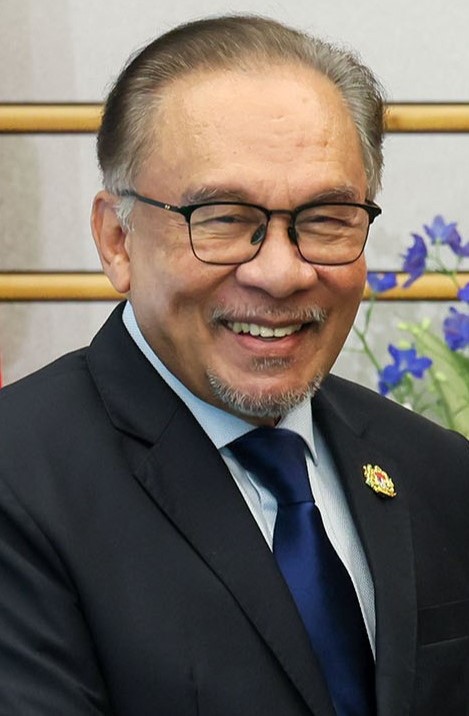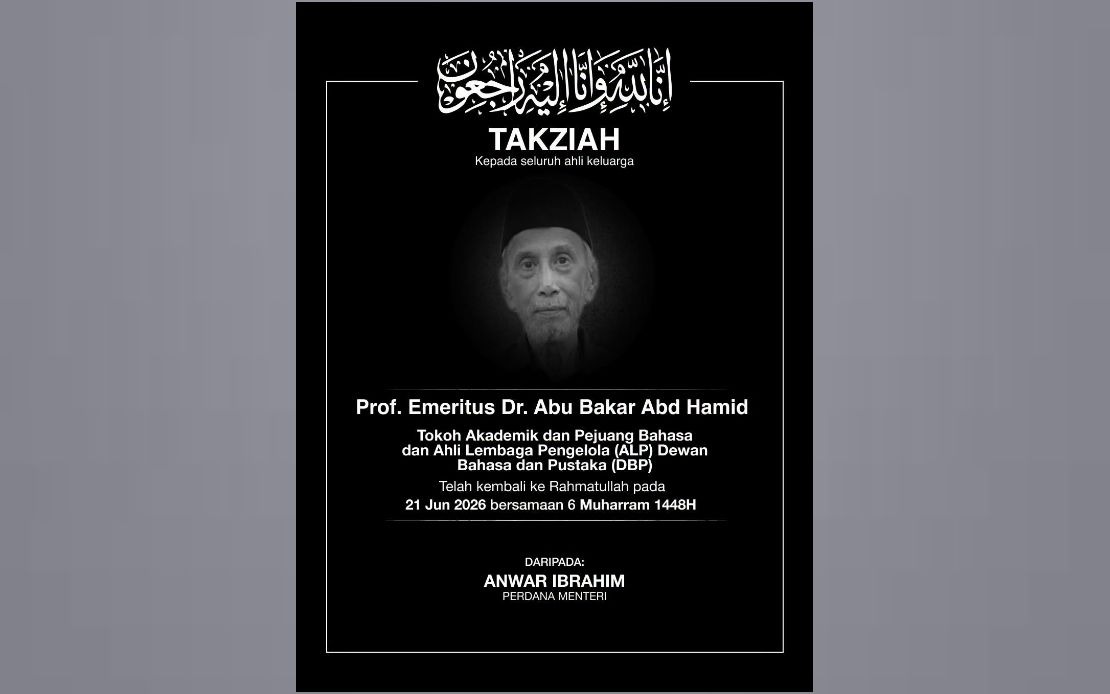
Prime Minister Datuk Seri Anwar Ibrahim has mourned the loss of one of Malaysia's most influential academics and literary scholars, Professor Emeritus Datuk Abu Bakar Abd Hamid, following the prominent educator's death on Sunday, June 21. Through a Facebook tribute posted on Monday, Anwar conveyed his deep sadness at the passing of a man he described as a central figure in the development of Malay letters and a pivotal force in establishing one of the nation's premier universities.
Anwar's personal connection to Abu Bakar adds particular weight to his remarks. As someone who had studied directly under the late professor, the Prime Minister reflected on the profound influence such mentors exert on their students' trajectories and intellectual formation. This relationship underscores how Abu Bakar's reach extended far beyond the confines of academia, touching the lives and shaping the careers of individuals who would go on to serve the nation in senior capacities.
According to reports, Abu Bakar, a native of Johor, experienced a sudden respiratory crisis at his residence in Petaling Jaya, Selangor, passing away around 10:30 pm. His death marks the end of a remarkably productive intellectual life spanning several decades of service to Malaysian education and cultural preservation. The circumstances of his final days reflect the sudden nature of his departure, leaving colleagues and former students with little opportunity for farewell.
Throughout his career, Abu Bakar occupied several roles of significant institutional importance. He served as deputy vice-chancellor at Universiti Malaya in 1987, a position that placed him among the nation's leading academic administrators during a critical period of higher education expansion. His contributions to university governance extended beyond UM; he was instrumental in the foundational work of establishing Universiti Kebangsaan Malaysia, serving as joint secretary of the committee tasked with creating the institution in 1968. This role positioned him as a key architect of Malaysian higher education during the post-independence nation-building era.
Beyond academia, Abu Bakar's leadership credentials earned him appointment as chairman of the Board of Governors of Bernama, the Malaysian National News Agency, a position he held from 1996 to 2000. This four-year tenure placed him at the helm of an institution responsible for disseminating authoritative news and information to Malaysian media outlets and international partners. The breadth of his responsibilities—spanning universities, media governance, and cultural institutions—demonstrates the high regard in which he was held across multiple sectors of Malaysian society.
In his Facebook post, Anwar emphasised qualities that extended well beyond Abu Bakar's formal credentials and positions. The Prime Minister highlighted his genuine passion for knowledge and his remarkable ability to inspire those around him, qualities that often define the most memorable educators. Such intangible contributions—the capacity to kindle intellectual curiosity and transmit values of scholarly rigor—frequently outlast more official accomplishments and help explain why figures like Abu Bakar remain embedded in institutional memory and personal recollection.
The late professor's intellectual legacy centres on his monumental contributions to Malay literature, a field that demands both deep cultural understanding and rigorous scholarly methodology. His work in this domain earned him numerous prestigious accolades throughout his lifetime, recognition that attested to his standing among peers and scholars globally. These honours reflected not merely personal achievement but validation of his role in elevating Malaysian literary scholarship to international standards.
Anwar's invocation of Islamic prayers for Abu Bakar's soul—requesting divine forgiveness and a place of honour in the afterlife—reflects traditional Malaysian expressions of mourning while underscoring the spiritual dimensions that accompany such losses in the community. The Prime Minister's public acknowledgment of grief and respect serves both to honour Abu Bakar's memory and to signal to the broader Malaysian public the significance of his contributions.
Abul Bakar was committed to his final resting place at Bukit Kiara Muslim Cemetery on Monday, a solemn conclusion to a life devoted to institutional service and intellectual advancement. His passing represents a notable loss to Malaysia's academic community, particularly to those institutions and fields that benefited from his leadership and scholarly expertise. For younger generations of academics and students, his death marks the end of an era in which direct mentorship by foundational figures of Malaysian higher education remains possible.
The tributes now flowing from senior government figures and academic circles underscore how profoundly Abu Bakar's influence permeated Malaysian intellectual and administrative spheres. His role in shaping both institutional structures and individual careers means that his legacy will continue to be felt across multiple domains of Malaysian society. For scholars and students of Malay literature, his contributions remain essential reference points, while for institutional historians, his fingerprints appear on key moments of Malaysian university development.