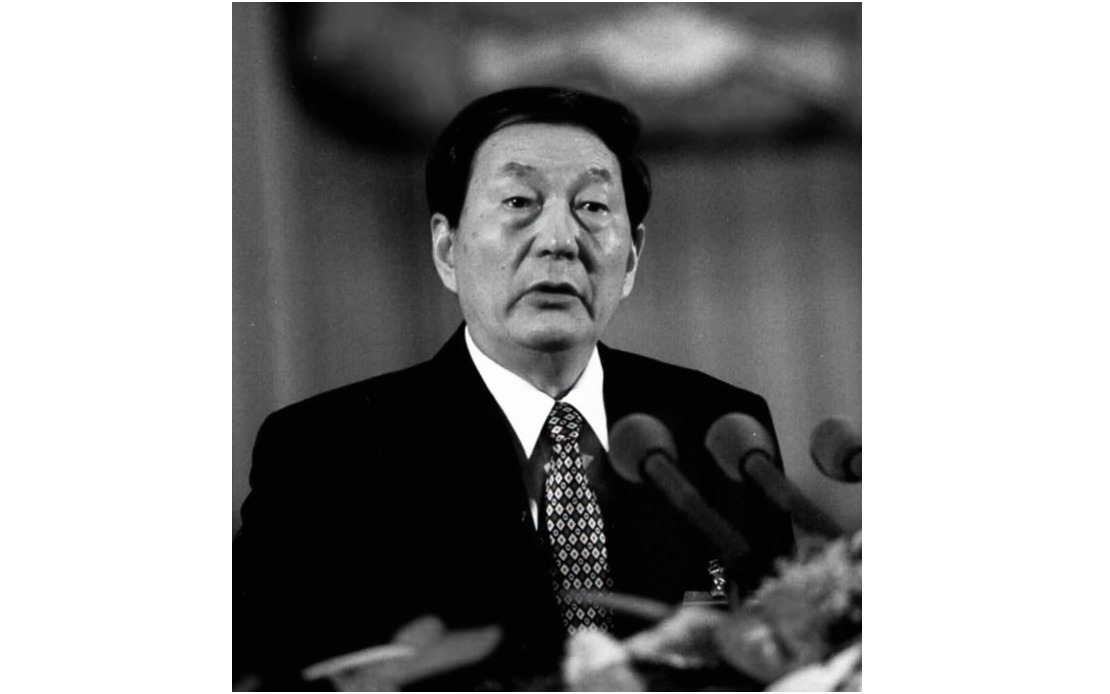
Prime Minister Datuk Seri Anwar Ibrahim has paid tribute to former Chinese Premier Zhu Rongji, who died at age 97, describing the late statesman as one of the most consequential figures in shaping modern China's rise as an economic powerhouse. In a Facebook message, Anwar highlighted Zhu's transformative role in steering the nation through its most critical period of market-oriented reform, extending his condolences to Zhu's family and the Chinese people.
Zhu's tenure as Premier from 1998 to 2003 marked a defining chapter in contemporary Chinese history. During his leadership, he orchestrated sweeping reforms that fundamentally restructured the country's state-owned enterprise sector, a move that was crucial in transitioning China from a centrally planned economy towards a more market-oriented system. His stewardship also proved instrumental in navigating China's entry into the World Trade Organisation, a watershed moment that accelerated the nation's integration into the global economic system and paved the way for decades of rapid growth.
For Anwar, Zhu's passing carries personal significance that extends beyond diplomatic protocol. The Prime Minister recalled working closely with the former Premier throughout the 1990s to strengthen economic and financial cooperation between Malaysia and China during a formative period for bilateral relations. The initiatives and frameworks established through their collaboration during that era have endured, continuing to serve as the foundation for Malaysia-China relations in the present day. This shared history underscores how leadership decisions made three decades ago continue to shape regional economic ties.
Anwar's recollections reveal a relationship that transcended formal state business. He remembered accompanying Zhu on visits to culturally significant locations, including the ancestral home of Confucius and the sacred mountain of Tai Shan, journeys that reflected Zhu's deep connection to Chinese civilisation and philosophy. The Prime Minister also noted a particularly memorable occasion when Zhu invited him to his personal library, where the former Premier thoughtfully selected classical Chinese texts as gifts, a gesture that spoke to Zhu's intellectual interests and his desire to foster cross-cultural understanding with Malaysia's leadership.
These personal anecdotes are instructive for understanding how China's top leaders during the 1990s and early 2000s conducted their diplomacy. Unlike purely transactional state-to-state interactions, relationships such as that between Anwar and Zhu were characterised by genuine personal connection and cultural exchange. Such connections often proved valuable in building trust and facilitating smoother economic negotiations during periods of significant structural change in both nations.
Zhu's legacy extends far beyond his relationship with Malaysian leadership. His economic policies fundamentally altered China's trajectory, transforming it from a regional economy with severe structural inefficiencies into a competitive global manufacturing and trading hub. The enterprise reforms he championed addressed decades of accumulated inefficiencies in the state sector, while his approach to WTO accession required China to embrace unprecedented levels of market competition and international commercial standards. These moves were politically contentious domestically but ultimately proved instrumental in unlocking China's economic potential.
For Malaysian observers, Zhu's career offers instructive lessons about the relationship between institutional reform and economic development. The former Premier demonstrated that sustained growth requires not merely policy adjustments but comprehensive restructuring of economic institutions, a principle that remains relevant as Malaysia contemplates its own economic transformation. Moreover, the timing of Malaysia-China economic deepening in the 1990s coincided with China's period of most dramatic institutional evolution, allowing both nations to benefit from complementary developmental phases.
Anwar's characterisation of Zhu as possessing "great character" and "a fierce sense of duty to his nation" reflects a view of the former Premier as motivated by nation-building rather than personal aggrandisement. During his tenure, Zhu implemented policies that were economically necessary but politically challenging, including substantial redundancies in the state sector and the disciplining of inefficient enterprises. Such decisions required both courage and commitment to long-term national interests over short-term political comfort.
The passing of Zhu marks the end of an era for China's leadership generation that steered the nation through its most dramatic transformation. The cohort of leaders who managed China's transition from Deng Xiaoping's era through the early 2000s have now largely departed the global stage. Zhu's death is particularly significant as he was among the architects of the specific model of economic management that propelled China's ascent, a model that has been studied and partially emulated by developing nations across Asia.
For Malaysia specifically, Zhu's death invites reflection on how bilateral relationships evolve across generations of leadership. The partnerships built between Anwar and Zhu in the 1990s have persisted through multiple administrations in both countries, suggesting that institutional frameworks and personal relationships, when properly established, can transcend individual tenures. As both Malaysia and China navigate new geopolitical and economic realities, the precedent of sustained economic cooperation established during Zhu's era remains relevant to contemporary policymakers.
Anwar's tribute also serves as a reminder of the interconnected nature of Southeast Asian and Chinese development trajectories. Malaysia's own economic advancement during the past three decades has been deeply intertwined with China's rise, from supply chain integration to trade partnerships. Understanding figures like Zhu who shaped that broader transformation helps Malaysian observers comprehend the structural forces that have defined regional economic relations.

