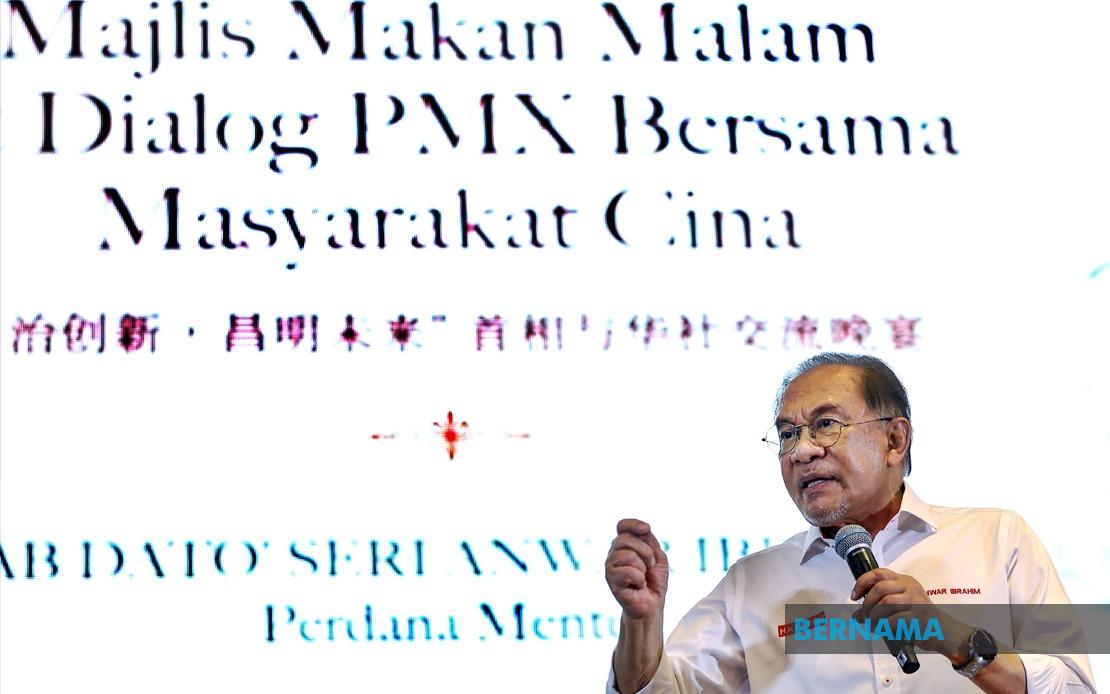
Prime Minister Datuk Seri Anwar Ibrahim used an evening gathering with Johor Bahru's Chinese community on July 4 to reinforce his determination to guide Malaysia into becoming a thriving and prosperous nation. The occasion offered him a platform to articulate his personal vision for the country's future, moving beyond immediate governance priorities to address his enduring impact on the nation once his tenure concludes.
Central to Anwar's remarks was his conviction that a leader must genuinely engage across Malaysia's diverse population tapestry. He stressed that bridging the nation's various ethnic and religious communities requires more than policy implementation—it demands authentic connection and demonstrated commitment. His emphasis on reaching out to every social segment signals an awareness that Malaysia's stability and progress depend fundamentally on inclusive governance that transcends traditional communal boundaries.
The Prime Minister articulated a remarkably personal dimension to his leadership philosophy, framing his ultimate aspiration in terms of human relationship rather than mere institutional achievement. He suggested that the ultimate measure of political success is whether citizens regard their leader with genuine affection, and reciprocate that sentiment. This humanistic approach contrasts with purely technocratic or results-oriented frameworks, positioning leadership as fundamentally about cultivating trust and mutual respect between government and people.
Anwar's reflection on his stage of life—acknowledging his advancing age and finite tenure—injects urgency into his stated priorities. Rather than pursuing new initiatives or ambitious expansion of his political power, he has redirected focus toward consolidating a principled foundation for governance. This maturation in perspective suggests a leader contemplating historical judgment and concerned with how future generations will assess his stewardship of public office.
The concept of "fair, clean and dedicated leadership" that Anwar repeatedly invoked addresses persistent anxieties within Malaysian society about corruption, nepotism, and partisan favouritism in government. By positioning ethical conduct and equitable treatment as legacy pillars, he implicitly acknowledges public scepticism about these qualities in recent Malaysian politics. The emphasis on serving all communities equally challenges historical patterns of governance seen as benefiting particular groups over others.
Anwar's commitment to showcase love for the Malaysian people, and his expectation that this sentiment will be reciprocated, reflects a transactional view of political legitimacy. He proposed that authentic care for citizens' welfare, transparently demonstrated, creates a virtuous cycle of mutual loyalty and cooperation. This philosophy aligns with communitarian values prevalent across Southeast Asia, where personal relationship and trust often carry greater weight than formal institutional structures.
The gathering in Johor Bahru, Malaysia's southernmost major city, holds particular significance given its position as a crucial economic and demographic centre. The Prime Minister's deliberate engagement with the Chinese community—a vital commercial and intellectual constituency—underscores his attention to specific communities while claiming universal inclusivity. This balancing act reflects the delicate political mathematics required in Malaysia's plural society, where no single ethnic or religious group constitutes an overwhelming majority.
Attendance by Parti Keadilan Rakyat (PKR) vice president and Selangor Menteri Besar Datuk Seri Amirudin Shari provided visible reinforcement of party solidarity around Anwar's vision. Amirudin's presence signalled alignment between federal leadership and state-level governance, potentially smoothing cooperation on national and regional initiatives. Such public demonstrations of unity carry symbolic weight in Malaysian politics, where factional tensions frequently surface and require careful management.
Anwar's articulation of leaving a legacy rather than pursuing immediate administrative victories suggests confidence in his government's foundational stability. A leader preoccupied with day-to-day survival typically avoids reflective discourse about historical impact. His capacity to address longer-term concerns indicates assessment that core governance challenges have reached manageable levels, permitting focus on intangible qualities like public perception and ethical standing.
The emphasis on love and mutual affection as political virtues represents a deliberate departure from technocratic or ideological framing of governance. Rather than discussing economic indicators, infrastructure development, or institutional reform, Anwar prioritised emotional bonds and moral character. This rhetorical choice appeals directly to citizens' human need for leaders who demonstrate genuine regard, potentially resonating across Malaysia's socioeconomic spectrum more effectively than policy-heavy discourse.
For Malaysia's plural democracy, Anwar's repeated commitment to serving all citizens equally carries practical implications extending beyond rhetoric. Public perception that the Prime Minister genuinely respects and values all communities regardless of background influences investor confidence, social cohesion, and political legitimacy. Whether rhetorical commitment translates into consistent policy implementation remains the ultimate test of his stated principles.

