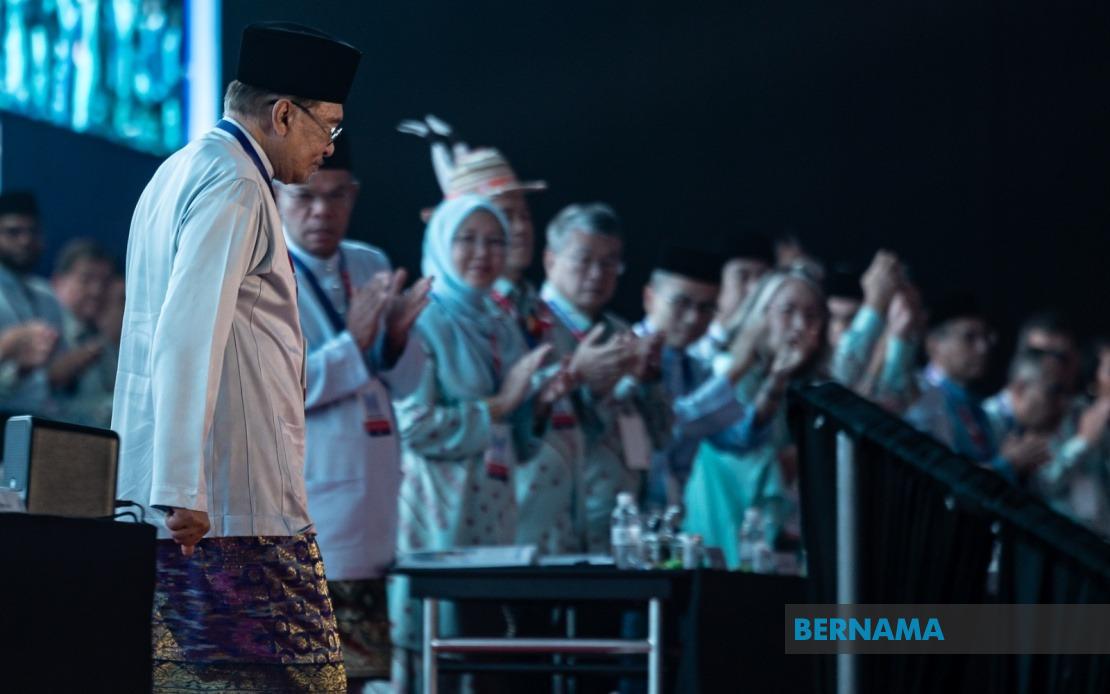
Prime Minister Datuk Seri Anwar Ibrahim has firmly rebutted suggestions that the MADANI Government is treating certain states inequitably, arguing instead that federal spending reflects strategic priorities while demonstrating consistent growth across all regions. Speaking at the PKR National Congress in Melaka on Thursday, Anwar framed the debate around state allocations as a mischaracterisation of his administration's approach to federalism and resource distribution.
The Prime Minister contended that variations in budget allocation across states stem from differing developmental needs and priorities rather than political bias or regional preference. He highlighted that concerns about unequal treatment have not been raised with the same urgency during previous administrations, suggesting that current criticisms may be politically motivated. This distinction carries weight in Malaysian politics, where regional disparities in development and federal funding have long been contentious issues between state and federal governments, particularly in states governed by opposition coalitions.
Anwar presented a comprehensive set of figures to substantiate his defence, beginning with Sabah's trajectory. Federal allocation to the resource-rich east Malaysian state has expanded from RM13 billion in 2022 to RM17.6 billion in 2026, representing a 35 per cent increase over the government's tenure. The magnitude of this growth underscores the administration's commitment to infrastructure and service delivery in the state, though it also reflects Sabah's strategic importance to the federal government's economic agenda.
Sarawak, the other major east Malaysian state, has witnessed even more dramatic budget expansion. Allocations have climbed from RM10.2 billion in 2022 to RM15.1 billion in 2026, a 48 per cent increase that surpasses the growth rate for Sabah. This substantial investment suggests prioritisation of both eastern states within the broader federal fiscal framework, potentially addressing historical grievances about development asymmetries between peninsular and east Malaysian regions.
Peninsular states have not been overlooked in this budgetary expansion. Terengganu's allocation has risen from RM6 billion to RM8.1 billion between 2022 and the current year, while Johor experienced growth from RM10.2 billion to RM14.6 billion across the same period. These figures indicate that the MADANI Government's spending increases span both opposition-controlled and government-friendly states, though the specific outcomes and visibility of these expenditures may vary depending on state-level implementation and political narratives.
Kedah and Kelantan, two northern peninsular states, also experienced overall allocation increases according to Anwar's statement, though he did not provide exact figures for these jurisdictions. The inclusion of these states in his remarks suggests a deliberate effort to demonstrate equitable treatment across political divides, as both states have fielded criticism regarding federal support. Perlis, similarly mentioned, rounds out the picture of comprehensive regional coverage in the government's spending strategy.
The strategic timing and venue of these remarks warrant consideration. Anwar delivered his defence during his Presidential Policy Speech at the 2026 PKR National Congress at the Melaka International Trade Centre, a platform that reaches party members and shapes internal PKR discourse. This context suggests the government is addressing not merely external critics but also managing expectations within its own coalition, where resource allocation disputes can strain political relationships between federal leadership and state-level partners.
The emphasis on percentage increases rather than absolute figures reveals something about the framing of this argument. While 35 to 48 per cent growth over four years represents genuine expansion, the absolute sums allocated remain modest by peninsular standards in some cases, and the real value of these increases depends heavily on inflation rates and the purchasing power of those ringgit in 2026 compared to 2022. Malaysian readers accustomed to economic scrutiny will recognise that nominal growth must be understood within broader macroeconomic conditions.
This defensive posture reflects deeper anxieties about regional equity in Malaysia's federal system. Historically, disputes over state allocations have catalysed political conflicts and fuelled separatist sentiment, particularly in east Malaysia. The current government appears conscious of this risk and committed to publicly demonstrating that no region is being deliberately marginalised. Whether these allocations translate into tangible improvements in schools, hospitals, roads, and other services remains a separate question that will ultimately determine whether such fiscal generosity strengthens or undermines political support.
The broader significance of Anwar's statement extends beyond budgetary accounting. It reflects the government's understanding that legitimacy in a multi-ethnic, multi-regional federation depends partly on demonstrable commitment to equitable development. As Malaysia navigates ongoing economic challenges and competes regionally for investment and talent, the perception of fairness in resource distribution carries real political and developmental consequences. States that feel neglected may become less cooperative with federal initiatives, creating friction that undermines national policy implementation.
Looking forward, the accountability for these allocations will lie not with the Prime Minister's speech but with visible outcomes on the ground. Infrastructure projects, educational improvements, healthcare enhancements, and economic opportunities in these states will ultimately validate or refute claims of equitable treatment. The political opposition and state governments will likely scrutinise project implementation closely, examining whether promised funds actually reach beneficiaries and whether development trajectories in their jurisdictions accelerate as the statistics suggest they should.

