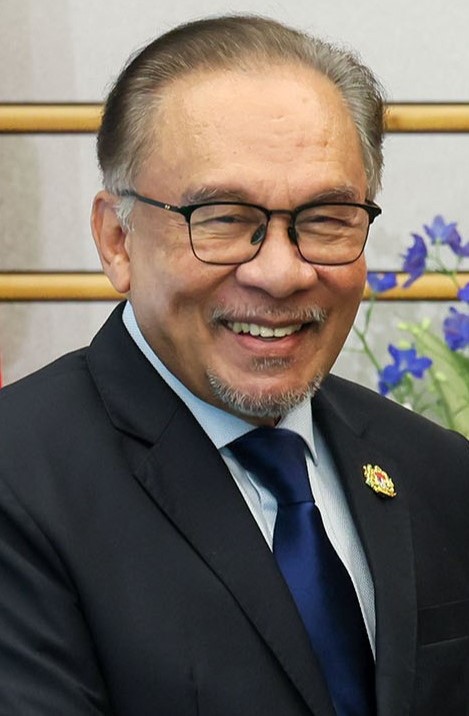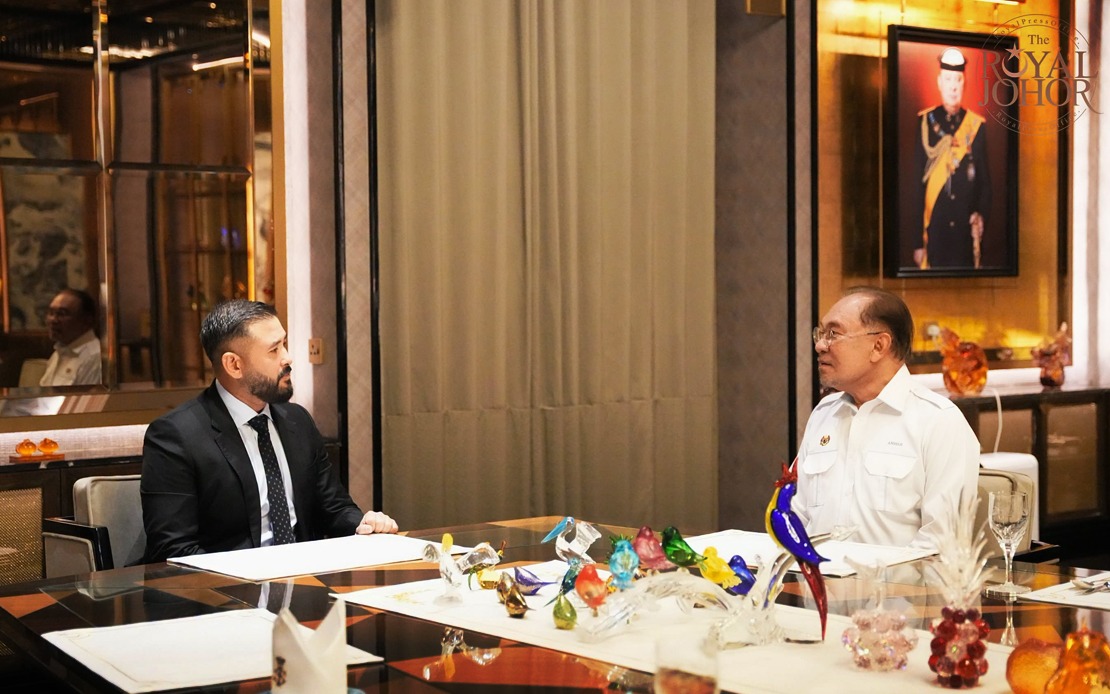
Prime Minister Datuk Seri Anwar Ibrahim has expressed appreciation for a recent audience with the Regent of Johor, Tunku Mahkota Ismail, while seizing the opportunity to deliver a pointed message to the nation's political establishment. Speaking at an event in Tangkak to unveil Pakatan Harapan's slate of candidates for the upcoming 16th Johor state election, Anwar indicated that the cordial meeting itself served as a powerful rebuke to what he characterised as petty partisan manoeuvres that exploit the prestige and standing of the monarchy.
The Prime Minister's remarks came as political temperatures rise across the country ahead of key state elections. His acceptance of the Johor Regent's invitation to meet in Kuala Lumpur, Anwar suggested, demonstrates the correct approach to royal engagement—one rooted in genuine respect and proper protocol rather than tactical calculations designed to enhance a political faction's credibility. By appearing alongside the heir to the Johor throne, Anwar simultaneously bolstered his own standing while signalling to other parties that such dignified interaction cannot be manufactured or claimed through rhetorical sleight of hand.
Anwar's criticism of opposition and rival parties for invoking the King's name and royal authority in election campaigns reflects longstanding tensions within Malaysia's political system. The invocation of monarchy has historically served as a potent tool in domestic political contests, with various factions seeking to wrap themselves in the mantle of royal legitimacy. The Prime Minister's warning suggests that this practice has reached a level where it warrants public reproach from the nation's chief executive, indicating frustration with what he views as the trivialisation of constitutional institutions.
During his meeting with Tunku Mahkota Ismail, Anwar seized the platform to brief the Regent on federal infrastructure and development initiatives specifically designed to benefit Johor's population. This element of the conversation underscores a calculation that opposition parties, despite their rhetorical attachment to royal support, lack substantive achievements to demonstrate at state level. By positioning himself as the harbinger of tangible benefits flowing from federal government programmes, Anwar attempted to frame the choice before Johor voters as one between decisive national leadership and parochial state-level politics.
The larger architecture of Anwar's remarks reflects a nuanced approach to the constitutional monarchy's role in Malaysian politics. Rather than attempting to diminish the Sultan's authority or constitutional standing, the Prime Minister instead advocates for a particular model of interaction—one emphasising consultation, dialogue, and the acceptance of royal counsel even when disagreement exists. This framing allows Anwar to position himself as a defender of the monarchy against what he characterises as its opportunistic exploitation by political rivals.
Anwar's stated practice of consulting with various sultans and accepting their views, even when disagreement emerges, speaks to the delicate constitutional balance that federal government leadership must navigate. Malaysia's system requires ongoing dialogue between the executive and the hereditary rulers, who retain significant symbolic authority and, in certain domains, substantial actual power. The Prime Minister's assertion that he maintains this respectful engagement across the board—including with the Federal Ruler—is designed to establish his administration as the guardian of constitutional propriety and institutional respect.
The presence of senior coalition partners at the Johor candidate announcement event reinforced the unity message that Anwar sought to convey. DAP secretary-general Anthony Loke Siew Fook, Amanah president Datuk Seri Mohamad Sabu, and other PH leaders stood alongside the Prime Minister, visually representing the multi-ethnic and multi-religious coalition that underpins the federal government's legitimacy. For Johor specifically, this display of unity holds particular weight, given the state's historical significance to Malaysian politics and the historically dominant position of UMNO and its allies in state governance.
The timing of these remarks, delivered as Pakatan Harapan formally launched its state election campaign, cannot be separated from electoral calculations. Johor has long served as a bellwether for Malaysian politics, and control of the state machinery would constitute a significant prize for the federal ruling coalition. By establishing the moral high ground regarding respect for royal institutions and constitutional propriety, Anwar attempts to neutralise potential attacks on his administration while simultaneously creating an unflattering portrait of opposition tactics for Johor's electorate.
For Southeast Asian observers, Anwar's emphasis on consulting the monarchy and accepting royal counsel, even amid disagreement, demonstrates how Malaysia's particular constitutional arrangements shape executive behaviour. Unlike neighbouring nations with different governmental models, the Malaysian Prime Minister must constantly perform deference to institutions that retain genuine constitutional authority. This reality constrains the executive's apparent power while simultaneously providing opportunities for political leaders to demonstrate their respect for law and tradition.
The deeper significance of the Prime Minister's comments lies in his attempt to redefine what constitutes legitimate political engagement with royal institutions. By presenting his audience with Tunku Mahkota Ismail as exemplifying proper respect, Anwar stakes a claim to defending institutional integrity against what he frames as partisan degradation. Whether this rhetorical positioning translates into electoral advantage for Pakatan Harapan in Johor will ultimately depend on whether voters prioritise the administration's institutional etiquette or its concrete record of governance and delivery.
Looking forward, Anwar's remarks suggest a federal government intent on positioning itself as the custodian of Malaysia's constitutional settlement and the respectful partner to the nation's hereditary rulers. This stance carries particular importance given broader regional questions about democratic governance, institutional stability, and the proper relationship between elected and hereditary authority. By emphasising consultation, acceptance of counsel, and the depoliticisation of royal prestige, Anwar articulates a vision of executive behaviour that many might view as appropriate to a constitutional monarchy, even as critics might question whether such rhetorical commitments translate into substantive institutional practice.