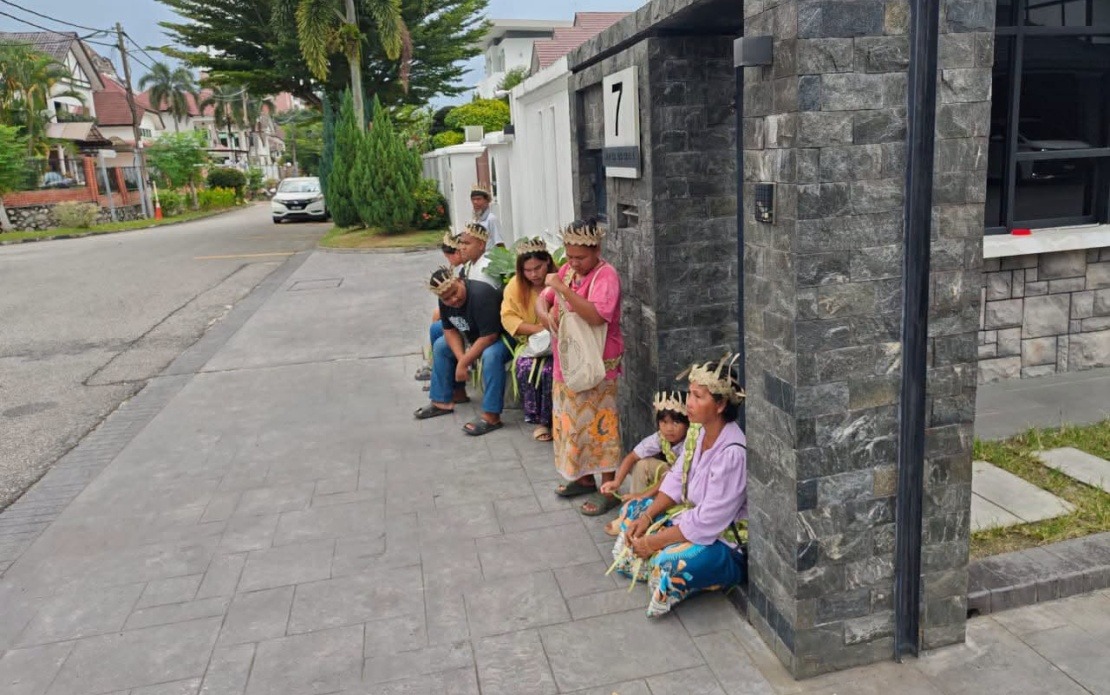
Prime Minister Datuk Seri Anwar Ibrahim has pledged to take up the land dispute matter affecting the Orang Asli settlement of Kampung Sungai Cot in Maran, Pahang, directly with the state administration. The commitment came after community representatives visited his residence on the afternoon of July 17, during which Anwar engaged in detailed discussions about the grievances confronting the indigenous community.
Through a Facebook statement released that evening, Anwar outlined the substance of his conversation with the Orang Asli delegation, emphasizing his attentiveness to their concerns regarding property and territorial rights. The Prime Minister indicated that the representatives had briefed him comprehensively on the complexities of their situation, painting a picture of a long-standing dispute that has created considerable hardship for residents of the village.
A significant development emerged during the discussions: three residents from the community who had been detained faced release by police, according to information conveyed to Anwar. The Prime Minister welcomed this outcome, signalling through his remarks that progress was already being made on at least one dimension of the broader crisis. The sequence of events suggests mounting pressure on authorities to address grievances emanating from the indigenous community, with senior political intervention now focused on finding workable pathways forward.
The land dispute affecting Kampung Sungai Cot represents a recurring challenge across Malaysia, where Orang Asli communities have historically encountered obstacles in securing recognized rights to ancestral territories. These conflicts frequently arise from competing claims between indigenous inhabitants and state or federal land classifications, a tension that has persisted despite constitutional protections ostensibly extended to indigenous peoples. The intervention by the Prime Minister elevates the visibility of this particular case within the national political sphere, potentially catalyzing more systematic attention to how such disputes are adjudicated.
Anwar's statement carried an implicit appeal for measured discourse surrounding the dispute, urging all stakeholders to refrain from politicizing or sensationalizing the situation. By requesting that parties avoid manipulating the narrative, the Prime Minister appeared to be cautioning against using the controversy as a vehicle for partisan advantage, a concern that often arises when indigenous rights become entangled with political competition. His framing suggested that productive resolution required cool-headed engagement grounded in legal frameworks rather than inflammatory rhetoric that might inflame already-fraught circumstances.
The Prime Minister's emphasis on pursuing solutions anchored in lawful procedures and pragmatic thinking reflects established governmental rhetoric regarding indigenous affairs, though implementation frequently lags behind stated commitments. By characterizing any eventual resolution as requiring fairness, prudence, and legal compliance, Anwar essentially outlined the parameters within which Pahang state authorities should operate when addressing the dispute. This formulation appears designed to constrain the discretionary power of state-level administrators, implicitly directing them toward outcomes that respect both indigenous interests and broader regulatory frameworks.
The timing of Anwar's intervention carries significance for regional indigenous advocacy networks, signalling that high-level political attention can be mobilized when communities press their grievances through direct engagement with national leadership. For Orang Asli organizations and allied civil society actors monitoring such developments, the Prime Minister's commitment represents a potential opportunity to influence how state governments handle competing land claims. Whether this translates into tangible outcomes for Kampung Sungai Cot depends substantially on subsequent implementation by Pahang's administration and the degree to which central oversight persists.
Maran district, situated within Pahang's interior regions, has witnessed various tensions related to land utilization and indigenous tenure over preceding decades. The prominence now attached to the Kampung Sungai Cot situation reflects broader Southeast Asian patterns wherein urbanization pressures and resource competition increasingly intersect with indigenous land claims, particularly in Malaysian peninsular states where Orang Asli populations maintain concentrated settlements. How federal and state governments navigate such disputes carries implications extending beyond individual communities, establishing precedents that shape future indigenous relations across the region.
The detention and subsequent release of three community members introduces questions about the investigative and enforcement procedures deployed by law enforcement agencies when addressing disturbances or alleged infractions within indigenous settlements. While Anwar's framing treated the release as positive momentum, underlying questions persist regarding what circumstances prompted the initial detention and whether comparable incidents might recur absent systemic reforms. The Prime Minister's engagement appears calibrated to prevent escalation while channelling grievances through institutional mechanisms rather than allowing tensions to crystallize into confrontation.
Moving forward, the Pahang state government faces pressure to demonstrate concrete engagement with the land dispute through substantive dialogue with community representatives and legal examination of competing claims. The Prime Minister's pledge to raise the matter with state authorities effectively places administrative responsibility on Pahang's leadership, creating reputational stakes for how expeditiously and fairly they respond. For Malaysian indigenous communities more broadly, this moment represents both opportunity and test—opportunity to secure high-level political attention, and test of whether such attention translates into meaningful institutional responsiveness to longstanding grievances regarding territorial rights and self-determination.

