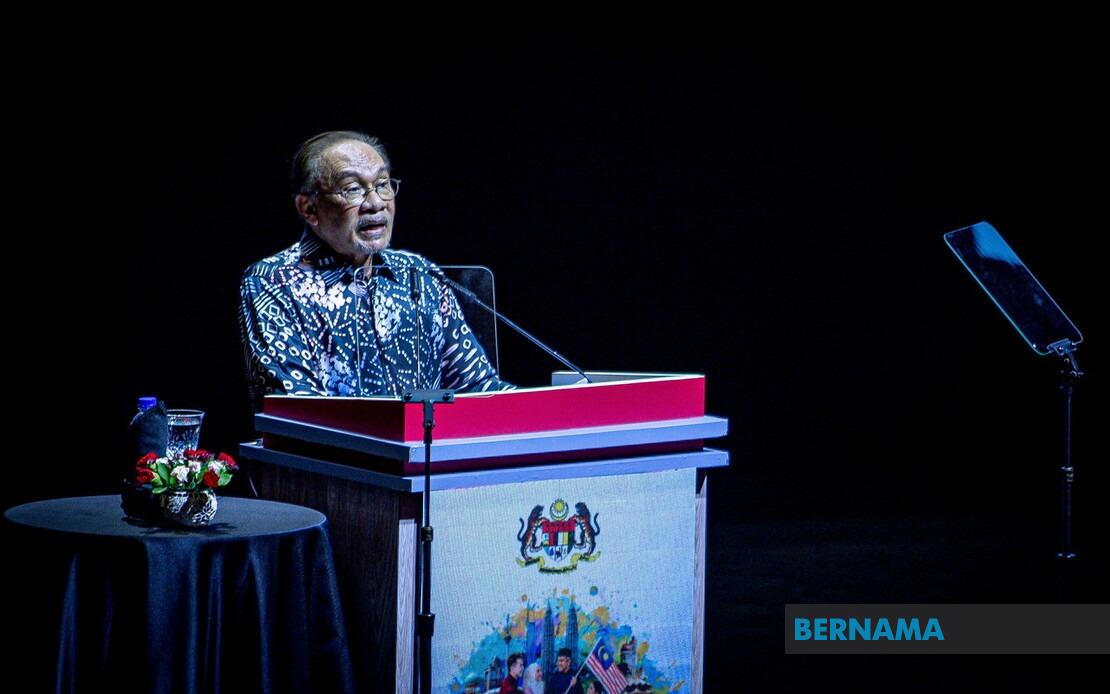
Prime Minister Datuk Seri Anwar Ibrahim outlined a comprehensive package of six policy measures designed to ease the financial strain facing ordinary Malaysians, with all initiatives set to commence on September 1. Speaking at the Putrajaya International Convention Centre during the 2026 National Day Prime Minister's Address, Anwar framed the announcements as direct responses to sustained public concerns about household expenses and daily living costs, acknowledging that despite previous government interventions, many citizens continue to face significant economic hardship.
The initiatives span multiple sectors critical to household budgets and national development. The package includes enhanced fuel subsidies aimed at reducing transportation expenses, accelerated school maintenance programmes to improve educational infrastructure, artificial intelligence integration into government services, healthcare system digitalisation to streamline medical access, e-Invoicing implementation for business efficiency, and expanded microfinancing schemes to support small entrepreneurs and informal sector workers. This diversity of measures reflects the government's attempt to address cost pressures across different demographic groups and income levels.
Anwar's remarks carried an implicit acknowledgment of the limitations faced by his administration in solving Malaysia's economic challenges comprehensively. Rather than claiming complete victory over inflation and affordability crises, he adopted a candid stance, noting that neither he, the Deputy Prime Minister, nor the Cabinet entertained illusions about having resolved all problems facing the populace. This measured tone stands in contrast to some government communications, suggesting a recognition that public frustration over economic pressures remains acute despite eighteen months of policy initiatives.
The timing of these announcements, just before National Day celebrations, carries political significance. Anwar positioned the measures as pre-holiday relief specifically targeting schoolchildren, youth, homemakers, and mothers—constituencies traditionally concerned with education costs, fuel prices, and household expenses. The framing strategy attempts to associate the government's economic competence with the patriotic renewal represented by the national anniversary, potentially seeking to convert policy announcements into broader political goodwill.
Fuel subsidies remain contentious in Malaysian politics, with previous governments attempting to reduce dependency on price controls despite fiscal pressures. Anwar's decision to enhance rather than curtail subsidies suggests the government prioritises immediate relief over longer-term fiscal consolidation, responding to political pressure from constituencies affected by transportation costs. For Malaysian commuters and logistics businesses, this announcement may provide temporary relief, though the sustainability of expanded subsidies under inflationary global conditions remains uncertain.
Healthcare digitalisation represents a structural modernisation objective that simultaneously addresses cost-of-living concerns by reducing medical expenses through efficiency gains. Digital systems can theoretically decrease wait times, eliminate redundant tests, and improve medication management, potentially lowering out-of-pocket costs for patients navigating the healthcare system. For Southeast Asia's region, digitalisation of health services aligns with broader regional trends toward e-health infrastructure, positioning Malaysia within international development benchmarks.
The e-Invoicing component targets business-to-business efficiency, indirectly benefiting consumers through reduced administrative costs that theoretically translate into lower prices. This measure also strengthens the government's tax collection capabilities by improving transaction transparency, creating a secondary fiscal benefit beyond direct cost relief. Microfinancing expansion addresses informal sector workers and small traders, demographic groups often overlooked in conventional economic policy but crucial to household income diversification in many Malaysian families.
Artificial intelligence integration into government services represents the package's most forward-looking element, suggesting long-term productivity improvements rather than immediate cost relief. AI-powered government services could enhance public service delivery efficiency, reduce bureaucratic delays, and lower administrative burdens on citizens seeking government assistance. However, realising these benefits requires substantial technological investment and public sector capacity-building, extending implementation timelines beyond September's commencement date.
Deputy Prime Minister Datuk Seri Dr Ahmad Zahid Hamidi and Communications Minister Datuk Seri Fahmi Fadzil's presence at the announcement reflected whole-of-government commitment, signalling coordination across relevant portfolios. Chief Secretary to the Government Tan Sri Shamsul Azri Abu Bakar's attendance underscored civil service involvement in execution, suggesting this was not merely political grandstanding but involved bureaucratic machinery alignment for implementation.
For Malaysian households, these measures offer layered relief mechanisms addressing different budget components. Fuel subsidies directly reduce transportation costs; school maintenance improves educational quality without additional household expenses; healthcare digitalisation theoretically decreases medical costs; microfinancing expands income-generation opportunities; e-Invoicing eventually reduces business transaction costs reflected in consumer prices. The cumulative effect targets multiple household expenditure categories simultaneously, a strategic approach to addressing compound cost-of-living pressures.
Regional observers should note that Malaysia's approach—combining immediate relief measures with structural modernisation initiatives—reflects broader Southeast Asian patterns where governments balance political pressure for instantaneous assistance with longer-term development aspirations. The announcement demonstrates how even pragmatic administrations must occasionally prioritise visible, immediate measures to maintain political legitimacy while pursuing deeper institutional transformations. The September 1 implementation date provides a clear marker for assessing whether these initiatives genuinely reach intended beneficiaries or remain largely symbolic gestures.

