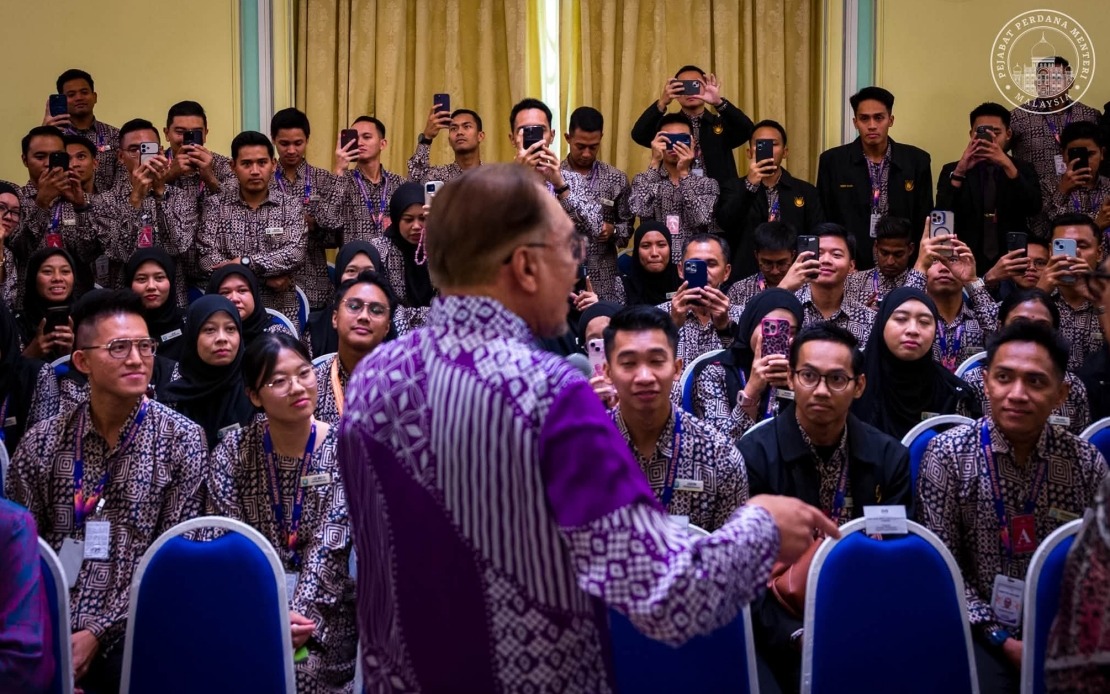
Prime Minister Datuk Seri Anwar Ibrahim has reinforced expectations that Malaysia's civil service must operate with uncompromising integrity while demonstrating readiness to adapt to evolving governance demands. Speaking during an engagement with Administrative and Diplomatic Service (PTD) officer cadets participating in a Postgraduate Diploma in Public Management programme at his Putrajaya office, Anwar underscored that public sector leadership must combine principled conduct with operational efficiency and a decisive commitment to national and public interest above institutional or personal advantage.
The address to these cadets carries particular significance given their trajectory within Malaysia's administrative hierarchy. The PTD represents the elite of the civil service, with officers in this stream typically progressing to senior ministerial adviser roles, permanent secretary positions, and diplomatic missions. By targeting this cohort early in their specialised management training, Anwar seeks to embed a reformist ethos at the source of future policy implementation and bureaucratic direction.
An implicit dimension of Anwar's remarks concerns the modernisation agenda that has characterised his administration since taking office. The public service has historically faced criticism over resistance to organisational reform, technological adoption, and adaptive management practices. The Prime Minister's emphasis on the "courage to embrace change" signals expectation that the civil service must become a vehicle for transformation rather than a brake on it. This message resonates with broader efforts to improve Malaysia's competitiveness in global rankings for ease of doing business and government effectiveness.
Integrity remains the cornerstone of Anwar's governance philosophy, reflecting his positioning as a leader committed to combating corruption and institutional renewal. The repeated emphasis on ethical conduct during a meeting with rising administrative cadres underscores awareness that standards set at senior levels inevitably cascade through the bureaucracy. By reinforcing this principle directly with future decision-makers and policymakers, the Prime Minister attempts to entrench a culture where integrity becomes non-negotiable rather than aspirational.
The timing of this engagement also merits consideration within Malaysia's broader political context. The civil service has occasionally become a flashpoint in debates over political neutrality and administrative independence. Anwar's focus on placing national interests above all else implicitly reinforces expectations that the bureaucracy should function as a non-partisan institution serving the state rather than partisan political interests. This distinction becomes crucial in a multi-party democracy where civil service impartiality underpins institutional legitimacy.
Efficiency concerns within the Malaysian public sector have long featured in reform discussions. Red tape, bureaucratic delays, and service delivery gaps consistently appear in private sector feedback and international competitiveness assessments. By coupling integrity and efficiency in his message to PTD cadets, Anwar signals that ethical governance need not compromise operational speed. Instead, principled systems designed and managed with integrity establish predictability and reliability that ultimately enhance rather than impede productivity.
The postgraduate management programme itself reflects institutional investment in developing sophisticated administrative capacity. PTD officers completing this diploma programme acquire advanced knowledge in public administration, policy analysis, and strategic management. Anwar's intervention during their training represents executive endorsement that these technical skills must always operate within a framework of ethical responsibility and commitment to the national interest. Management capability without principle risks producing efficient wrongdoing rather than effective governance.
For Southeast Asian observers, Anwar's address illuminates Malaysia's approach to civil service reform during a period of significant regional governance challenges. Countries across the region grapple with questions about bureaucratic capacity, corruption, and adaptive governance. Malaysia's articulation of expectations for its administrative elite provides insight into how the country positions itself as a relatively institutionalised Southeast Asian democracy committed to professional standards alongside reform.
The Prime Minister's remarks also implicitly acknowledge that sustainable national development ultimately depends on governance quality as much as economic policy or infrastructure investment. A capable public service executing policies with integrity builds investor confidence, strengthens social cohesion, and establishes the institutional foundations necessary for long-term prosperity. By targeting future senior administrators with this message, Anwar positions the civil service as essential to Malaysia's trajectory toward becoming a higher-income, more just and equitable nation.
Looking forward, the challenge involves translating these articulated principles into systematic institutional practice across Malaysia's sprawling bureaucracy. The PTD cadets receiving Anwar's message represent a relatively small cohort, yet their eventual influence over policy implementation and administrative direction will be substantial. Success ultimately hinges on whether integrity and embrace of change become embedded characteristics of Malaysia's administrative culture or remain periodic exhortations from political leadership.

