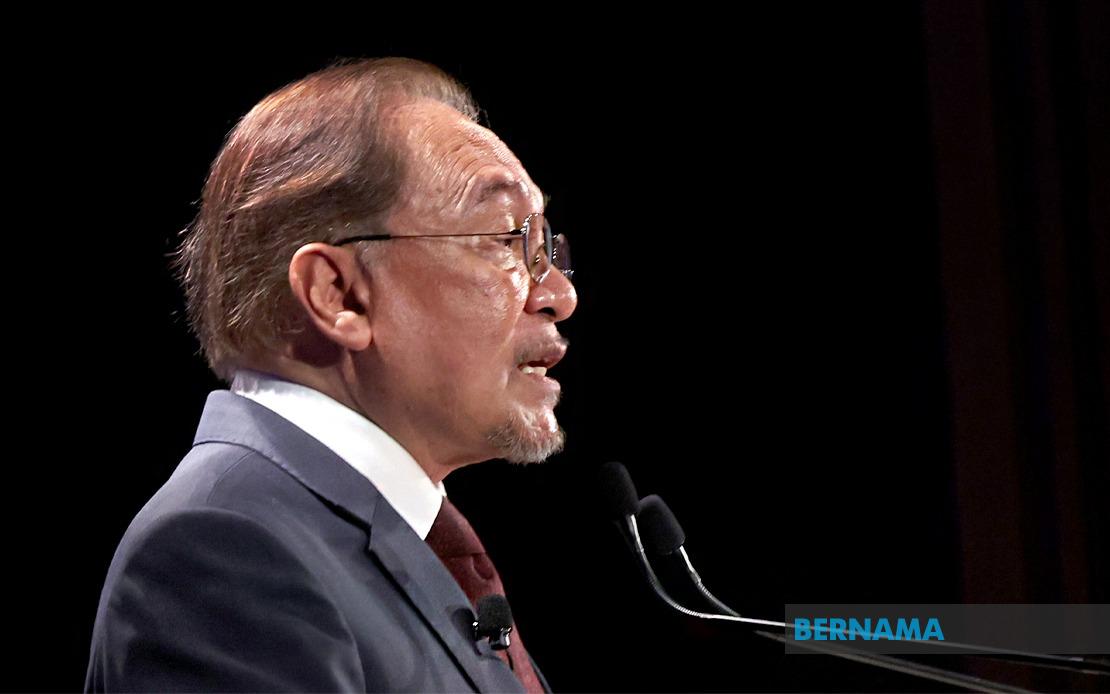
Prime Minister Datuk Seri Anwar Ibrahim's final day in Turkmenistan promises an intensive schedule of diplomatic engagements as Malaysia seeks to consolidate and expand its strategic partnership with the oil-rich Central Asian nation. The itinerary reflects Kuala Lumpur's broader strategy to strengthen economic and political ties across Central Asia, a region of growing importance to Malaysian trade and energy interests.
The day will commence with formal ceremonial proceedings at the Presidential Palace in Ashgabat, where President Serdar Berdimuhamedov will host a welcoming reception for the Prime Minister. This official formality will be followed by an exclusive one-on-one meeting between the two leaders, setting the tone for substantive bilateral discussions to follow. The private session typically allows both governments to address sensitive matters and establish personal rapport between senior leadership, a critical foundation for long-term diplomatic relations.
Following the one-on-one session, Anwar and Berdimuhamedov will proceed to formal bilateral talks where representatives from both delegations will participate. These discussions will address the current trajectory of Malaysia-Turkmenistan relations and identify concrete opportunities for deepening cooperation across multiple sectors. The breadth of potential collaboration is substantial, spanning conventional trade and investment pathways through to the energy sector, where Malaysian interests are particularly acute. Agriculture and commodity trading represent another avenue for expansion, as do emerging domains including digital transformation and scientific research partnerships.
The signing ceremony will constitute a major milestone of the visit, with both leaders expected to endorse a joint statement codifying their mutual commitment to strengthened relations. Several bilateral agreements will be formalized during the ceremony, including a crucial Air Services Agreement that will facilitate enhanced connectivity between the two nations. Additionally, an understanding between Malaysia's foreign affairs institute and Turkmenistan's equivalent organization signals intent to deepen scholarly and institutional exchanges. These arrangements typically serve as precursors to broader cultural and educational partnerships that strengthen people-to-people connections.
Other significant memoranda of understanding will be exchanged during the ceremony, extending across multiple government departments and research institutions. An agreement between Malaysia's Ministry of Transport and Turkmenistan's State Service will address logistics, connectivity, and infrastructure cooperation. Notably, a memorandum between the Academy of Sciences Malaysia and the Academy of Sciences of Turkmenistan reflects both nations' commitment to collaborative research and technological advancement. The energy sector will feature prominently, with documentation addressing oil and gas cooperation expected to receive particular emphasis given Petronas's substantial operational presence in Turkmenistan.
Regional and international affairs will feature prominently in substantive discussions between the two leaders. Anwar and Berdimuhamedov are anticipated to exchange perspectives on developments across ASEAN, allowing the Turkmen president exposure to Southeast Asian perspectives on regional stability and economic integration. Conversely, the Malaysian delegation will gain insight into Central Asian priorities and challenges, fostering mutual understanding of geopolitical concerns in both regions. Such exchanges enhance both nations' capacity to coordinate on matters of shared interest within multilateral forums.
The itinerary incorporates cultural and spiritual dimensions alongside formal statecraft. Anwar will perform Friday prayers at the Turkmenbashi Ruhy Mosque, a gesture acknowledging Turkmenistan's Muslim-majority population and reflecting Malaysia's identity as an Islamic nation. This religious observance carries diplomatic significance, signaling respect for local customs and religious traditions. Following the midday prayers and accompanying luncheon hosted by Berdimuhamedov, Anwar will participate in jointly opening the Malaysia-Turkmenistan Forum at the Chamber of Commerce and Industry of Turkmenistan, positioning the two nations' business communities as active participants in the strengthening relationship.
The delegation's composition underscores the economic dimensions of this visit. Minister of Investment, Trade and Industry Datuk Seri Johari Abdul Ghani and Minister of Economy Akmal Nasrullah Mohd Nasir's presence reflects the primacy accorded to commercial and investment objectives. Their participation in bilateral discussions signals that Malaysia views Turkmenistan not merely as a diplomatic counterpart but as a potential economic partner worthy of cabinet-level attention. Senior officials from the Prime Minister's Office and Foreign Ministry will ensure coordination across policy domains and facilitate implementation of agreements reached during the visit.
Ashgabat's global designation as the "White Marble City" provides both literal and metaphorical context for this diplomatic engagement. The capital's distinctive architecture, featuring over 500 white marble-clad structures that earned it Guinness World Record recognition, symbolizes Turkmenistan's modernization ambitions and national pride. The city's monumental avenues and architectural grandeur reflect President Berdimuhamedov's development vision, creating an impressive backdrop for high-level diplomatic encounters. For Malaysian observers, Ashgabat's transformation serves as a tangible example of how resource-rich nations can leverage energy wealth for comprehensive urban development.
Turkmenistan's geographic and economic significance to Malaysia extends beyond bilateral relations. The nation occupies a strategically crucial position along the Caspian Sea's eastern coast, serving as a gateway between Central Asia and the broader Eurasian region. Its borders with Kazakhstan, Uzbekistan, Afghanistan, and Iran position it as a nexus for regional commerce and diplomacy. From Malaysia's perspective, establishing strong ties with Turkmenistan provides leverage within broader Central Asian diplomacy and potential benefits for Malaysian enterprises seeking to access regional markets.
The energy sector assumes paramount importance in Malaysia-Turkmenistan relations, with Petronas serving as a cornerstone of economic engagement. The national oil company's accumulated investments of RM52.73 billion since 1996 represent Malaysia's most substantial economic footprint in Turkmenistan, positioning energy cooperation as the relationship's central pillar. Turkmenistan's hydrocarbon reserves and ongoing development projects offer continued opportunities for Malaysian participation, particularly as global energy transitions require sophisticated operational expertise that Petronas can provide.
Bilateral trade statistics demonstrate the relationship's growing importance, with Turkmenistan ranking as Malaysia's fourth-largest trading partner among Central Asian nations. Total trade volume reached RM75.80 million in 2025, with Malaysian exports comprising RM75.50 million of this total and reflecting a robust 9 percent annual growth trajectory. This expansion trajectory suggests that diplomatic engagement at the prime ministerial level carries tangible commercial implications, with government-level discussions and agreements typically catalyzing private sector participation and investment flows.
The visit culminates with a press conference addressing Malaysian media, providing opportunity for Anwar to articulate the visit's outcomes and broader strategic vision for Malaysia-Central Asia relations. This communication serves both domestic and international audiences, signaling to Malaysian stakeholders the government's commitment to economic diversification and to international observers Malaysia's active role in Central Asian affairs. As Malaysia positions itself within evolving global geopolitical dynamics, engagement with resource-rich Central Asian nations like Turkmenistan constitutes an important dimension of comprehensive foreign policy strategy.

%22%2F%3E%3C%2Fpattern%3E%3C%2Fdefs%3E%3Crect%20width%3D%22100%25%22%20height%3D%22100%25%22%20fill%3D%22url(%23phy0vqg)%22%2F%3E%3Crect%20width%3D%22100%25%22%20height%3D%22100%25%22%20fill%3D%22url(%23phy0vqp)%22%2F%3E%3Ctext%20x%3D%2250%25%22%20y%3D%2250%25%22%20text-anchor%3D%22middle%22%20dominant-baseline%3D%22central%22%20fill%3D%22rgba(255%2C255%2C255%2C0.95)%22%20font-family%3D%22Georgia%2C%20'Times%20New%20Roman'%2C%20serif%22%20font-weight%3D%22700%22%20font-size%3D%22170%22%20letter-spacing%3D%22-0.02em%22%3EMalaysia%3C%2Ftext%3E%3C%2Fsvg%3E)