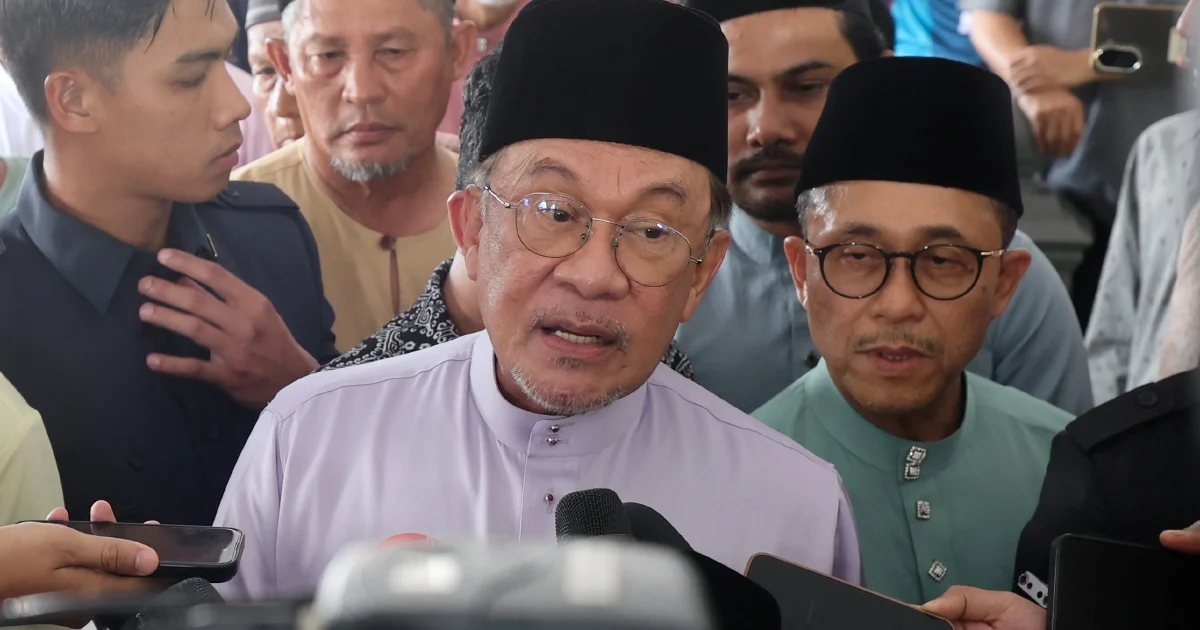
Prime Minister Datuk Seri Anwar Ibrahim has sought to allay concerns among Malaysia's non-Muslim communities by emphasising that government initiatives to enhance the Syariah court system will remain within constitutional boundaries and will not encroach upon religious freedoms guaranteed to other faiths. Speaking from Putrajaya, the premier underscored the importance of maintaining the delicate balance that underpins Malaysia's plural society, where both Islamic and civil legal frameworks operate in their respective domains.
The statement comes amid ongoing discussions about elevating the administrative and institutional standing of Syariah courts, a topic that periodically generates scrutiny from civil liberties advocates and minority religious groups. Malaysia's constitutional structure designates Syariah courts as having jurisdiction exclusively over matters affecting Muslims, including family law, inheritance, and religious affairs, while the civil courts retain authority over criminal and commercial proceedings affecting all citizens regardless of faith. This demarcation has long been considered fundamental to safeguarding religious pluralism in the federation.
Anwar's clarification addresses a persistent tension in Malaysian public discourse: the desire among some segments of the Muslim majority to expand the reach and effectiveness of Islamic legal institutions, balanced against the constitutional assurances provided to non-Muslim citizens since independence. The premier's emphasis on respecting established boundaries reflects an awareness that any perceived erosion of the constitutional separation between Syariah and civil jurisdiction could trigger significant communal apprehension and potentially undermine social cohesion.
The Syariah court system has expanded considerably since Malaysia's founding, both in terms of the scope of issues it addresses and the number of courts operating across the country. These institutions now handle hundreds of thousands of cases annually, making them integral to the administration of Islamic law in the federation. Efforts to strengthen their institutional capacity, improve case processing efficiency, and enhance their professional standards have been proposed as mechanisms to better serve the Muslim population without extending into areas governed by civil law.
Malaysia's approach to managing a Muslim-majority state with substantial non-Muslim populations has long been premised on maintaining statutory distinctions between religious and civil authority. This framework, enshrined in the Federal Constitution, represents a political bargain that proved essential during the nation's transition to independence and has remained a cornerstone of interethnic relations. The constitutional provisions protecting freedom of religion for all citizens, including the right to propagate and practise faith, are explicitly preserved for non-Muslims, even as Islam holds a special constitutional position.
For non-Muslim Malaysians—who comprise roughly one-third of the population across Buddhist, Christian, Hindu, and Sikh communities—assurances from the highest political level carry particular weight given historical episodes of tension around religious boundaries. Chinese and Indian Malaysians, alongside indigenous Christian and Muslim populations in East Malaysia, have often expressed vigilance regarding any institutional changes that might affect their religious autonomy or legal standing. The premier's statement thus serves an important reassurance function within Malaysia's communal balance.
The government's intent to strengthen Syariah courts typically focuses on improving infrastructure, training judicial officers, streamlining administrative processes, and enhancing the enforcement of Syariah-related judgments. Such enhancements are presented as modernising the system to better serve Muslim Malaysians without altering its jurisdictional scope. However, the persistent need for reassurance from the highest office suggests that public confidence in these constitutional boundaries requires regular renewal, particularly as questions about the role of religion in law and governance remain live issues across Southeast Asia.
Anwar's government has navigated complex questions about religious identity and secular governance, particularly given his own prominence within both Islamic intellectual circles and Malaysian civil society. His coalition encompasses parties with varying stances on religious matters, necessitating careful calibration of messaging around Islam, law, and pluralism. The statement represents an attempt to signal commitment to institutional strengthening while forestalling constitutional concerns that could fracture the multiethnic political consensus required for effective governance.
The broader context involves regional trends toward reasserting Islamic institutional roles across Southeast Asia, while simultaneously grappling with demands for rule of law, minority protections, and secular governance standards. Malaysia, as a pioneer of postcolonial plural constitutionalism, faces pressure from multiple directions: to demonstrate responsiveness to the religious aspirations of its Muslim majority while maintaining the institutional structures that protect minority rights and cross-communal trust. The premier's framing attempts to accommodate both impulses by distinguishing between enhancing institutional effectiveness within existing boundaries and expanding jurisdictional authority.
Looking forward, the challenge for Malaysian policymakers involves translating such high-level reassurances into specific institutional arrangements and legislative safeguards that persistently convince diverse communities of constitutional stability. As the federation continues moderating debates about faith, law, and national identity, the precedent established by Anwar's statement—that institutional development can proceed alongside constitutional protection—will require consistent reinforcement through specific policies and judicial practice that all communities can observe and evaluate.

