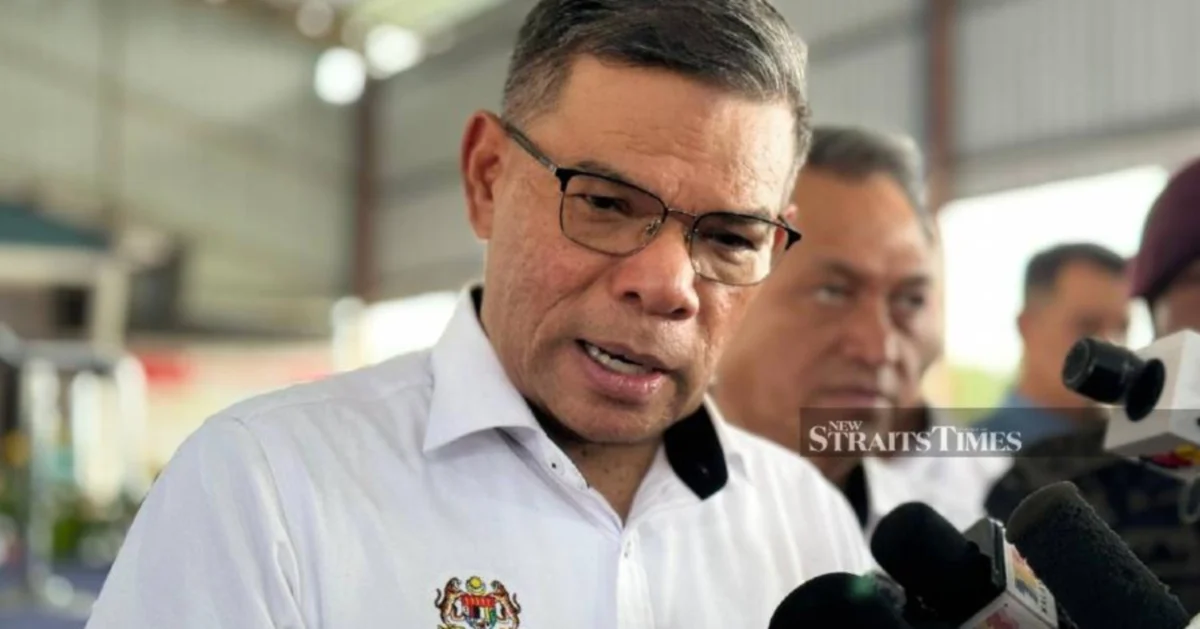
Prime Minister Datuk Seri Anwar Ibrahim has given the green light for RM22 million in government spending directed towards equipping the Malaysian Border Control and Protection Agency with firearms, tactical gear, and other operational equipment needed for enhanced border management. The allocation represents a significant commitment to strengthening the nation's capacity to monitor and control activities at its land and sea boundaries.
The announcement, made through Defence Minister Mohamed Saifuddin Nasution, reflects the government's recognition that Malaysia's border regions require modernised and well-equipped enforcement personnel to meet contemporary security challenges. The MCBA, as the agency responsible for border control and protection, faces complex operational demands across Malaysia's extensive land frontiers with Thailand, Brunei, and Indonesia, as well as its maritime boundaries.
Equipping border control personnel with appropriate firearms and supporting equipment is essential for maintaining operational effectiveness in remote and sometimes hostile terrain. The funds allocated are expected to enhance the agency's ability to respond to threats including smuggling operations, illegal immigration, and other cross-border criminal activities that regularly test Malaysia's security apparatus.
Border security has become an increasingly pressing concern across Southeast Asia, where trafficking networks and transnational criminal syndicates exploit porous boundaries to move contraband and illicit goods. Malaysia's geography places it at particular risk, given its position as a transit hub in Southeast Asian trade routes. The investment in MCBA capabilities acknowledges this vulnerability and signals governmental intent to tighten controls.
The timing of the approval aligns with broader regional trends towards increased border enforcement spending. Neighbouring countries have similarly invested in upgrading their respective border management agencies, recognizing that effective boundary control requires sustained capital investment beyond routine operational budgets. Malaysia's approach positions it within this regional security architecture.
Operational effectiveness in border protection depends heavily on personnel having access to reliable, modern equipment. Firearms procurement for government agencies involves rigorous procurement processes and training requirements to ensure responsible deployment. The RM22 million allocation will need to address not only purchasing weapons systems but also the supporting infrastructure, maintenance systems, and training frameworks necessary for professional border operations.
The MCBA was established as part of Malaysia's restructuring of border management agencies, consolidating various border-related functions under unified command. This organisational reform aimed to improve coordination and eliminate bureaucratic inefficiencies that had previously hampered border security responses. Adequate equipment funding is crucial to realizing the intended benefits of this reorganisation.
Malaysia's border regions extend across densely forested and mountainous terrain, particularly along the Thailand boundary in Peninsular Malaysia, where challenging geography complicates enforcement efforts. Maritime borders spanning thousands of kilometres add further complexity, requiring personnel capable of operating in diverse environments. Equipment budgets must account for these varied operational contexts.
The allocation also represents confidence in the MCBA's institutional capacity to utilize resources effectively. Proper equipment procurement in government agencies requires transparent processes, professional management, and accountability mechanisms to ensure taxpayer funds achieve intended security outcomes. The approval implies that authorities are satisfied with institutional frameworks governing the agency's operations.
From a regional perspective, Malaysia's investment in border control capabilities contributes to broader Southeast Asian stability. Effective border management by any nation benefits its neighbours by reducing transnational criminal activity and enhancing overall regional security. This interconnected approach to security has become standard thinking among ASEAN governments managing shared boundaries.
The financial commitment also reflects domestic political priorities around national security and law enforcement. Border security resonates with Malaysian voters concerned about illegal immigration, smuggling, and the maintenance of national sovereignty. Public spending on visible security infrastructure typically receives broad political support across the spectrum.
Looking forward, the RM22 million authorization represents an initial investment that may set precedent for future equipment upgrades. Modern security operations involve continuous adaptation as threats evolve and technology advances. Establishing a sustainable funding framework for border agency modernization will likely remain on government policy agendas in coming years.
Successful border protection ultimately depends on sustained commitment combining adequate funding, professional personnel, strategic planning, and regional cooperation. Malaysia's latest equipment approval constitutes one component of this multifaceted approach, demonstrating governmental willingness to invest in securing the nation's boundaries.