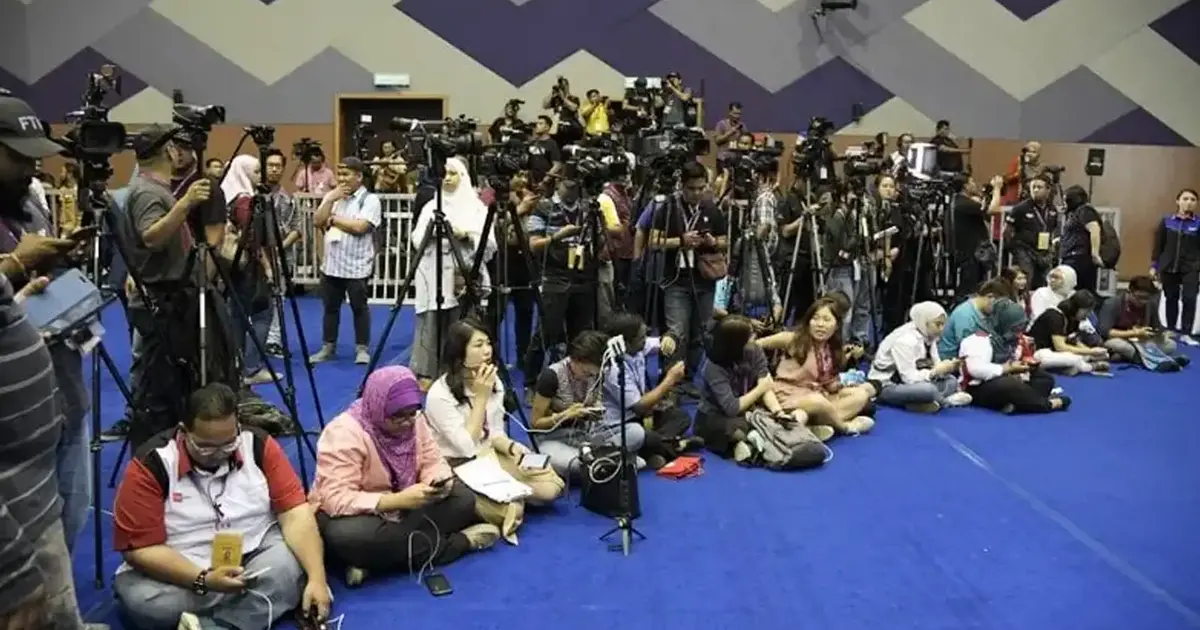
Prime Minister Anwar Ibrahim has articulated a new framework for addressing complaints against media practitioners, emphasizing that allegations must navigate through the Malaysian Media Council as an initial checkpoint before regulatory bodies or law enforcement agencies intervene. This procedural approach represents an attempt to create institutional guardrails around press accountability while ostensibly preserving editorial independence.
The Malaysian Media Council, a self-regulatory body comprising industry representatives and journalism professionals, would serve as a first-instance forum for vetting allegations against journalists and news organizations. By channelling grievances through this intermediary body rather than directing them immediately to government agencies or courts, the administration suggests it intends to insulate media regulation from potential political interference while maintaining checks on journalistic conduct.
This mechanism carries particular significance in Malaysia's political landscape, where press freedom and government accountability have long existed in tension. Previous administrations have faced criticism from international media watchdogs and civil society organizations for using defamation laws, sedition provisions, and other legal instruments to inhibit critical coverage. The current government's emphasis on involving an ostensibly independent council suggests a deliberate differentiation from those approaches, though observers will scrutinize whether the council maintains genuine autonomy from executive influence.
The Malaysian Media Council functions as a quasi-judicial body tasked with investigating complaints, mediating disputes, and issuing advisory findings on ethical breaches. By positioning this body as the mandatory first stop, the framework theoretically creates space for industry self-regulation to address concerns before heavier-handed governmental mechanisms come into play. This mirrors approaches adopted in democracies with mature media institutions, where ombudsmen and press councils serve as buffers between state power and newsrooms.
However, the practical implications of this framework warrant careful examination. Complainants must now navigate an additional bureaucratic layer, potentially lengthening resolution timelines and frustrating those seeking swift redress. Simultaneously, the council's ability to enforce recommendations remains limited; without clear mechanisms to translate council findings into tangible consequences, the system risks becoming toothless when addressing serious ethical violations or systematic misconduct by powerful news organizations.
For Malaysian journalists and media organizations, the clarification offers modest assurance against capricious enforcement action, yet introduces uncertainties about how the council will interpret its mandate. The body's composition, decision-making processes, and appeal mechanisms will determine whether it functions as a genuinely independent arbiter or an extension of government messaging objectives. Recent years have demonstrated how regulatory mechanisms can be weaponized against inconvenient reporting, particularly regarding matters touching on governance, corruption, or official missteps.
The timing of this announcement reflects ongoing negotiations over press freedom in the post-2022 Malaysian political landscape. The current administration, which succeeded a government credibly accused of media intimidation and press censorship, has positioned itself as committed to democratic norms. Yet systemic pressures persist: government entities remain powerful advertisers capable of withdrawing support, opposition to unfavourable coverage continues, and legal frameworks originally designed for authoritarian control remain on the books.
Regional observers monitoring Malaysia's democratic trajectory will view this mechanism as indicative of the administration's evolving relationship with institutional checks on executive power. Southeast Asia's media landscape has contracted significantly, with governments across the region employing increasingly sophisticated techniques to constrain critical journalism. Whether Malaysia can maintain or expand press freedoms depends substantially on whether such frameworks genuinely protect editorial independence or merely provide a veneer of accountability masking continued state control.
For international media organizations and foreign correspondents operating in Malaysia, this clarification provides procedural transparency, though concerns about substantive protections remain. The Malaysian Media Council's response time, decision quality, and willingness to challenge powerful complainants—including government entities—will ultimately determine the framework's credibility. International press freedom organizations will likely monitor the council's record closely for evidence of bias or political capture.
The broader question underlying this mechanism concerns how democracies navigate the legitimate need for accountability in journalism against the existential danger of governmental suppression through regulatory overreach. Media organizations undoubtedly have ethical obligations to accuracy, fairness, and public interest, yet history demonstrates repeatedly that government-defined standards for "responsible journalism" frequently translate into suppression of inconvenient truths. Malaysia's implementation of this framework will test whether institutional separation and procedural formality can genuinely constrain such pressures or whether they simply obscure continuing patterns of control.

