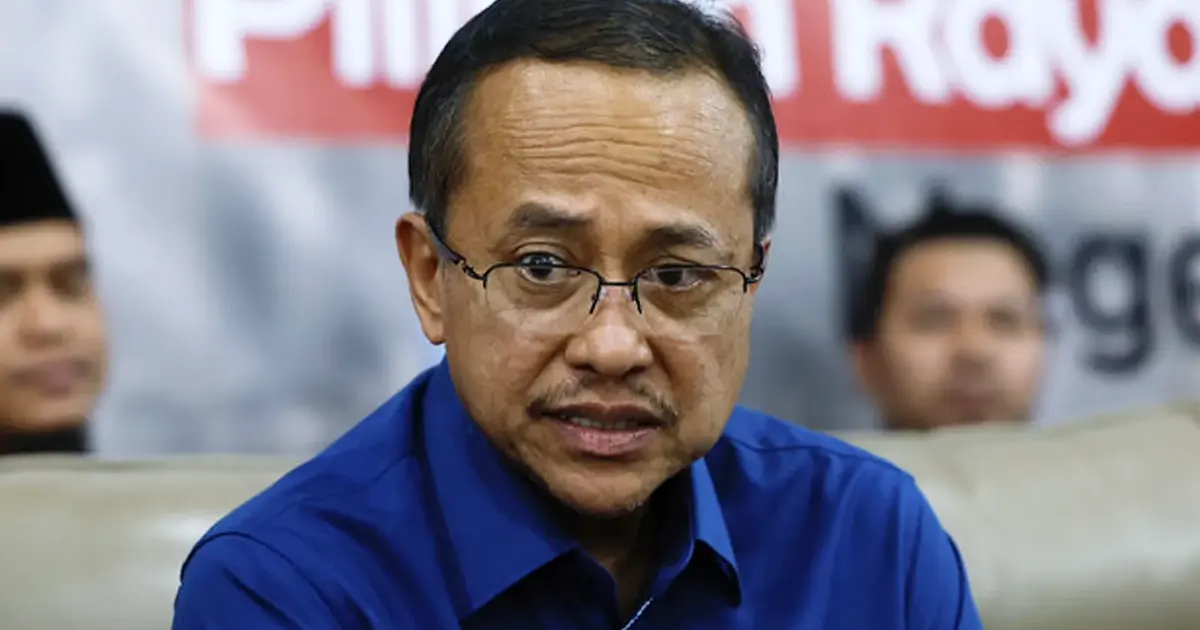
Perikatan Nasional chairman Samsuri Mokhtar has moved to quell mounting speculation about potential confusion arising from the coalition's branding arrangement, where both PAS and Bersatu are permitted to deploy the PN logo in their respective campaigns. The clarification comes amid ongoing scrutiny of how the populist-Islamist alliance manages its internal mechanics, particularly as the coalition seeks to consolidate its growing influence across Malaysian politics.
The core of Samsuri's reassurance centres on a fundamental operational principle: the two component parties operate within clearly delineated territorial boundaries. By contesting different parliamentary and state seats, PAS and Bersatu effectively eliminate the scenario where voters in the same constituency might encounter candidates from both parties using identical coalition imagery. This separation of electoral turfs has become the coalition's primary defence against claims that shared branding could degrade campaign clarity or muddle voter choice at the ballot box.
For Malaysian observers, the PN logo question reflects deeper tensions within multi-party coalitions that have become increasingly complex. Unlike the more traditional gatekeeping functions of established coalitions such as Barisan Nasional or Pakatan Harapan, Perikatan Nasional operates as a younger, more fluid formation with less consolidated institutional structures. The permission granted to PAS and Bersatu to both use PN's logo represents an attempt to project unified strength while accommodating the constituent parties' individual brand recognition—a balancing act that often generates friction.
PAS, the larger partner by electoral reach, has consistently leveraged Islamist positioning and grassroots organizational capacity, particularly in rural and semi-urban constituencies across the Peninsula and Sabah. Bersatu, by contrast, draws its support from urban-leaning demographics and maintains its own organizational identity rooted in its break from UMNO. The coalition arrangement allows both parties to benefit from PN's electoral machinery and coordinated messaging without surrendering their distinct party identities, a compromise that would prove impossible within more rigid alliance frameworks.
Samsuri's public statement also serves a tactical purpose within PN's internal power dynamics. By affirming that the logo-sharing arrangement functions smoothly, he signals to party leadership and grassroots members that coalition cohesion remains intact despite occasional public disagreements. The PN alliance has weathered multiple crises since its emergence in 2020, and maintaining the appearance of administrative competence—particularly regarding logistical and electoral coordination—becomes essential for retaining the confidence of component parties and their supporters.
From a voter perspective, the practical implications depend heavily on local context. In constituencies where PAS fields candidates, voters accustomed to the party's distinctive green imagery and Islamic messaging will encounter PN branding alongside existing party symbols. Where Bersatu contests, a different demographic cohort encounters the coalition logo, potentially attracting voters who might not automatically identify with either parent party's ideological positioning but find the PN coalition umbrella appealing. This segmentation strategy effectively expands the coalition's appeal across previously disparate voter clusters.
The arrangement also reflects broader strategic calculations within Malaysian electoral competition. By allowing both PAS and Bersatu autonomous use of the PN logo, the coalition avoids the perception of subordinating either party to the other—a concern that could trigger internal instability. Such autonomy proves particularly crucial for PAS, which commands the larger parliamentary representation and maintains powerful state governments. Any suggestion that Bersatu exercised preferential control over PN branding could trigger resentment among PAS delegates and undermine the coalition's stability.
However, international and domestic observers have raised questions about whether such flexibility in branding creates unintended consequences. Voters in constituencies where neither PAS nor Bersatu contests—or where coalition partner Gabungan Parti Sarawak operates under its own banner—may encounter fragmented messaging about what the Perikatan Nasional actually represents beyond a temporary electoral arrangement. This ambiguity potentially weakens the coalition's capacity to function as a cohesive political force on national policy questions.
Samsuri's statement additionally carries implications for understanding how Southeast Asian coalitions navigate brand management in increasingly crowded electoral landscapes. Malaysia's multi-ethnic, multi-party system demands sophisticated coalition choreography, and the PN model demonstrates one approach: permitting internal plurality while maintaining sufficient unified identity for electoral purposes. Whether this model proves sustainable as the coalition matures remains an open question, particularly if either PAS or Bersatu experiences significant electoral reversal that might trigger re-evaluation of partnership terms.
The PN coalition's logo arrangement ultimately reflects the practical constraints of managing diverse political actors with distinct constituencies, ideological emphases, and organizational structures. Samsuri's confidence that no confusion will emerge from shared branding rests on the assumption that seat division mechanisms function precisely as designed. Should those mechanisms falter—whether through miscommunication, competitive tensions, or unexpected electoral dynamics—the branding issue could rapidly transform from administrative detail into substantive coalition challenge. For now, the chairman's reassurance suggests that Perikatan Nasional leadership believes its structural arrangements sufficiently robust to accommodate this organizational complexity without fracture.

