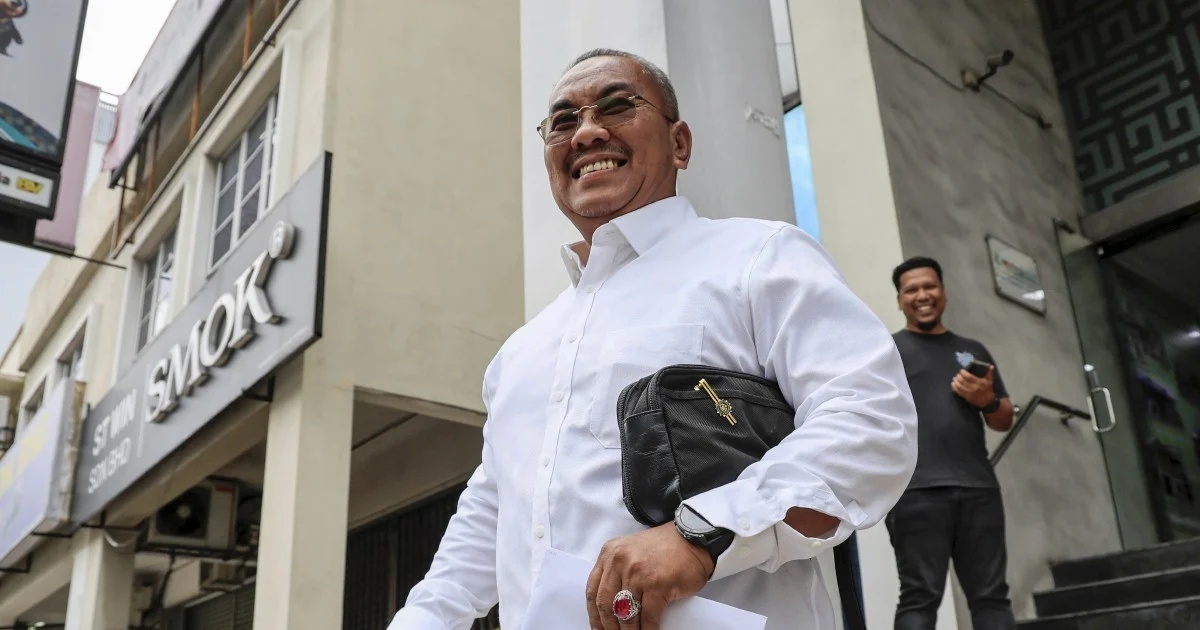
Perikatan Nasional has wrapped up its internal seat allocation process for the forthcoming Johor election, marking a significant milestone in the coalition's election preparation efforts. Datuk Seri Sanusi Md Nor, who serves as the electoral chief for the political alliance, made the announcement in Kuala Lumpur, signalling that negotiations between the various component parties within the coalition have reached a conclusive stage.
The resolution of 34 overlapping constituencies represents the culmination of what are typically complex internal discussions within multi-party coalitions. When several political organisations compete under a single electoral banner, the question of which party contests which seat becomes a delicate matter of political negotiation. Component parties must balance their individual aspirations with the broader coalition strategy, and such discussions frequently test the cohesion and diplomatic skills of coalition leadership.
For Johor specifically, this development carries particular significance given the state's political weight in Malaysian electoral calculations. As the second-largest state by population and a traditional stronghold of various political forces over the decades, Johor elections often serve as a bellwether for broader national political sentiment. The successful conclusion of seat negotiations suggests that PN has been able to maintain internal unity despite the inherent tensions that arise when multiple parties must divide electoral opportunities.
The successful resolution of overlapping seat claims demonstrates the coalition's organisational capacity and the effectiveness of its negotiation mechanisms. Coalition partners must often compromise on their initial demands, accepting seats in areas where they lack strong ground presence in exchange for stronger positions elsewhere. This give-and-take process requires sophisticated electoral analysis and political maturity from all parties involved.
From a strategic perspective, PN's ability to rapidly conclude these negotiations contrasts with the sometimes protracted discussions that other coalitions have experienced in past elections. The Malaysian political landscape has seen instances where seat allocation disputes festered for months, creating public perception problems and undermining coalition messaging. By resolving matters swiftly, PN projects an image of internal cohesion and readiness heading into the electoral campaign.
The 34 overlapping seats that required resolution likely represent areas where two or more PN component parties had legitimate claims based on historical performance, organisational presence, or strategic considerations. These are invariably the most contentious allocations, as they involve genuine disappointments for parties that must yield ground. The fact that agreement has been reached suggests either that compensation arrangements were worked out elsewhere, or that certain parties accepted strategic losses for the sake of coalition stability.
For regional observers and opposition parties, PN's concluded negotiations establish a clear picture of which parties will contest which seats, potentially affecting campaign strategies and voter expectation management. Opposition coalitions must now adjust their own plans accordingly, understanding exactly where they will face PN candidates rather than dealing with uncertainty about the final allocation.
The timing of this announcement also warrants consideration. Completing negotiations early allows the coalition to launch a more unified campaign message, with each party able to fully focus on its respective constituencies without ongoing internal discussions creating distractions. Party machinery in targeted areas can immediately mobilise around designated candidates, and ground-level coordination between coalition partners can commence in earnest.
Johor's strategic importance in Malaysia's political arithmetic cannot be overstated. The state holds significant representation in Parliament and in its own state assembly, and electoral performance here influences both state-level governance prospects and broader perceptions of coalition strength heading into national considerations. A smooth internal process in Johor thus sends reassuring signals to coalition members nationwide that PN leadership can manage the practical challenges of multiparty electoral competition.
The resolution process likely involved input from senior figures across multiple PN parties, reflecting the coalition's structured approach to internal dispute resolution. Rather than allowing disagreements to fester or be resolved through public confrontation, PN appears to have channelled negotiations through established mechanisms, producing an outcome acceptable enough to all parties that public announcements could proceed without immediate contradiction or complaint.
Looking forward, the concluded seat allocation for Johor allows PN to transition focus toward campaign execution, candidate deployment, and messaging strategy. With the internal housekeeping completed, the coalition can present a unified front while individual parties begin their own voter outreach activities in their designated areas. This transition from negotiation to campaign represents a critical juncture where internal alignment must translate into electoral performance.