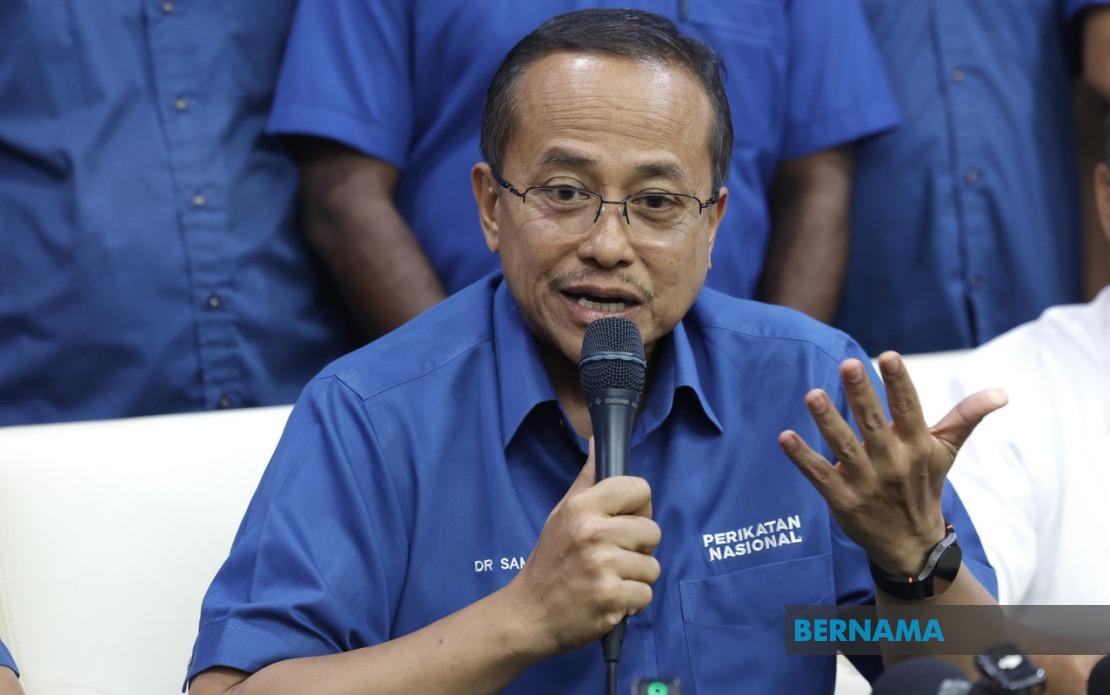
The Perikatan Nasional coalition took a decisive step forward in its preparations for the Negeri Sembilan state election, with the bloc's top decision-making body giving the green light to a unified campaign strategy that consolidates its fractured power base in the state. At an extraordinary meeting held in Seremban on July 16, the PN Supreme Council rubber-stamped the distribution of electoral seats among its component organizations—PAS, Gerakan, Wawasan, and MIPP—while cementing a crucial agreement that all nominated contenders would compete under the common Perikatan Nasional emblem rather than their respective party symbols.
The endorsement, announced by PN chairman Datuk Seri Dr Ahmad Samsuri Mokhtar through a formal statement, represents a calculated bid to project unity at a critical juncture when Malaysia's opposition coalition faces internal tensions and electoral headwinds. The decision to present a single visual identity across Negeri Sembilan reflects the coalition leadership's recognition that fragmented party logos could undermine brand recognition and voter mobilization efforts. By insisting on the PN symbol, the coalition aims to foster a perception of cohesion that transcends the individual organizational identities of parties whose historical antagonisms and ideological divergences have frequently surfaced during previous electoral cycles.
Dr Ahmad Samsuri framed the electoral push in ambitious terms, characterizing the campaign as fundamentally oriented toward advancing public welfare, accelerating the state's socioeconomic trajectory, and safeguarding the delicate religious and ethnic pluralism that underpins both Negeri Sembilan and the broader Malaysian federation. This rhetorical positioning suggests the coalition intends to contest not merely on narrow partisan grounds but by positioning itself as a guardian of societal stability—a narrative device that could resonate with centrist and swing voters who worry about social fragmentation. The statement's emphasis on harmony and development, rather than sharp adversarial framing, indicates a strategic calculation that PN's most fertile ground lies among moderate electorate segments rather than ideologically hardened blocs.
The PN chairman's clarification regarding his involvement in preliminary coalition discussions carries particular significance given the political backdrop. Ahmad Samsuri's assertion that all preliminary negotiations occurred with his explicit knowledge and subsequent approval by the Supreme Council was a direct riposte to claims emanating from Bersatu that the party had been marginalized from the seat-allocation process. This preemptive assertion of transparency and consultative procedure suggests PN leadership anticipated criticism and moved to inoculate itself against accusations of unilateral decision-making that could deepen existing organizational rifts.
The statement's timing and content appear strategically calibrated to address simmering tensions within PN that have threatened to destabilize the coalition's electoral positioning. Bersatu president Tan Sri Muhyiddin Yassin had publicly complained that his party was excluded from substantive discussions regarding seat distribution and coordination mechanics with the larger Barisan Nasional coalition. Rather than remaining bound by PN discipline, Muhyiddin opted for a dramatic rupture, announcing that Bersatu would field its own slate of candidates bearing exclusively the Bersatu organizational symbol. This fracturing carries implications well beyond Negeri Sembilan, as it signals broader instability within the opposition's structural arrangements ahead of future national electoral contests.
The divergence between Bersatu and the remainder of the PN coalition crystallizes a fundamental tension within Malaysia's opposition politics. Bersatu, ostensibly the coalition's nominal leader and historically the vehicle through which former Prime Minister Mahathir Mohamad has exercised political influence, finds itself in the paradoxical position of possessing nominal seniority while wielding diminishing practical leverage over coalition decision-making. The party's inability to prevent what it characterizes as sidelining in the Negeri Sembilan arrangement reflects a broader erosion of Bersatu's organizational and political weight, suggesting that PN's other constituents—particularly PAS, which has consolidated significant grassroots machinery in multiple states—now exercise preponderant influence over coalition strategy.
For Negeri Sembilan specifically, the PN-Bersatu split introduces complexity into an already competitive electoral landscape. The state, which possesses a substantial Malay-Muslim demographic but also retains pockets of urban Chinese and Indian middle-class communities, has historically been contested territory where incumbent governing coalitions have faced periodic challenges. The PN's unified approach under a single logo could theoretically streamline campaign messaging and reduce voter confusion regarding which opposition entity to support. Conversely, Bersatu's independent candidacy risks fragmenting the anti-establishment vote, potentially advantaging the sitting government if opposition energies dissipate across competing organizational banners.
The coalition's strategic communications also warrant scrutiny regarding content and framing. The emphasis on welfare, development, and social harmony reflects PN's awareness that crude ideological appeals or confrontational posturing have yielded diminishing electoral returns as Malaysian voters increasingly prioritize bread-and-butter governance competence over factional rhetoric. This pivot toward technocratic and inclusive framing suggests the coalition has absorbed lessons from previous campaigns in which strident communal messaging alienated moderate constituencies while failing to deliver tangible organizational advantages among core support bases.
Beyond the immediate Negeri Sembilan context, the PN-Bersatu rift carries implications for Malaysia's broader political equilibrium. If Bersatu continues to marginalize itself through unilateral withdrawal from collaborative opposition arrangements, the party risks permanent diminishment as a consequential political actor. Conversely, if PN's other constituents consolidate power over coalition direction through exclusionary decision-making, they risk triggering further defections that could ultimately weaken the entire opposition bloc's electoral viability. The Negeri Sembilan election thus becomes a laboratory test case for whether PN can manage internal diversity through transparent consultation and power-sharing, or whether centrifugal forces will continue fragmenting Malaysia's opposition into competing micro-organizations incapable of mounting coherent challenges to incumbent governance structures.

