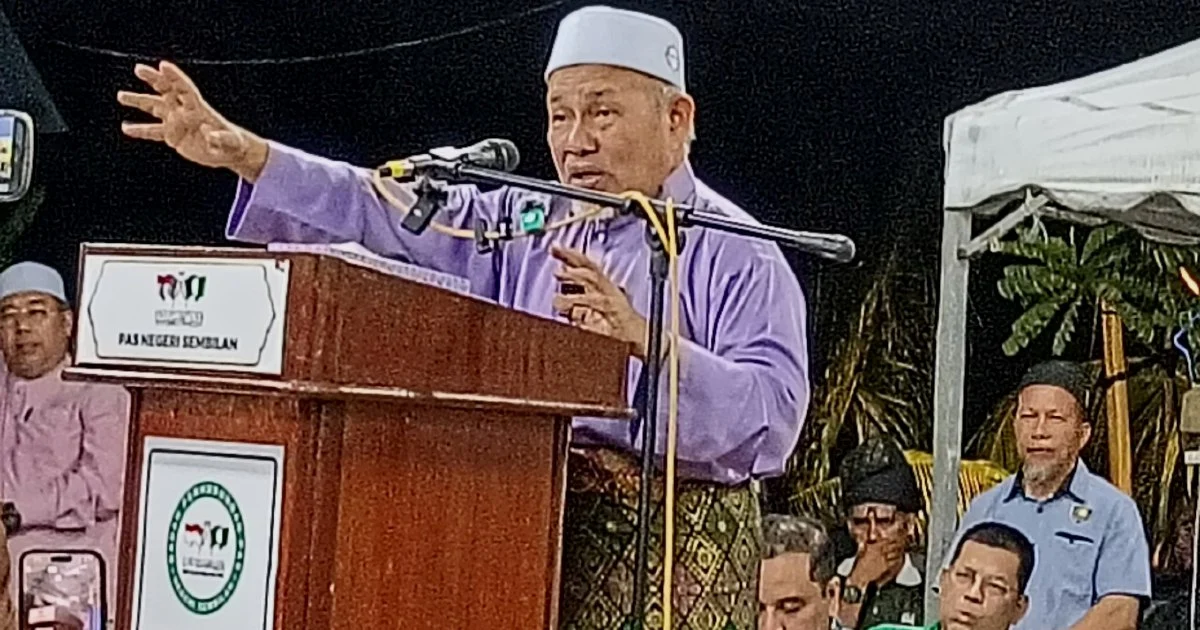
The question of who holds ultimate authority within Perikatan Nasional has flared into open dispute once again, with PAS deputy president Datuk Seri Tuan Ibrahim Tuan Man pushing back against suggestions that Bersatu exercises sole ownership over the coalition. His remarks underscore deepening tensions within the political alliance and raise questions about governance structures that remain murky to outsiders.
Tuan Ibrahim's intervention signals that PAS, one of PN's most powerful member organisations, views itself as an equal stakeholder rather than a junior partner in the coalition. This distinction matters considerably in Malaysian politics, where coalition strength often derives from how evenly power is distributed among constituents. When one party dominates, friction typically follows as smaller members feel sidelined or manipulated. PN's formula has always presented itself as a partnership between Bersatu, PAS, and other components, yet recent conflicts suggest this foundation may be eroding.
Bersatu's position as the coalition chairman has occasionally led to perceptions that it wields disproportionate influence over PN's direction and decision-making. The party's role in anchoring the Perikatan alliance during its formation, and its continued presence in federal government, may have reinforced this impression both within PN circles and among the broader public. However, Tuan Ibrahim's pushback indicates that PAS leadership, which commands substantial parliamentary seats and grassroots organisation, is unwilling to accept any narrative placing Bersatu in a controlling position.
The coalition ownership dispute reflects deeper anxieties about representation and institutional fairness that plague most multi-party alliances in Malaysia. When constituencies and supporters see their party relegated to secondary status within a supposed partnership, they lose confidence in the coalition's legitimacy and longevity. PAS's forthrightness in this instance may be defensive positioning ahead of internal negotiations or potential disputes over candidate selection and policy direction.
Tuan Ibrahim's statement also carries implications for PN's electoral prospects and internal stability heading forward. A coalition perceived as genuinely collective tends to campaign more effectively and retain membership support longer than one dominated by a single party. Conversely, if member parties continue airing grievances publicly, as they did here, the coalition risks appearing divided to voters and vulnerable to opposition claims that it lacks cohesion.
The specifics of what triggered Tuan Ibrahim's remarks—referenced in the original reporting as comments from "Peja"—remain central to understanding the nature of this latest friction. Without clarity on what sparked the dispute, it is difficult to assess whether this represents a passing disagreement over terminology or indicates more substantive conflict over coalition governance. The fact that such disagreements reach public platforms suggests that private channels for resolving tensions within PN may be ineffective.
From a Malaysian electoral perspective, the health of PN matters considerably because the coalition holds significant parliamentary influence and remains a potential kingmaker in any future government formation scenario. Should PN fracture or become dysfunctional, it would reshape the entire political landscape and alter calculations for both the current administration and opposition blocs. This makes every public disagreement between PN components newsworthy and consequential, not merely routine political banter.
PAS's assertiveness in this instance reflects the party's strategic confidence within the PN arrangement. As one of Malaysia's best-organised political entities with deep roots in certain regions and among particular voter demographics, PAS commands respect and cannot be easily marginalised. Tuan Ibrahim's willingness to speak up publicly suggests that PAS leadership believes its position sufficiently strong to challenge Bersatu without risking expulsion or irrelevance within the coalition.
The broader Southeast Asian context adds another dimension to this dispute. Coalition politics across the region frequently struggles with power-sharing arrangements that satisfy all parties equally. Whether in Thailand, Indonesia, or elsewhere, multiparty governments tend toward instability when constituents feel they lack adequate voice in decision-making. PN's experience mirrors these regional patterns, suggesting that the challenges facing Malaysian coalitions reflect universal tensions within plural political systems.
Moving forward, PN's leadership will need to clarify governance structures and decision-making protocols if it wishes to prevent recurring disputes from becoming public spectacles that undermine coalition credibility. Clearer written agreements about how each party participates in major decisions, how leadership roles rotate or balance, and what mechanisms exist for resolving disagreements internally would address some of the ambiguity that currently permits competing interpretations of PN's nature.
Tuan Ibrahim's intervention ultimately serves notice that PAS will not passively accept any diminishment of its status within Perikatan Nasional. Whether through formal restructuring or through such public declarations, member parties appear increasingly willing to assert their prerogatives. For Malaysian voters and political observers, these disputes provide valuable windows into how coalition partners actually relate to one another and how genuinely equal their partnership truly is.