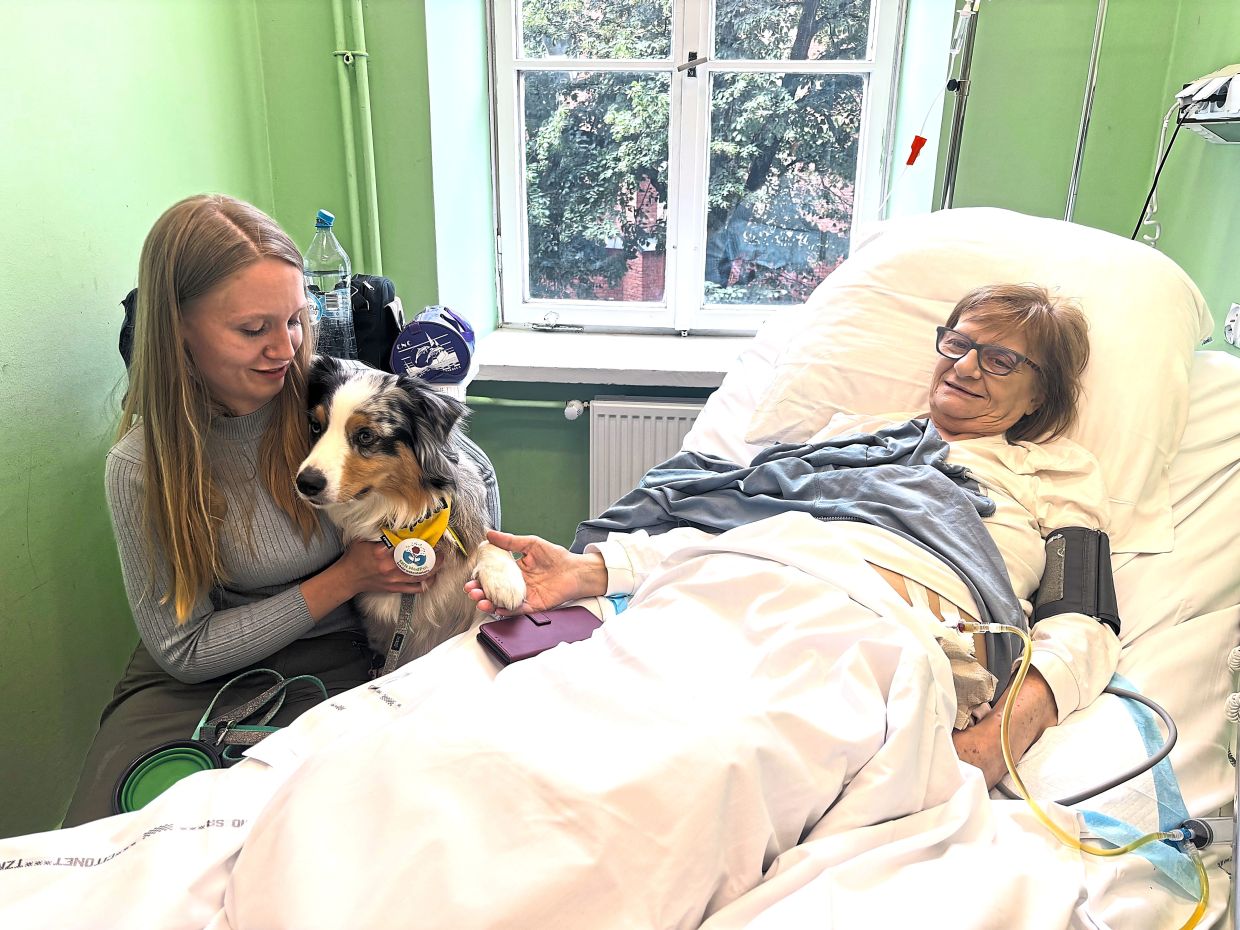
Poland is moving toward enshrining a legal right for terminally ill patients to receive visits from their companion animals while in hospice and palliative care wards, a development that underscores growing recognition of pets' role in supporting emotional wellbeing during the final stages of life. The proposed legislation, now before parliament's health committee, stems from efforts by Dr Tomasz Dzierzanowski, director of the Palliative Medicine Clinic at the Medical University of Warsaw, and has been championed by Katarzyna Piekarska, a lawmaker from Prime Minister Donald Tusk's centrist party. While informal pet visitation already occurs in many Polish medical facilities, the new law would establish this practice as an explicit patient right, removing ambiguity and ensuring consistent access across all palliative care settings.
The initiative gained momentum through deeply personal experiences. One patient named Waldemar, facing a terminal cancer diagnosis, expressed profound anxiety not about his own mortality but about the fate of his two cats. When Dzierzanowski arranged for the animals to be brought into the ward, the emotional reunion—marked by the patient's tears of joy and the visible emotional response of the cats, other patients, and hospital staff—crystallised the doctor's conviction that this issue demanded formal policy attention. Similarly, Ewa Lutka-Krawczyk, a 70-year-old admitted to the Warsaw hospital's palliative ward following her gallbladder cancer diagnosis, had become preoccupied with the wellbeing of Gaja, a shelter dog she adopted three years earlier. Her primary concern upon learning of her terminal prognosis was not her own mortality but whether she would live long enough to ensure Gaja would not be abandoned. Left at home, the dog has struggled to eat, sensing the disruption in her owner's presence.
Dzierzanowski articulates a broader social concern underlying the pet visitation initiative: Poland, like many developed nations, faces what he characterises as "an epidemic of loneliness" among terminally ill populations. His clinical experience reveals a troubling pattern in which many elderly patients have outlived their peers and social networks, arriving at their final chapter in profound isolation. Young patients, too, increasingly enter palliative care wards without the robust friendship networks that previous generations typically cultivated. In an era dominated by digital communication and virtual connections, many lack the deep interpersonal bonds necessary to provide meaningful human companionship during terminal illness. Dzierzanowski's philosophy—that "no patient dies alone"—extends beyond the platitude to acknowledge a harsh reality: when human companions are absent, animal companions can provide essential psychological comfort and a sense of continued connection to the world beyond the hospital bed.
The therapeutic value of animal presence in end-of-life care extends beyond patients themselves. During a visit by Kluska, an Australian shepherd therapy dog whose name translates to "dumpling," both patients and hospital staff demonstrated immediate engagement and emotional uplift. Wojciech Zelik, a 58-year-old patient admitted with a tumour, roused himself to admire the dog and interact with her, his focus shifting momentarily from his condition to the simple pleasure of stroking her fur. Hospital staff members—nurses, cooks, and other workers bearing the emotional weight of caring for dying patients—equally sought moments of interaction with the dog, evidencing the stress-relieving benefits that extend through entire care units. Kluska's handler, Malgorzata Brzozowska, a medical student, notes that therapeutic benefits amplify substantially when patients receive visits from their own animals rather than visiting therapy dogs. The familiar presence of a pet with whom the patient shares history and emotional attachment provides deeper psychological reassurance than encounters with unfamiliar animals.
The distinction between therapy animals and personal pets holds particular significance for understanding the initiative's rationale. While trained therapy dogs offer valuable distraction and momentary stress relief, a patient's own pet represents continuity, identity, and the bonds that defined life before illness. For Lutka-Krawczyk, the prospect of seeing Gaja offered not merely entertainment but reassurance that a critical relationship would persist through her final days. For the animal, too, reunion carries profound meaning. Brzozowska observes that when owners and their pets are reunited, the animals themselves visibly relax, suggesting they comprehend the reunion after an absence. This mutual calming effect—the patient reassured by the animal's physical presence, the animal released from anxiety about their owner's inexplicable disappearance—creates a therapeutic loop that benefits both parties.
Piekarska, the legislator advancing the proposal, emphasises that formalising pet visitation rights represents not a revolutionary change but rather the codification of existing informal practice. "In reality, animals in hospitals are already there anyway," she observed, "that's why it needs to be regulated in the law." Her statement highlights a common governance challenge: practices that have evolved organically within institutions often lack formal legal foundation, making them vulnerable to inconsistent application or sudden prohibition. By enshrining pet visitation as a statutory right, the legislation would eliminate discretionary barriers and ensure that patients' rights to maintain crucial emotional connections are protected across all palliative care facilities regardless of individual administrator preferences or institutional policies.
The timing of this legislative initiative reflects broader European trends toward recognising non-human animal relationships as legitimate dimensions of healthcare. Several other European countries have increasingly permitted or encouraged pet visitation in hospitals and care facilities, though Poland's proposal to specifically mandate this right in end-of-life settings represents a distinctive approach. The focus on palliative care—rather than acute care or general wards—acknowledges that the emotional and spiritual needs of dying patients warrant particular consideration. At this stage of life, when curative interventions have been exhausted and comfort becomes the paramount concern, the presence of a beloved companion animal addresses fundamental human needs for connection, continuity, and comfort that conventional medical treatment cannot provide.
The medical establishment's embrace of pet visitation, exemplified by Dzierzanowski's leadership, signals a shift in how healthcare professionals conceptualise wellbeing during terminal illness. Rather than viewing the patient as merely a body requiring symptom management, this approach recognises the patient as an integrated person embedded within relationships that extend beyond the hospital walls. The presence of a pet validates the patient's identity, history, and emotional reality at a moment when institutional medicine often strips away individual particularity. For healthcare workers, facilitating these connections aligns palliative care philosophy with its stated objective: to enhance quality of life and dignity during dying, not merely to manage pain and physical symptoms.
For Malaysian and Southeast Asian readers, Poland's legislative development offers instructive perspective on how healthcare systems might formally recognise the role of companion animals in end-of-life care. While cultural attitudes toward animals and palliative medicine vary substantially across the region, the underlying recognition that terminally ill individuals require emotional support beyond pharmacological intervention resonates universally. As healthcare systems in Malaysia and neighbouring countries expand palliative care provision—a critical gap in many regional health systems—policymakers might consider how companion animals could enhance the dignity and comfort of dying patients. The Polish model suggests that formal legislative protection, rather than relying on individual clinician discretion, ensures consistent implementation and protects vulnerable patients from arbitrary restrictions.
The human stories animating this legislative effort ultimately transcend borders and healthcare systems. Ewa Lutka-Krawczyk's anxieties about Gaja, Waldemar's tears upon reunion with his cats, Wojciech Zelik's simple pleasure in stroking Kluska's fur—these moments illuminate fundamental truths about human-animal bonds and their capacity to sustain meaning and comfort even as physical life diminishes. The proposed Polish legislation acknowledges that at life's end, when mortality becomes undeniable and medical intervention reaches its limits, the presence of a loved one—whether human or animal—constitutes not a luxury amenity but an essential component of dignified, compassionate care.

