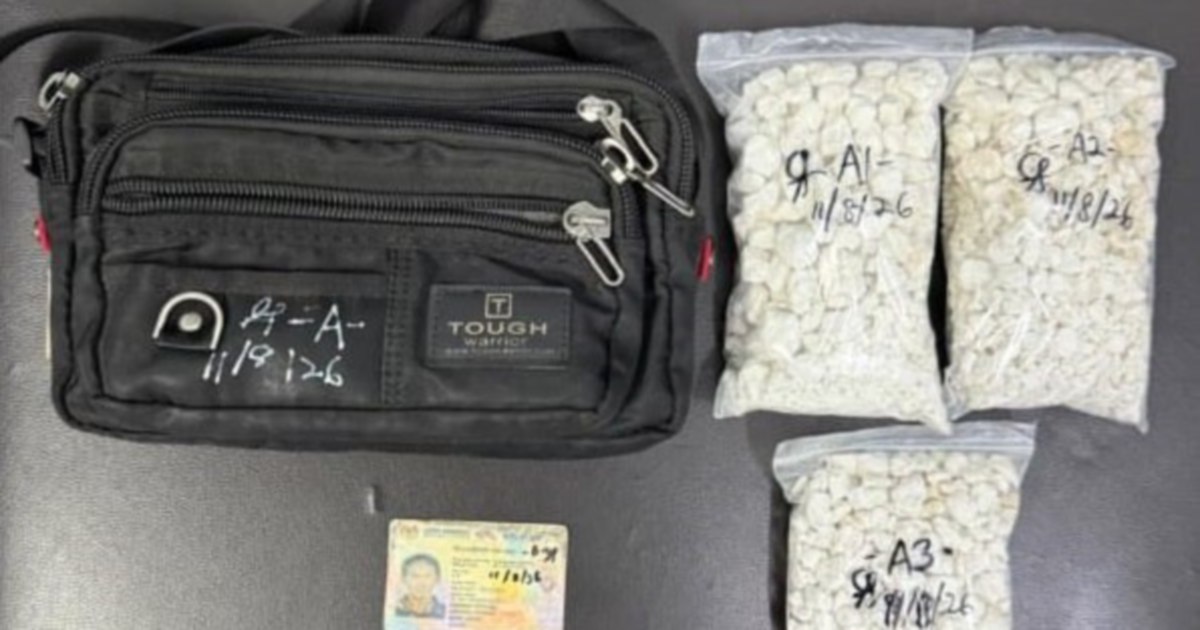
Law enforcement officers in Johor have successfully intercepted a significant narcotics shipment as part of their ongoing battle against drug trafficking in the state. The operation, carried out in the early hours of the day in Simpang Renggam, resulted in the confiscation of 1.055kg of heroin with an estimated street value of RM10,128. A 42-year-old male suspect was taken into custody at the scene, marking another arrest in the region's persistent fight against illicit drug distribution networks.
Simang Renggam, located within the Kluang district in southern Johor, has been an area of concern for law enforcement agencies monitoring trafficking corridors. The location's strategic position relative to major highways and residential zones has made it a hotspot for narcotics operations, prompting regular police patrols and targeted enforcement activities. This particular raid demonstrates the continued vigilance of local narcotics units in disrupting supply chains before substances reach consumers in neighbouring communities.
The timing of the operation—conducted during early morning hours—reflects standard police methodology for combating organized drug distribution. Law enforcement typically conduct surprise raids during these periods to maximize the likelihood of catching suspects off guard and minimizing risks associated with alerting wider trafficking networks. The early morning approach also reduces opportunities for evidence disposal or suspect escape, factors that significantly impact the success rate of narcotics operations across Malaysia.
The confiscated quantity represents a moderately substantial seizure in regional context. Heroin remains one of the most problematic controlled substances circulating through Peninsular Malaysia, with trafficking patterns often originating from northern transit points before distribution southward. The RM10,128 valuation reflects typical street-level pricing in Malaysian markets, where the cost per gram varies based on purity levels and local demand fluctuations. Understanding these price points helps authorities estimate the scale of distribution networks and their commercial viability.
The arrested individual faces charges under the Dangerous Drugs Act, legislation that carries severe penalties including lengthy imprisonment and substantial fines depending on the quantity involved and prior criminal history. Malaysian drug laws distinguish between trafficking and possession charges, with trafficking thresholds set at levels well below the 1.055kg seized in this case. This determination typically moves the offense into serious trafficking territory, attracting mandatory minimum sentences upon conviction.
Police operations targeting heroin distribution have intensified across Johor in recent years, reflecting broader national concerns about synthetic and natural opioid prevalence. The state's status as a commercial hub and its proximity to major ports create conditions favourable for trafficking organizations seeking to move contraband through Malaysia en route to regional markets. Local enforcement agencies coordinate with federal narcotics units to identify and dismantle these distribution networks at their operational nodes.
The Simpang Renggam raid illustrates how community intelligence and systematic police work combine to disrupt drug supplies. Tip-offs from residents, surveillance activities, and pattern analysis of trafficking movements all contribute to successful enforcement outcomes. Police maintained that continued public cooperation remains essential for identifying suspicious activities and locations where narcotics distribution occurs, reinforcing the partnership between communities and law enforcement in combating this persistent social challenge.
For residents across Johor and the broader Southeast Asian region, such seizures represent visible progress in countering drug trafficking, though authorities acknowledge the ongoing nature of this enforcement struggle. Each successful raid reduces available supplies temporarily while disrupting established distribution patterns, yet replacement supplies frequently flow through alternative routes or via new networks. This reality underpins the need for sustained, long-term strategies complementing immediate enforcement actions.
The apprehended suspect remains in police custody pending further investigations and potential charges to be formally filed. The case will likely proceed through Malaysia's criminal justice system following established protocols for narcotics offenses. Beyond the immediate legal proceedings, this seizure contributes to national statistics on drug enforcement effectiveness and provides law enforcement with valuable intelligence about trafficking methodologies, routes, and organizational structures operating within Johor.

