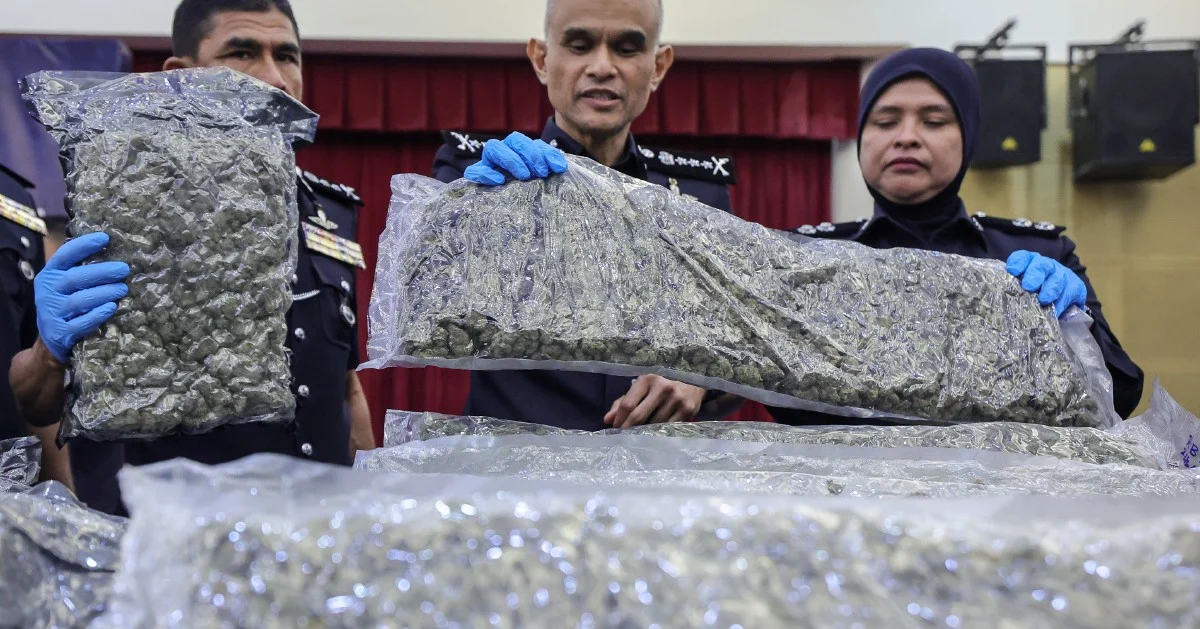
Malaysia's national police force has delivered a substantial blow against international narcotics trafficking, uncovering a coordinated drug smuggling network that attempted to move half a tonne of cannabis through the country's primary air gateway. Since January, officers working under the Shah Alam police division have impounded 650 kilogrammes of cannabis buds at Kuala Lumpur International Airport whilst simultaneously arresting 38 suspects, a mixture of Malaysian nationals and foreign operatives, as part of an expansive investigation into organised drug trafficking.
The seizure represents one of the more substantial cannabis interceptions recorded at KLIA in recent years and underscores the persistent challenges Malaysian law enforcement faces in combating the transnational movement of illicit substances through commercial aviation channels. International airports remain high-priority targets for drug syndicates because they offer direct access to global distribution networks, with trafficking organisations exploiting the volume of passenger and cargo traffic to mask their operations. The sheer quantity recovered in this instance—650 kilogrammes—suggests a professionally organised enterprise with considerable financial backing and established smuggling infrastructure.
The geographical significance of KLIA as a regional transportation hub makes Malaysia a transit point for drugs destined for markets across Southeast Asia and beyond. The airport's position connecting Europe, the Middle East, and the broader Asia-Pacific region creates multiple vulnerability points where drugs can be repositioned onto connecting flights or concealed within legitimate cargo shipments. This particular operation appears to have targeted that vulnerability through a multi-layered approach involving ground handlers, airport workers, or other insider facilitators, a pattern increasingly observed in major regional drug busts.
The involvement of foreign nationals in the trafficking network points to the transnational character of modern drug operations and the complex web of international criminal relationships that support large-scale smuggling ventures. Malaysian authorities have historically cooperated with international counterparts through Interpol and bilateral arrangements to dismantle such networks, recognising that drug trafficking rarely operates within national boundaries. The simultaneous arrests of both local and foreign participants suggest coordinated investigative work across multiple jurisdictions, with intelligence-sharing enabling authorities to identify and apprehend participants at critical junctures in the supply chain.
Cannabis trafficking has intensified across Southeast Asia as global demand for the substance expands, particularly given regulatory changes in certain jurisdictions that have created lucrative black-market opportunities. Malaysia maintains one of the region's strictest drug enforcement frameworks, with trafficking offences carrying severe penalties including lengthy imprisonment and, in aggravated cases, capital punishment. This legal environment serves as a significant deterrent, yet criminal organisations continue attempting to move cannabis through Malaysian territory, calculating that potential profits outweigh the risks of detection and prosecution.
The 650-kilogramme haul also reflects evolving smuggling methodologies as traffickers adapt to enhanced airport security measures and canine detection units. Larger shipments are sometimes fragmented across multiple packages, hidden within dual-compartment luggage, or concealed in food items and other innocuous goods designed to evade standard screening procedures. The successful interception in this case suggests that police reconnaissance and intelligence work identified suspicious patterns—potentially through tracking known traffickers, monitoring suspicious financial transactions, or intelligence from international partners—before the contraband entered circulation.
The scale of arrests—38 individuals—indicates that investigators pursued a comprehensive approach extending beyond the airport perimeter to dismantle supply chains and distribution networks. This typically involves tracking shipments to warehouses, surveillance of suspected dealers and couriers, and identification of financiers bankrolling operations. Such methodology produces more durable impacts on trafficking organisations than single-point seizures, as it removes multiple operational layers and disrupts the human networks essential for maintaining smuggling viability.
For Malaysian security authorities, this operation demonstrates the importance of sustained investment in airport interdiction capabilities, intelligence analysis, and international cooperation frameworks. KLIA handles approximately 65 million passengers annually and processes thousands of tonnes of cargo, creating a massive surveillance challenge where drug operatives seek concealment within legitimate travel flows. The police achievement here reflects committed resource allocation and sophisticated detection methods, yet also illustrates that smuggling attempts remain persistent because profit margins in the illicit drug trade continue attracting criminal participation despite enforcement risks.
The investigation's broader implications extend to regional security dynamics, as Malaysia sits within trafficking corridors connecting source countries in the Golden Triangle and other production regions with consumer markets in East Asia and beyond. Enhanced police operations at KLIA contribute to the wider Southeast Asian counter-narcotics architecture, raising costs for traffickers and forcing them toward less-efficient smuggling routes. Each major interdiction generates valuable intelligence about methodology, distribution networks, and financial flows that strengthens ongoing investigations.
Moving forward, authorities will likely focus on prosecuting the arrested individuals through Malaysia's robust drug enforcement courts whilst pursuing additional investigations into the financial networks and larger organisational structures that funded this particular smuggling venture. The cases will probably proceed under Malaysia's dangerous drugs legislation, with sentences reflecting the substantial quantity involved. Additionally, police will leverage information gleaned from interrogations to identify remaining network participants and intercept future shipments before they reach Malaysian territory, creating a continuous cycle of disruption that incrementally raises barriers to successful trafficking operations.