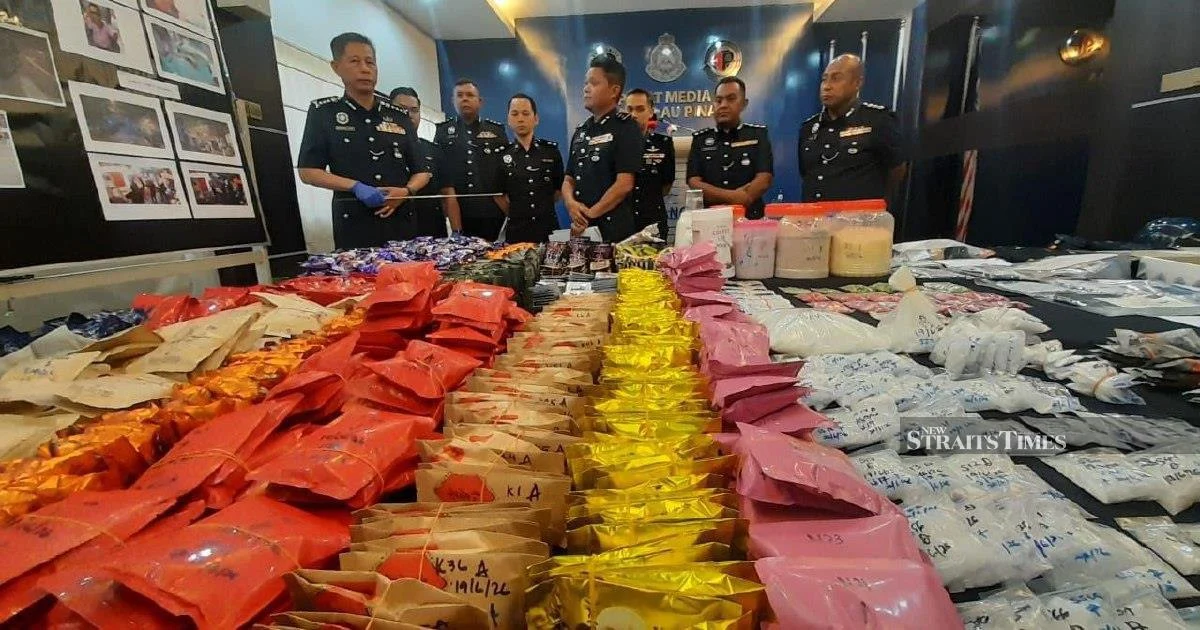
Law enforcement authorities in Penang have concluded a major drug investigation that culminated in one of the region's larger seizures of illicit substances this year. Officers from the state police headquarters executed a raid on a condominium unit in Butterworth, where they uncovered a comprehensive drug production and trafficking enterprise. The operation, which appears to have been actively supplying the local market, has now been disrupted following the arrests of two individuals believed to be at the centre of the network.
The seized narcotics, valued at approximately RM9.7 million, represent a substantial blow to organised criminal syndicates operating within the state. The discovery of drugs at this scale within a residential property in the Seberang Perai district highlights the increasingly sophisticated methods employed by traffickers to conceal their illicit activities in seemingly ordinary urban environments. Condominiums, particularly those in busy commercial and residential areas, have become preferred locations for such operations due to their relative anonymity and ease of access.
The couple detained during the raid are currently assisting police with their ongoing investigation into the full scope of the operation. Officers are working to establish the chain of supply, identify potential customers, and determine whether the network had connections to larger trafficking organisations operating across the region. The investigation reveals not merely a distribution point but evidence of an on-site processing capability, suggesting a vertically integrated operation with manufacturing facilities rather than simple resale activities.
Penang, positioned strategically on the west coast of Peninsular Malaysia and serving as a major port city, has long faced challenges related to drug trafficking due to its geographic proximity to maritime smuggling routes and its role as a regional transshipment hub. The state's status as an international commercial centre creates natural vulnerabilities that criminal networks routinely exploit. This latest case adds to the growing list of significant drug seizures recorded across the northern region in recent months.
The discovery underscores the ongoing pressure placed on the Royal Malaysia Police and cooperating agencies to maintain vigilance against transnational organised crime. The Narcotics Division has intensified operations targeting both street-level dealers and upper-tier distributors, recognising that dismantling supply chains requires simultaneous action across multiple enforcement levels. Intelligence gathering, community reporting, and coordination between federal and state authorities have proven effective in disrupting operations of this magnitude.
For residents across the Klang Valley and northern states, incidents such as this reinforce broader public health and safety concerns surrounding drug-related crime. Beyond the immediate threat posed by organised trafficking networks, the proliferation of synthetic drugs and the evolving methods used to conceal illegal manufacturing have complicated enforcement efforts. The processing capability found within the Butterworth condominium suggests traffickers are moving beyond simple distribution to local production, potentially indicating increased chemical precursor smuggling or domestic supply chain development.
The implications of this bust extend beyond immediate arrests and seizures. The discovery of an operational drug lab within a residential complex raises questions about oversight mechanisms in condominium management and building security protocols. Developers and property management firms across Malaysia may face renewed scrutiny regarding tenant vetting procedures and mandatory reporting obligations when suspicious activities are observed. Some condominium associations have begun implementing stricter visitor policies and enhanced CCTV monitoring following similar incidents.
State authorities have indicated that follow-up investigations will examine financial transactions linked to the suspects, potentially uncovering money laundering schemes and offshore accounts used to conceal proceeds. The financial investigation phase typically reveals the true scope of trafficking operations, including international connections and the total value of drugs moved through the network over extended periods. Banks and financial institutions have been advised to remain alert for suspicious transaction patterns consistent with drug trafficking proceeds.
The seizure also contributes to Malaysia's ongoing effort to meet international drug control commitments under the United Nations Convention Against Illicit Traffic in Narcotic Drugs and Psychotropic Substances. The country has established ambitious targets for drug interdiction and supplier disruption, with the enforcement agency coordinating closely with ASEAN neighbours on transnational investigations. The Penang case demonstrates the continued necessity of sustained, well-resourced policing operations dedicated to addressing the drug trade at its highest levels.
Police statements indicate that the investigation remains active, with additional leads being pursued regarding potential associates and customers of the operation. Officers are appealing for information from the public regarding any suspicious activities in residential properties or evidence of drug manufacturing. Community vigilance has proven instrumental in several recent major seizures, suggesting that public awareness campaigns emphasising the reporting of suspected drug operations continue to yield results.
The couple remain in custody pending formal charges under the Dangerous Drugs Act 1952, which carries severe penalties including lengthy imprisonment and substantial fines for manufacturing and trafficking offences. The strength of prosecutorial cases built on evidence from these large-scale raids generally results in convictions, establishing deterrent precedents within criminal networks. Legal experts anticipate that the scale of the seized quantities will likely result in charges reflecting trafficking rather than simple possession, potentially triggering sentencing guidelines that mandate extended custodial periods.