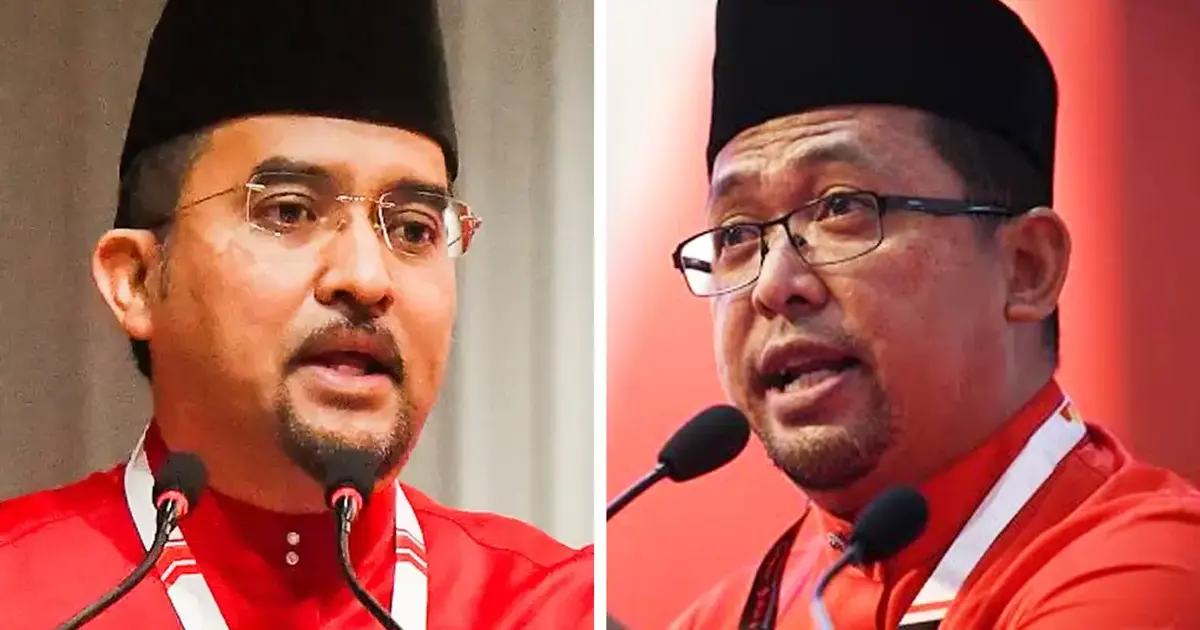
Police complaints have been lodged against two senior Umno figures following campaign statements that Pakatan Harapan's legal team contends warrant thorough investigation. The allegations centre on controversial remarks made during party campaigning, sparking a fresh flashpoint in Malaysia's increasingly contentious political landscape where accusations of impropriety dominate campaign narratives.
The complaints, initiated by Pakatan Harapan's legal division, target specific claims made by the Umno politicians regarding the appointment of a Menteri Besar, a position that sits at the heart of state-level political authority in Malaysia's federal structure. The appointment process for this chief minister role has become particularly sensitive in Negeri Sembilan, where coalition politics and inter-party dynamics create volatile power dynamics that frequently overflow into legal disputes and formal complaints.
A secondary but equally significant complaint relates to assertions that Negeri Sembilan's Democratic Action Party faction exercises undue control over the state palace. This allegation touches a particularly raw nerve in Malaysian politics, where the symbolic authority of the state ruler remains culturally and constitutionally significant, and suggestions of party manipulation of palace decisions carry serious implications for perceptions of institutional independence and political propriety.
Pakatan Harapan's legal team has framed these complaints as essential steps toward accountability, arguing that such statements, if left unchallenged, could undermine democratic discourse and set dangerous precedents for future political campaigns. The coalition has emphasised that the complaints are not motivated by partisan scoring alone, but rather represent a principled stand on what they characterise as inaccurate and misleading claims that distort public understanding of how state institutions function.
The timing of these complaints reflects broader tensions within Malaysia's political ecosystem, where the transition from the Mahathir era to subsequent administrations has intensified competition between Umno-led and Pakatan Harapan coalitions. Negeri Sembilan, a state with significant political leverage despite its smaller population, has become a microcosm of these national struggles, with control over the state increasingly contested between competing blocs.
Umno's response to the complaints will likely shape the trajectory of political discourse heading into anticipated electoral contests. The party has traditionally responded to such legal challenges with counter-accusations, often arguing that opposition parties weaponise the police and court systems for political advantage. Such exchanges have become routine features of Malaysian politics, though they continue to generate debate about whether constant legal skirmishes serve the broader public interest.
The complaints underscore an ongoing pattern where campaign rhetoric increasingly spills into formal legal territory. Malaysian political parties across the spectrum have become increasingly willing to utilise police reports as a tool for political messaging, transforming the constabulary into an arena where campaign battles are relived through formal complaints. This trend raises questions about whether such mechanisms genuinely serve justice or primarily function as additional venues for partisan warfare.
For Malaysian observers, these complaints highlight the fragility of state-level political arrangements, where coalition partners maintain complex relationships that can unravel rapidly when parliamentary mathematics shift. Negeri Sembilan's particular significance derives from its role as a swing state where neither major coalition can claim guaranteed dominance, making every statement about governance, appointments, and institutional independence potentially consequential for actual power distribution.
The allegations regarding palace involvement carry constitutional weight that extends beyond typical campaign disputes. Malaysia's constitutional monarchy system accords considerable formal authority to state rulers in matters including ministerial appointments, and any suggestion that elected politicians are orchestrating palace decisions challenges foundational assumptions about institutional separation. Whether such claims constitute defamation, unauthorised commentary on constitutional processes, or legitimate political critique remains contested territory between the disputing parties.
Investigations into these complaints, should police proceed, will test how Malaysia's law enforcement agencies navigate politically sensitive terrain. Police have faced persistent criticism from both coalitions regarding perceived partisan handling of complaints, creating pressure to demonstrate impartial investigation regardless of which political actors lodge reports. The credibility of any outcomes will depend substantially on whether investigations appear thorough and evidence-based or susceptible to accusations of selective enforcement.
These developments carry implications extending beyond Negeri Sembilan, as they illustrate how Malaysia's political system increasingly relies on legal and law enforcement mechanisms to resolve disputes that might previously have been settled through internal party processes or electoral contests. The shift reflects deeper fragmentations within the political landscape, where trust between competing blocs has eroded sufficiently that direct negotiation and acceptance of electoral outcomes seem less feasible.
For regional observers, Malaysian political dynamics demonstrate patterns increasingly visible across Southeast Asia, where strengthening democratic institutions compete with intensifying partisan polarisation. The complaints against the two Umno leaders exemplify these tensions, simultaneously reflecting commitments to accountability and concerns about whether legal systems are being instrumentalised for political purposes.

