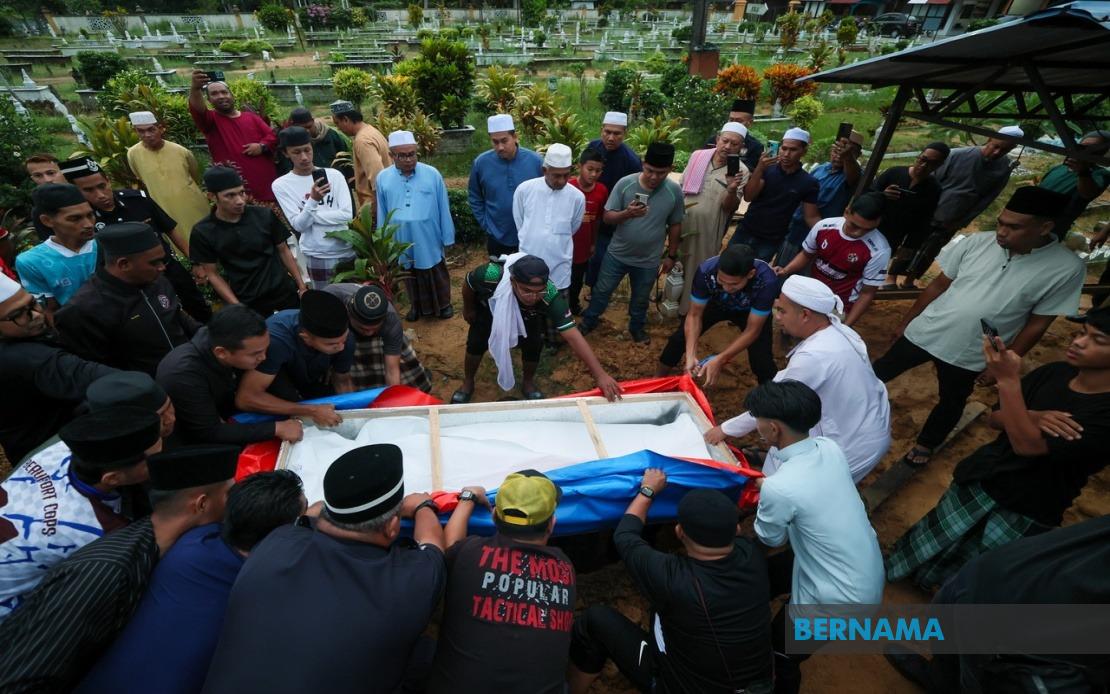
Corporal Mohamad Nur Hafiz Rahim, aged 29, was committed to the earth at Kampung Pangkal Kuang Muslim Cemetery in Ketereh, Kelantan, on Thursday morning, concluding funeral rites held at his family residence in Kampung Hutan Pasir. The officer had died from an electric shock while stationed in Beaufort, Sabah, in circumstances that have prompted a national inquiry into workplace safety within the Royal Malaysia Police force.
The tragic incident unfolded on Wednesday evening at 5.50 pm outside Weston Police Station when Mohamad Nur Hafiz and two colleagues were electrocuted while attempting to relocate a 29-foot metal pole designed for harvesting coconuts. The pole, positioned near the station grounds adjacent to Sekolah Kebangsaan Weston, came into contact with overhead electrical infrastructure, resulting in fatal injuries to all three officers. Alongside Mohamad Nur Hafiz, the victims included Corporal Chiu Teck Siong, 40, originally from Sarawak, and Constable Muhammad Raimi Ismarubee, 26, from Terengganu.
Speaking at the cemetery, Nurlella Rahim, the deceased's eldest sister aged 34, expressed gratitude to the Royal Malaysia Police for their logistical assistance in arranging the repatriation of her brother's remains from Sabah to their native Kelantan. She described the emotional weight of the loss while acknowledging the institution's support during the family's darkest hours. The corpse arrived at the family home at 4.45 am, having been transported across the country to enable final rites to take place in the deceased's home state according to Islamic tradition.
The five siblings maintained an exceptionally close bond despite geographical separation, with Nurlella herself residing in Ipoh, Perak, while her brother was stationed in the East Malaysian state. Daily video communications formed the bedrock of their family connection, supplemented by interactions through social media platforms and a dedicated family WhatsApp group. These virtual touchpoints allowed the geographically dispersed family to remain emotionally connected, sharing moments from their daily lives and offering mutual support across the distances that separated them.
Nurlella recounted the touching details of her late brother's final interactions with their mother, which occurred on Thursday afternoon via video call. During that conversation, Mohamad Nur Hafiz appeared fatigued and less talkative than usual, though he maintained his characteristic smile and warmth. He informed their mother that he needed to prepare for his work shift and promised they would speak again later, a promise that would tragically remain unfulfilled. The young officer's dedication to maintaining familial bonds extended even to the brief intervals between his police duties, when he would seize opportunities to connect with relatives through short video calls.
The family's most recent shared memory with Mohamad Nur Hafiz dated to the preceding Sunday, when Nurlella last communicated with her brother via video. At that moment, he was enjoying leisure time with his wife, Fatimah Shahira, and their child at a local beach, a peaceful scene that captured him in a moment of family contentment. Such snapshots of ordinary life take on poignant significance when they prove to be the final occasions of connection between loved ones, serving as bittersweet reminders of time now lost to tragedy.
The electrocution incident has triggered high-level governmental response reflecting deep concern about workplace safety protocols within law enforcement agencies. Prime Minister Datuk Seri Anwar Ibrahim issued a directive ordering a comprehensive, transparent, and expeditious investigation into the circumstances surrounding the deaths. In a statement posted on Facebook, Anwar emphasised that the inquiry held critical importance not only for determining the precise cause of this catastrophic event but also for identifying systemic improvements that could prevent recurrence of similar tragedies within police operations across Malaysia.
The incident raises significant questions about occupational hazard management within police stations and the adequacy of safety protocols when personnel handle potentially dangerous equipment in proximity to electrical infrastructure. The employment of a 29-foot metal pole for coconut harvesting at a police station premises, combined with apparent inadequate electrical safeguards, represents a confluence of risk factors that proved lethal. Such workplace fatalities within security forces attract particular attention because officers are expected to work within carefully regulated environments where employer responsibility for worker safety should be paramount.
For Malaysian law enforcement and the broader Southeast Asian region, this tragedy underscores the critical importance of comprehensive occupational health and safety frameworks within government institutions. The deaths of three young, dedicated officers in a preventable workplace accident represents not merely a personal loss to their families but also a significant institutional failure. The investigation ordered by Prime Minister Anwar Ibrahim will likely examine whether existing safety standards were followed, whether equipment was properly maintained, and whether officers received adequate training in handling potentially hazardous operations near electrical hazards.

