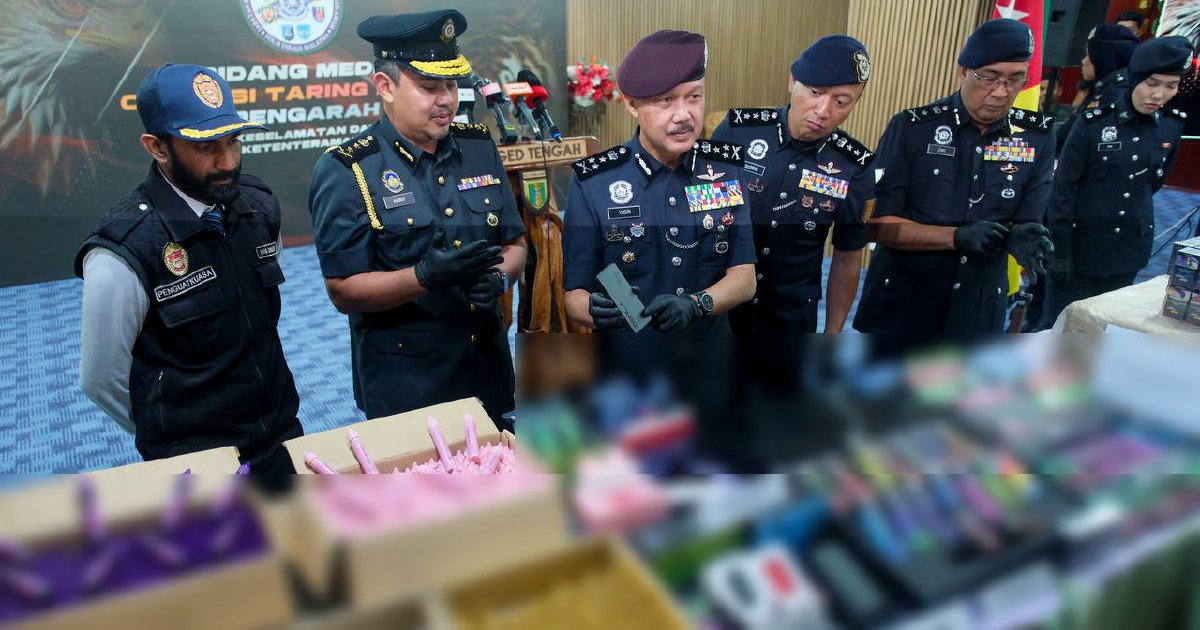
Malaysian authorities have delivered a significant blow to the underground cigarette and vape trafficking network with the confiscation of contraband goods valued at over RM15.5 million during synchronized enforcement operations conducted throughout Selangor in recent weeks. The dual operations, carried out by police units targeting organised smuggling activities, represent an escalating effort to contain the proliferation of black-market tobacco and nicotine products across Malaysia's most densely populated state.
The scale of the interdiction underscores the substantial economic leakage through illicit tobacco trade channels and highlights the sophistication of distribution networks operating beneath official oversight. Selangor, serving as a crucial logistics hub due to its strategic proximity to Kuala Lumpur and major ports, has emerged as a critical battleground in the battle against contraband operations. The timing of these coordinated raids suggests law enforcement is increasingly deploying intelligence-led operations to dismantle supply chains rather than pursuing isolated enforcement actions.
Vaping products have become a particularly contentious category in Southeast Asia's informal economy, occupying an ambiguous regulatory space that differs markedly across jurisdictions. Unlike cigarettes, which have long-established taxation and smuggling countermeasures, electronic nicotine delivery systems represent a comparatively newer challenge for customs and policing authorities. The significant proportion of confiscated goods represented by vaping merchandise indicates that smuggling organisations have rapidly adapted their portfolios to capitalise on demand gaps created by regulatory restrictions and taxation differentials.
The contraband cigarette sector, conversely, reflects a mature smuggling ecosystem with deep supply chains extending across Southeast Asia and beyond. Malaysia's substantial excise duties on legitimate tobacco products create powerful incentives for parallel importation networks. Smugglers exploit tariff arbitrage by bringing untaxed cigarettes from jurisdictions with lower duties or outright production in unregulated facilities, then distributing them through informal retail channels that avoid government tax collection entirely. This dynamic has persistently frustrated revenue authorities and health regulators for decades.
The economic implications of such large-scale smuggling operations extend beyond direct tax revenue losses, affecting legitimate retailers who face unfair competition from black-market distribution. Small convenience stores and petrol stations operating within the formal regulatory framework cannot compete on price with illicit competitors whose entire supply chains operate outside taxation frameworks. This squeeze on legitimate business creates pressure for further consolidation in retail sectors and potentially incentivises otherwise law-abiding traders to engage in informal activity.
From a public health perspective, contraband tobacco and nicotine products bypass quality control mechanisms and health warnings that accompany licensed products. Consumers purchasing black-market cigarettes cannot verify product authenticity or ingredient composition, exposing them to potentially harmful substances. Unregulated vaping liquids sourced from informal channels may contain undisclosed nicotine concentrations or hazardous chemicals, creating health risks that neither users nor regulators can readily quantify or address through public health interventions.
The enforcement success reflects improved coordination between police units and likely enhanced intelligence gathering capabilities. Sustained focus on dismantling supply chains rather than merely arresting street-level dealers suggests a strategic recalibration toward addressing smuggling systematically. These operations typically require advance surveillance, informant networks, and cooperation across jurisdictional boundaries, indicating that Malaysian law enforcement is allocating significant resources to this domain.
Regional context matters substantially here. Singapore and Brunei maintain strict regulatory frameworks governing vaping products, with Singapore effectively banning most vaping devices entirely. These restrictions create demand displacement toward Malaysia, where regulatory treatment remains comparatively permissive. Smuggling networks exploit such regulatory divergences, sourcing products from jurisdictions with lenient frameworks and channelling them toward higher-value markets where scarcity and prohibition inflate street prices. Understanding cross-border dynamics is essential for crafting effective counter-smuggling strategies.
The confiscated merchandise represents inventory that would have generated substantial untaxed retail revenue. Extrapolating from this single operation, authorities can estimate the scale of ongoing leakage from Malaysia's tax system. Such figures inform policy discussions regarding optimal tax rates, enforcement resource allocation, and potential regulatory reforms that might narrow arbitrage opportunities exploited by smuggling networks. Taxation that deviates significantly from regional norms and lacks accompanying enforcement capacity creates vulnerability to organised smuggling.
Looking forward, these operations demonstrate that law enforcement possesses capacity to disrupt smuggling networks when resources concentrate on particular geographic areas or suspect organisations. However, sustained progress requires consistent funding, intelligence infrastructure, and coordination across police, customs, and relevant agencies. Successful interdiction does not eliminate underlying incentives driving smuggling; rather, it raises operational costs and risks for traffickers, making the illicit business less attractive relative to legal alternatives.
The implications for Malaysia's broader regulatory strategy merit consideration. Whether through adjusted taxation, enhanced border security, or improved supply chain verification for legitimate imports, policymakers must address structural vulnerabilities that enable large-scale contraband operations. The RM15.5 million seizure represents enforcement success, but sustainable progress requires systematic reform addressing the economic fundamentals that make smuggling profitable. These raids represent necessary enforcement action, yet alone they cannot resolve the underlying market dynamics generating persistent demand for contraband products.

