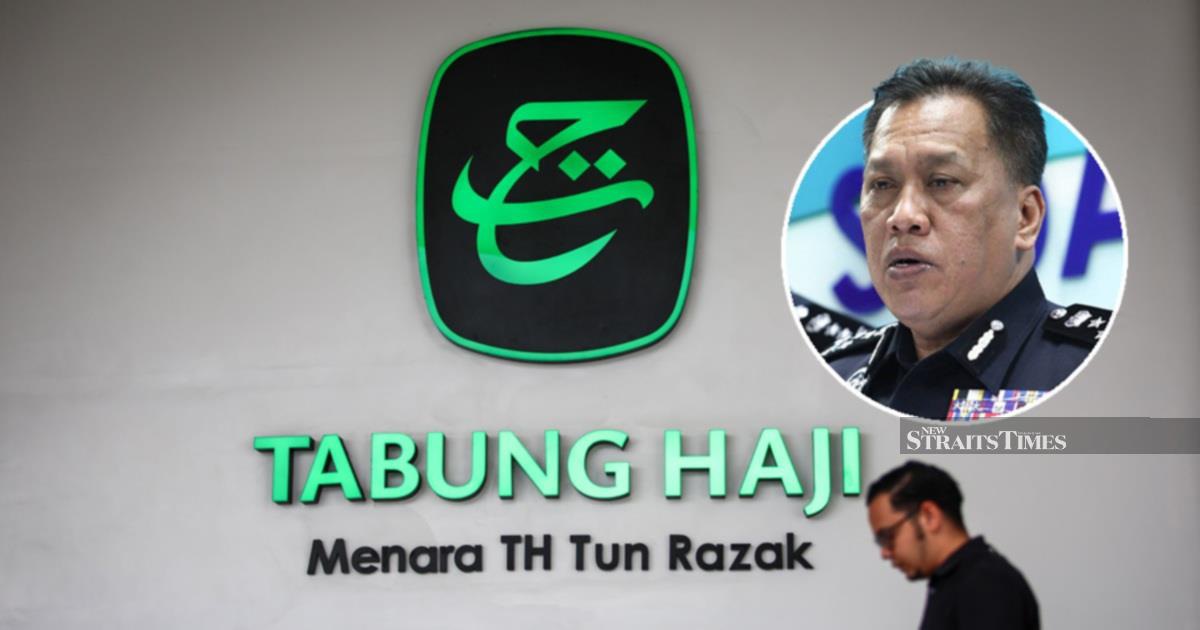
The Royal Malaysian Police have significantly expanded their investigative reach into the Tabung Haji scandal, with officers having now compiled witness statements from 134 individuals as they work through the findings contained in the Royal Commission of Inquiry's damning report on Lembaga Tabung Haji. The inquiry represents one of the most comprehensive examinations of misconduct allegations at the Islamic pilgrimage fund, which manages savings for nearly one million Malaysian Muslims seeking to perform the hajj. Among the 134 witnesses, police recently added 10 new individuals to their interview schedule, suggesting the investigation is moving into fresh territory and potentially uncovering previously undisclosed leads.
The RCI report, which concluded its proceedings after an extensive hearing process, documented serious findings regarding mismanagement and alleged financial impropriety at Lembaga Tabung Haji spanning several years. The commission's conclusions triggered immediate interest from law enforcement agencies tasked with determining whether any criminal conduct had occurred. The breadth of police interviews—now encompassing more than a hundred individuals—underscores the complexity of the case and the multiple layers of institutional oversight and decision-making that investigators must untangle.
Lembaga Tabung Haji occupies a unique and sensitive position within Malaysia's financial landscape. Established to help Malaysian Muslims accumulate savings specifically for the hajj pilgrimage, the institution manages roughly 8 million accounts containing hundreds of billions of ringgit contributed by ordinary Malaysians, many of whom depend on these funds to fulfil one of Islam's five pillars. Any institutional failure at this level carries profound implications not merely for individual savers but for Malaysia's reputation in managing Islamic financial institutions and for public confidence in government-linked entities more broadly.
The decision to summon an additional 10 witnesses in the latest phase of questioning points toward a more targeted investigative approach. Rather than simply recording preliminary accounts from all available personnel, police appear to be pursuing specific lines of inquiry that emerged from earlier testimonies or from the RCI's own findings. This methodological shift suggests investigators have moved beyond the initial fact-gathering phase and are now attempting to establish chains of responsibility and intentional wrongdoing, rather than mere administrative negligence.
The investigation carries significant political weight in Malaysia, where public sector accountability has become an increasingly pressing concern following numerous scandals in recent years. Citizens and taxpayers have grown more demanding in their expectations that state institutions will be properly managed and that officials who breach public trust will face consequences. The visible police presence in the Tabung Haji case—marked by the accumulation of more than a hundred statements—helps demonstrate to the public that institutional wrongdoing is being taken seriously and investigated rigorously.
From a financial sector perspective, the Tabung Haji investigation has ramifications extending beyond the hajj pilgrimage fund itself. Islamic finance remains a critical growth area for Malaysia's economy, and the nation's credibility in managing such institutions affects investor confidence and Malaysia's competitive standing in the global Islamic financial market. Regulators and institutional overseers across the Malaysian financial system are watching closely to see how thoroughly police pursue the investigation and whether the process results in prosecutions and systemic reforms.
The gathering of witness statements forms the foundation upon which any eventual prosecutions will rest. Police must establish not only that wrongdoing occurred but also that specific individuals bore responsibility for decisions and actions that resulted in financial loss or misappropriation. With 134 statements already compiled, investigators possess a substantial evidentiary base, though converting witness accounts into prosecutable cases requires careful analysis, corroboration of contradictory claims, and documentation of the decision-making processes that led to questionable transactions.
The involvement of 10 additional witnesses in recent rounds of questioning may indicate that police have identified key personnel previously overlooked or whose roles only became apparent as investigators reviewed earlier statements. In complex institutional investigations, such pattern-building often occurs gradually as a narrative emerges from multiple accounts. These newly summoned individuals may occupy crucial positions in the institutional hierarchy or possess knowledge of specific transactions central to the investigation.
The timeline and pace of the police investigation will prove crucial to public perception. Malaysians will scrutinize not merely whether charges are eventually filed but how expeditiously the process moves forward. Lengthy investigations risk appearing to lose momentum or suggest that institutional inertia is impeding accountability. The recent addition of 10 new witnesses signals that investigative work is ongoing and progressing, though the ultimate test will come when police either file charges or announce the investigation's conclusion.
For Tabung Haji account holders—ordinary Malaysians whose accumulated savings remain in the institution—the investigation's progress carries direct personal significance. Many contributors fear that institutional mismanagement may have eroded their savings without their knowledge, and the police investigation offers a potential avenue through which wrongdoing may be exposed and accountability pursued. Public updates on the investigation's scope and direction help reassure account holders that their interests are being protected through formal legal channels.
Moving forward, the police investigation must balance thoroughness with efficiency. The compilation of 134 statements represents substantial investigative output, but witness testimony alone will not suffice to establish culpability. Investigators will need to cross-reference accounts against documentary evidence, transaction records, and institutional decision-making minutes to construct a coherent narrative of how and why the alleged misconduct occurred. The recently added witnesses may provide crucial corroborating evidence or testimony that transforms preliminary accounts into prosecutable cases.
Ultimately, the Tabung Haji investigation will test Malaysia's capacity to hold public institutions and senior officials accountable through formal legal processes. The visible commitment of investigative resources—evidenced by the compilation of more than a hundred witness statements—demonstrates institutional willingness to pursue the matter, but public confidence will ultimately depend upon whether the investigation culminates in meaningful consequences for those responsible and in structural reforms preventing future misconduct.

