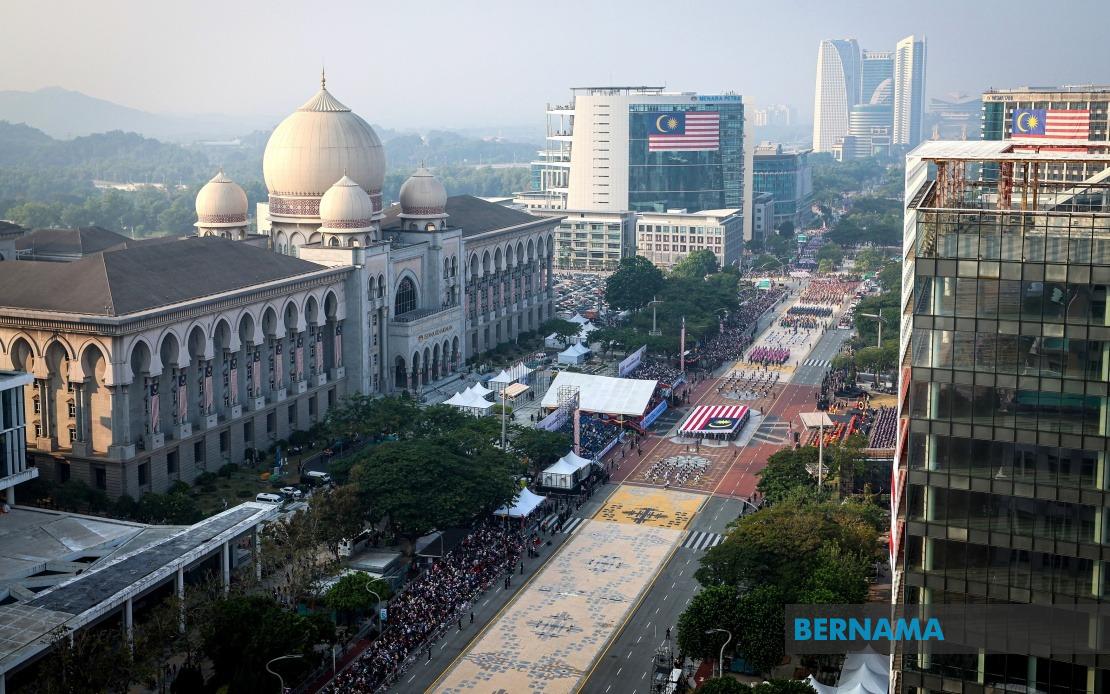
The Royal Malaysia Police will position 2,354 members and officers throughout Dataran Putrajaya to maintain security and facilitate the smooth progression of Malaysia's 69th National Day celebration on August 31. The substantial police presence underscores the authorities' commitment to protecting the estimated 80,000-plus visitors expected to gather for what promises to be a significant national occasion held under the theme "Malaysia MADANI: Kesejahteraan Dinikmati."
According to Putrajaya district police chief ACP Aidi Sham Mohamed, the deployment encompasses both stationary checkpoints and mobile traffic control units positioned at key access points and intersections surrounding the ceremonial grounds. This layered security approach reflects standard procedures for large-scale public gatherings in Malaysia, where crowd management and vehicle flow remain paramount concerns. The scale of the operation demonstrates the logistical complexity involved in hosting national celebrations that draw substantial civilian participation.
Aidi Sham emphasised the importance of public cooperation in maintaining orderly conditions throughout the event. He urged attendees to arrive well in advance of proceedings to allow adequate time for security screening and entry procedures. By distributing arrivals across an extended window rather than concentrating them at specific times, authorities aim to reduce congestion and minimise bottlenecks that could compromise both security effectiveness and visitor experience.
Parking restrictions will be strictly enforced in designated prohibited zones, a measure designed to maintain clear access routes for emergency vehicles and facilitate rapid police response should any incident occur. The district police chief stressed that vehicles obstructing traffic flow would be subject to enforcement action, signalling zero tolerance for infractions that could hinder security operations or impede the movement of large crowds. Compliance with these traffic directives remains essential for the event's success.
Personal safety emerged as another key theme in the police advisory. Attendees, particularly parents and guardians, have been encouraged to maintain heightened vigilance regarding their children's whereabouts and safeguard personal belongings throughout the celebration. Such guidance reflects realistic concerns about pickpocketing and accidental separation that commonly occur at densely-packed public venues, issues that become magnified when crowds exceed conventional thresholds.
A notably firm warning concerned the prohibition on bringing weapons or dangerous implements to the venue. Aidi Sham reiterated this directive with particular emphasis, framing it not as a bureaucratic restriction but as an essential safety measure designed to protect the celebratory atmosphere and ensure that August 31 remains a day of national unity rather than potential conflict. This reflects Malaysia's broader approach to public order management, where preemptive restrictions aim to eliminate risks before they materialise.
Communications Minister Datuk Seri Fahmi Fadzil addressed assembled media following a comprehensive full-scale rehearsal of the ceremony. His confirmation that the 2026 celebration would proceed according to established conventions provided assurance to both organisers and prospective attendees. The decision to maintain traditional formats, despite evolving security landscapes, suggests confidence in the adequacy of current protective measures and institutional readiness.
The "Malaysia MADANI: Kesejahteraan Dinikmati" theme carries deeper significance beyond ceremonial branding. MADANI represents the government's overarching vision for national development emphasising shared prosperity and citizen wellbeing, making this year's National Day celebrations a platform for reinforcing that message. The choice of Dataran Putrajaya as the venue maintains continuity with recent years while leveraging the federal administrative centre's infrastructure and symbolic value as a representation of modern Malaysian governance.
The 80,000-plus expected attendance reflects substantial public interest in the National Day proceedings. This projection shapes the scale of security operations required, as crowds of this magnitude require sophisticated coordination to prevent dangerous overcrowding while maintaining the celebratory spirit that characterises the occasion. The police deployment accordingly represents not merely a security exercise but an exercise in facilitating public participation in national observance.
From a Southeast Asian perspective, Malaysia's approach to managing large public celebrations demonstrates how democracies balance security imperatives with civic participation. The detailed planning evident in these arrangements—from traffic management to weapon prohibition to personal safety advisories—reflects institutional maturity in crowd management. The police messaging emphasises shared responsibility between authorities and citizens, a framing that encourages voluntary compliance over punitive enforcement.
As Malaysia approaches its 69th National Day, the comprehensive preparations underway at Dataran Putrajaya symbolise the nation's continued commitment to celebrating collective identity while maintaining the orderly, secure environment necessary for public events. The deployment of over two thousand police personnel, the detailed rehearsals, and the clear public guidance all underscore how contemporary governance manages the intersection of freedom of assembly and public safety. For Malaysians planning to attend, the message is clear: celebrations will proceed with full ceremonial dignity, contingent upon visitor cooperation with established safety protocols.

