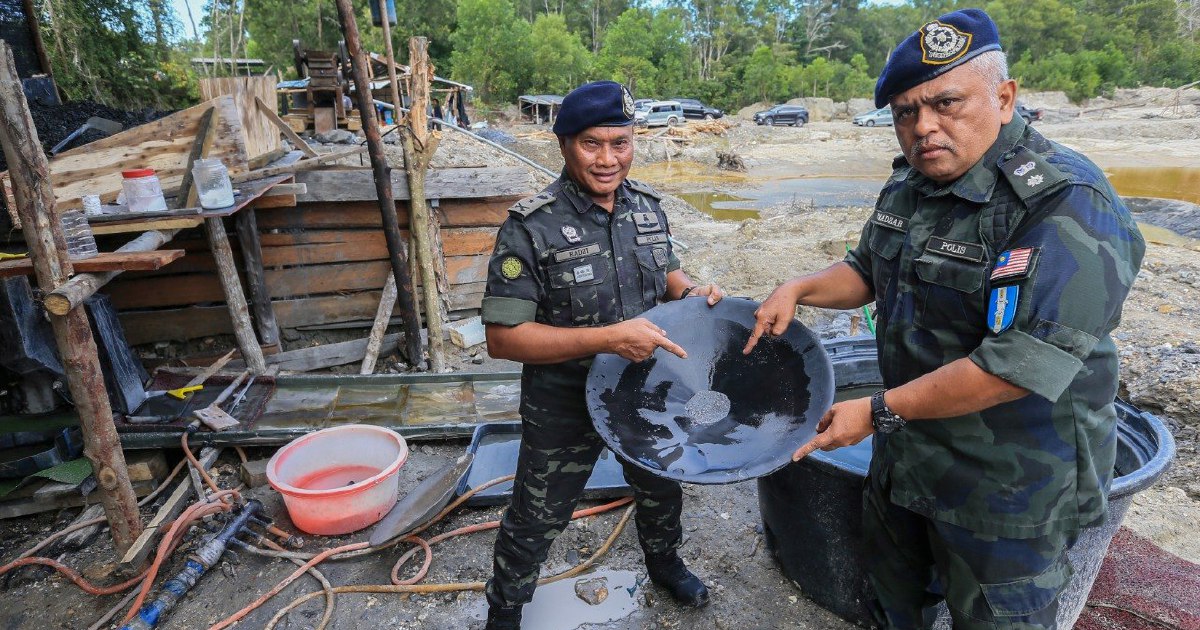
Authorities in Terengganu have successfully dismantled what investigators describe as a substantial illegal precious metals extraction operation following a strategic raid at Bukit Kor near Marang. The coordinated law enforcement action resulted in the apprehension of 15 individuals suspected of involvement in the illicit mining enterprise, which authorities estimate had been generating approximately RM13,000 in daily proceeds through unlicensed operations.
The scale of this particular syndicate highlights the persistent challenge that Malaysian law enforcement agencies face in combating organised illegal mining throughout the peninsula. The operation's reported daily revenue suggests a well-established network with consistent processing and distribution mechanisms, indicating this was not a small-scale or opportunistic venture but rather a structured criminal enterprise operating with considerable sophistication.
Illegal gold mining has emerged as a significant problem across Southeast Asia, with Malaysia experiencing particular difficulties in controlling such activities in forested and mountainous regions where remote terrain complicates regulatory oversight. These operations frequently occur in areas of limited governmental presence, allowing operators to maintain activities with minimal disruption until targeted enforcement actions intervene. The Bukit Kor location, situated within Terengganu's landscape, evidently presented conditions favourable for clandestine extraction work.
The sustainability of operations generating RM13,000 daily suggests the syndicate possessed reliable markets for processed gold and had established supply chains for distributing proceeds. Such financial volumes indicate customers within Malaysia's jewellery industry, investment sector, or potentially regional markets, all representing potential avenues for investigation into the broader network that sustained demand for illicitly sourced precious metals.
Beyond the immediate criminal implications, illegal mining operations carry substantial environmental consequences. Unregulated extraction disrupts soil structure, contaminates water sources, and degrades surrounding ecosystems that communities may depend upon for agricultural, recreational, or subsistence purposes. The absence of proper environmental safeguards during illegal operations means affected areas often require extensive remediation efforts to restore functionality.
The arrest of 15 individuals provides enforcement agencies with opportunities to pursue deeper investigations into organisational hierarchy, financial flows, and client networks. Understanding whether these detainees constitute the entire operational structure or represent only visible components of a larger enterprise remains crucial for comprehensive disruption. Such investigations frequently reveal connections to other illicit activities and may implicate individuals across multiple jurisdictions.
Fencing operations that convert raw extracted materials into marketable gold products represent a critical vulnerability within mining syndicates. Identifying and prosecuting individuals responsible for processing, refining, and distributing illegally sourced precious metals can disrupt the entire value chain, making future operations economically unviable. Law enforcement focus on these intermediaries often proves more effective than addressing field-level extraction workers who may be replaceable within criminal networks.
Malaysia's approach to combating illegal mining has intensified through increased patrols, community reporting mechanisms, and inter-agency coordination. However, the continued emergence of operations approaching RM13,000 daily capacity suggests that enforcement efforts, while improving, have not yet achieved sufficient deterrent effect. Syndicates remain willing to undertake operational risks despite heightened enforcement activities, indicating either confidence in their operational security or inadequate consequences for capture and prosecution.
The geographical distribution of illegal mining activities across Malaysian states, including Terengganu, points toward systemic vulnerabilities in monitoring and control mechanisms. While major urban centres benefit from concentrated police presence and surveillance infrastructure, rural and forested regions present enforcement challenges requiring specialised expertise and sustained resource commitment. Effective countermeasures demand intelligence-led operations targeting specific locations where preliminary investigations or community intelligence indicate suspicious activity.
Regional mining regulations, licensing frameworks, and international protocols governing precious metals trade all contribute to the broader context within which illegal operations function. Malaysia's regulatory environment requires licensed entities to maintain rigorous extraction standards and environmental compliance measures. Illicit operators circumvent these requirements entirely, creating competitive advantages through reduced operational costs while simultaneously maximising environmental and social externalities borne by surrounding communities.
The detention of 15 individuals represents one enforcement action within an ongoing struggle against organised illegal mining. Success in dismantling this particular syndicate should catalyse broader investigations examining market demand, distribution networks, and corruption networks potentially facilitating such operations. Whether authorities prosecute detainees to maximum applicable penalties under relevant legislation will significantly influence future syndicate calculations regarding operational risks.
Look ahead, Malaysian law enforcement must balance immediate tactical successes like the Bukit Kor operation with strategic approaches addressing underlying factors that make illegal mining economically attractive. Strengthening environmental protection enforcement, improving livelihood alternatives for communities in mining-prone regions, and enhancing inter-agency intelligence sharing across jurisdictions can collectively increase pressure on these criminal networks throughout the peninsula.

