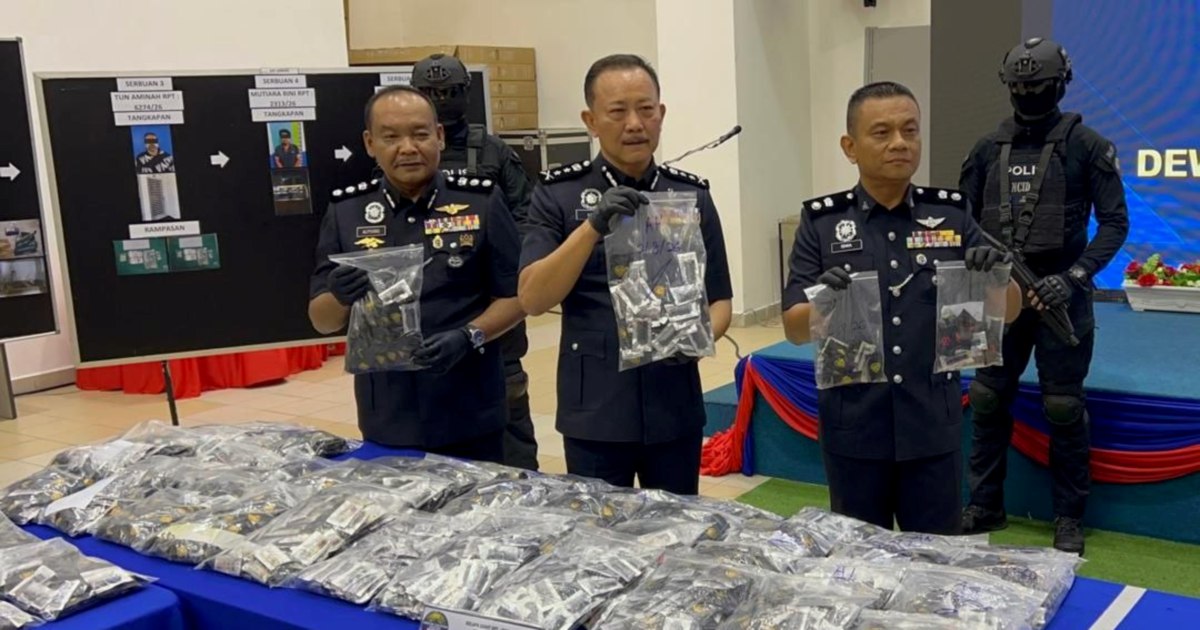
Police in Johor have successfully shut down a significant organised crime syndicate specialising in the manufacture and sale of vape cartridges laced with narcotic substances. The operation, which culminated in coordinated enforcement action across multiple locations in the state on Sunday, has resulted in the apprehension of seven individuals suspected of leading and participating in the illicit enterprise. The confiscated products and equipment are valued at RM10.68 million, representing a substantial blow to drug trafficking networks operating in the region.
The breakthrough came after an intensive investigation into the supply chains and distribution networks of illegal narcotics in Johor. Law enforcement personnel executed five separate search warrants simultaneously across different areas of the state, a tactic designed to prevent suspects from fleeing or destroying evidence. The coordinated nature of the operation underscores the scale of the suspected criminal organisation and the complexity of its operations spanning multiple locations and administrative divisions.
Vape-based drug delivery has emerged as a concerning trend throughout Southeast Asia, as criminal networks adapt their methods to exploit the popularity of vaping devices among younger demographics. The modification of commercial vape cartridges to contain illegal substances represents an evolution in drug distribution tactics, making detection and enforcement increasingly challenging for authorities. The cartridges offer several advantages to traffickers: they are portable, difficult to distinguish from legitimate products, and can be easily concealed and transported across borders or between jurisdictions.
The RM10.68 million valuation encompasses both the manufactured drug-laced cartridges ready for distribution and the equipment utilised in their production. This figure likely reflects both street value and the considerable investment in machinery required to operate an industrial-scale manufacturing facility. The asset seizure represents a significant financial disruption to the syndicate's operations and removes inventory that would have eventually reached consumer markets throughout Malaysia and potentially the broader region.
The seven arrested individuals are believed to hold various roles within the organisational hierarchy, though specific details regarding their suspected positions have not been disclosed. Investigations typically focus on identifying the uppermost echelon of such operations—importers, financiers, and distribution coordinators—as dismantling leadership structures is more effective at disrupting criminal enterprise than apprehending low-level operatives. The calibre of personnel detained will provide investigators with critical information about the syndicate's connections to larger regional trafficking networks.
Johor's geographic position as a major transit hub connecting Malaysia to Singapore and Indonesia makes it a natural focal point for drug trafficking activity. The state's extensive port facilities, land borders, and industrial zones create both opportunities and vulnerabilities in law enforcement's battle against organised crime. Police presence in the state has intensified in recent years as authorities have sought to address the rising prevalence of synthetic drugs and novel narcotic delivery systems entering the market.
The vape market in Malaysia has faced increasing regulatory scrutiny as authorities grapple with both legitimate commercial concerns and public health challenges. The introduction of narcotic substances into vape products compounds existing regulatory issues and creates a layered enforcement problem for authorities, who must now police both legal compliance and criminal activity within the same product category. This complexity requires specialised training and intelligence capabilities that regional police forces have been gradually developing.
Investigations into syndicates of this nature typically expand beyond the immediate arrests to identify downstream distribution networks, retailers, and end consumers. Law enforcement agencies frequently pursue proceeds of crime charges and asset forfeiture actions against not only the primary suspects but also their associates and financial beneficiaries. The intelligence gathered during interrogations frequently leads to subsequent operations targeting other segments of the drug supply chain.
The operation represents part of a broader national strategy to combat the increasingly sophisticated mechanisms employed by drug trafficking organisations. Malaysia's enforcement agencies have been collaborating more closely with international counterparts, particularly those in neighbouring countries, to disrupt cross-border narcotics movements. Regional intelligence sharing has become instrumental in identifying and neutralising organised crime networks that frequently operate across multiple jurisdictions.
The successful dismantling of this syndicate sends a clear message regarding authorities' capacity to identify and neutralise major criminal operations, yet the continued emergence of new trafficking methods suggests that the underlying demand for illegal substances and the profitability of drug distribution remain significant challenges. Effective long-term solutions require sustained coordination between enforcement agencies, community engagement programmes, and public education initiatives addressing substance abuse prevention. The Johor operation, while significant, likely represents only one component of a much larger narcotics ecosystem requiring comprehensive, sustained intervention across multiple levels of government and society.

