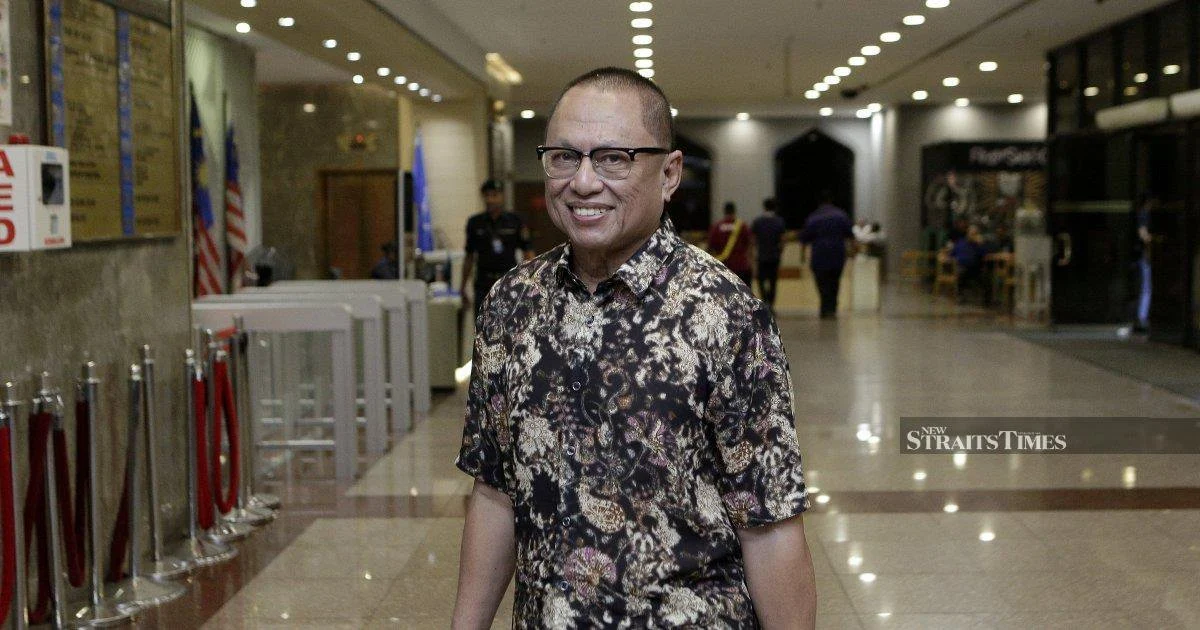
The Royal Malaysia Police have begun formal proceedings to examine controversial remarks attributed to former Umno stalwart Datuk Dr Mohd Puad Zarkashi circulating on social media platforms, prompted by a significant public response that saw 153 police reports submitted nationally in a single day. The scale of complaints underscores the polarizing nature of the statements in question and reflects broader sensitivities within Malaysia's political and social landscape regarding public discourse by senior political figures.
The investigation commenced following the filing of these reports at police stations across various states, indicating that the alleged statements have triggered concern among diverse segments of the Malaysian public. The decision to formally probe the matter suggests that authorities have deemed the allegations sufficiently serious to warrant systematic examination, even as questions remain about the specific nature of the contentious remarks and their precise wording or context.
Datuk Dr Mohd Puad Zarkashi, whose background spans decades within Malaysia's most dominant political party until recently, holds considerable influence within conservative circles and has historically been vocal on matters touching upon Islam, social values, and national identity. His public interventions have frequently generated significant discussion and, at times, controversy, making any statements attributed to him subject to heightened scrutiny from both supporters and critics alike.
The triggering of such an extensive formal investigation highlights how social media has transformed the landscape of political accountability in Malaysia. What might once have remained confined to limited circulation now reaches instantaneously across networks of millions, amplifying both the reach and potential impact of controversial utterances. The sheer volume of reports filed suggests that members of the public have moved beyond passive consumption of disputed content to actively engaging civic mechanisms to address perceived infractions.
The specific allegations relate to remarks characterized by critics as invoking the "3R" framework—a reference that carries particular resonance in Malaysian discourse surrounding religious, racial, and royalty-related sensitivities. These three domains have long been constitutionally protected through Article 153 and related provisions, with Malaysians socialized to exercise particular caution when discussing these intersecting subjects. Any perceived disrespect toward these domains can rapidly mobilize public opinion and trigger formal responses from authorities.
For Malaysian readers observing this development, the investigation represents a case study in how political speech remains heavily regulated domestically, even when originating from prominent retired politicians rather than incumbent officeholders. The investigation's launch also demonstrates the willingness of law enforcement to respond to public complaints at scale, a dynamic that carries implications for how political figures calculate their communication strategies and manage their public personas on digital platforms.
The broader Southeast Asian context matters too, as Malaysia's approach to regulating political speech and social media content differs materially from approaches taken in neighboring jurisdictions. While Singapore maintains more explicit content moderation frameworks and Indonesia relies heavily on defamation provisions, Malaysia's regulatory approach tends toward investigating matters following public complaint and negative reception rather than through proactive monitoring. This reactive posture has both advantages and drawbacks for managing political discourse.
Puad Zarkashi's positioning within Umno circles adds another dimension to the investigation, coming at a period when the party itself navigates considerable internal divisions and external political pressures. Comments by former senior figures, particularly those touching upon communal sensitivities, invariably reflect upon the party's brand and may generate consequences for current party leadership seeking to maintain unity and moderate their public image.
The investigation process itself will be closely watched by observers of Malaysian politics and press freedom advocates, who monitor how authorities handle cases involving prominent political personalities. The outcome—whether conclusions are reached quickly or whether the matter extends into protracted legal proceedings—will signal important messages about consistency in enforcement and the practical implications of constitutional protections for public discourse in the digital age.
For citizens who filed reports, the police inquiry represents validation of their concerns and their confidence in formal mechanisms for addressing speech they deem problematic. For others, particularly those sympathetic to Puad Zarkashi's political views, the investigation may appear as an example of how political opponents leverage institutional apparatus to silence dissenting voices. These divergent interpretations reflect deeper divisions within Malaysian society regarding free expression, religious sensitivities, and the proper boundaries of permissible public discourse.
The investigation underscores that Malaysian political figures, even those no longer holding office, operate within carefully demarcated boundaries when engaging with public audiences. The speed with which formal proceedings commenced following the mass filing of reports suggests that authorities regard the allegations as warranting urgent attention rather than routine administrative processing.

