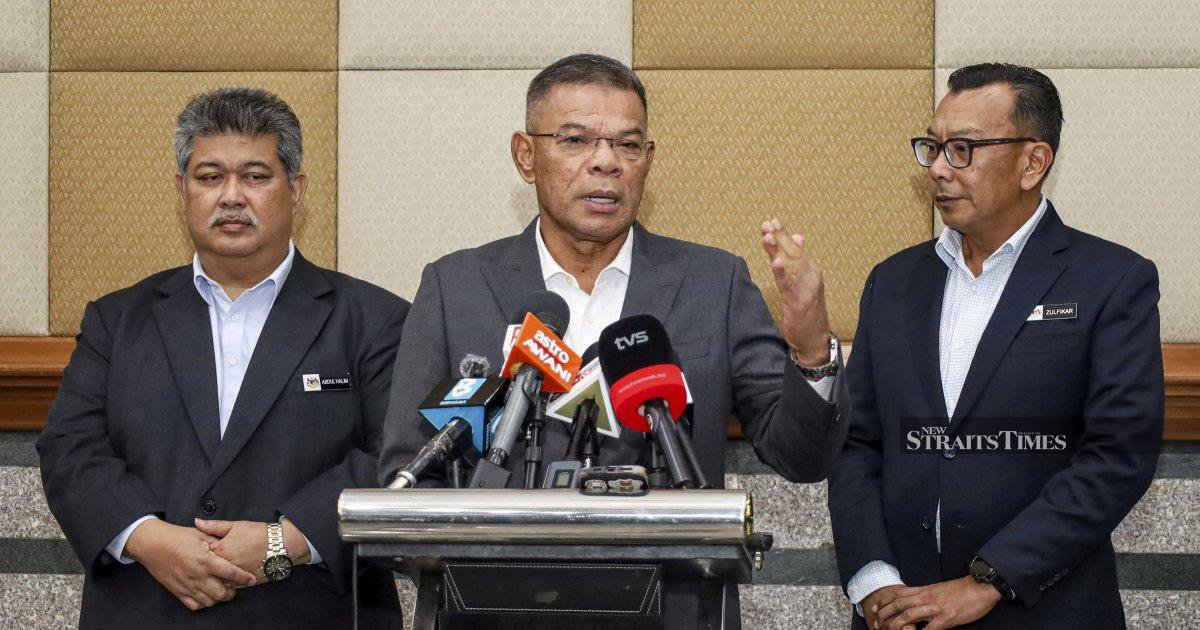
The arrest of a dozen police officers on allegations of extorting money from a Vanuatu national represents a significant test of Malaysia's resolve to purge its law enforcement ranks of corruption. Home Minister Datuk Seri Saifuddin Nasution Ismail, speaking from the capital, emphasised that such detentions demonstrate the police force's willingness to take decisive action against those who abuse their position, signalling that institutional tolerance for wrongdoing has reached a turning point.
The extortion case, involving officers who allegedly used their authority to unlawfully demand payments from the foreign national, touches on perennial concerns about police accountability that have long shadowed public confidence in the force. Malaysia's reputation for efficient policing has been periodically dented by scandals involving corrupt or rogue officers, creating friction between citizen trust and institutional credibility. When officials from other nations become targets, the diplomatic and reputational stakes climb considerably, making swift prosecution not merely a legal obligation but a strategic necessity.
Saifuddin's statement carries particular weight given the Home Ministry's expanded oversight role in police matters. His insistence that misconduct will face consequences reflects a broader pivot within the force's leadership to prioritise internal discipline and professional standards. This messaging is directed not only at the Malaysian public but also at international observers, reassuring them that the country takes rule of law seriously even when the accused wear official uniforms. Such pronouncements, however, must ultimately be validated through transparent investigations and credible prosecution outcomes.
The involvement of a Vanuatu citizen underscores how police integrity issues transcend domestic boundaries. Southeast Asia's growing integration into regional and global trade networks means that incidents involving foreign nationals carry amplified consequences. Investors, tourists, and expatriate workers form crucial components of Malaysia's economic ecosystem, and their sense of safety directly influences capital flows and talent recruitment. An extortion case involving police officers threatens to undermine the stability assurances that governments constantly project to attract foreign participation in their economies.
Police misconduct investigations in Malaysia have historically faced challenges in maintaining public credibility throughout the prosecution phase. Previous high-profile cases have sometimes culminated in outcomes perceived as lenient or compromised, fuelling cynicism about internal accountability mechanisms. The arrest of 12 officers simultaneously signals that the force is attempting to move beyond isolated prosecutions toward systematic enforcement. Whether this represents genuine institutional reform or a public relations exercise will become clearer as the investigation progresses and charges are formally filed before the courts.
The broader context of Southeast Asian policing suggests that Malaysia is not alone in wrestling with officer misconduct. Neighbouring Thailand, Singapore, and Indonesia have all grappled with corruption scandals involving law enforcement. However, the region's divergent approaches to accountability reveal starkly different institutional priorities. Malaysia's willingness to arrest serving officers on allegations rather than allowing administrative processes to shelter them suggests evolving standards that may gradually reshape how the force polices itself.
For the accused officers, the arrest initiates a legal process where guilt must be proven beyond reasonable doubt, a principle that observers should respect even while scrutinising the evidence. The extortion allegations, if substantiated, would represent an egregious breach of the oath taken by those entrusted with law enforcement authority. Conversely, if the charges prove unfounded, the reputational damage to the officers involved will serve as a cautionary reminder of how misconduct allegations can derail careers regardless of ultimate exoneration.
The Home Ministry's coordination with investigative units suggests institutional mechanisms are functioning to channel complaints into formal procedures rather than allowing them to languish in bureaucratic limbo. This process improvement, if sustained, could gradually enhance the force's capacity to self-correct. However, the challenge lies in ensuring that high-profile cases do not obscure systemic weaknesses affecting everyday police-citizen interactions that remain beyond the glare of media attention.
International observers, particularly those from Vanuatu's diplomatic mission in Malaysia, will be monitoring how authorities navigate this case. The manner in which Malaysia handles accusations against its own uniformed personnel carries broader diplomatic implications for bilateral relationships and regional perceptions of institutional integrity. Timely prosecutions coupled with transparent proceedings would signal that no individual, regardless of their official position, remains above the law.
Moving forward, the true measure of Saifuddin's commitment to zero tolerance will manifest not in arrest announcements but in conviction rates and the severity of sentences imposed. Public confidence restores gradually, through consistent demonstration that misconduct investigations yield genuine accountability rather than performative gestures. For Malaysia's police force, transforming rhetoric into sustained institutional practice remains the defining challenge ahead.

