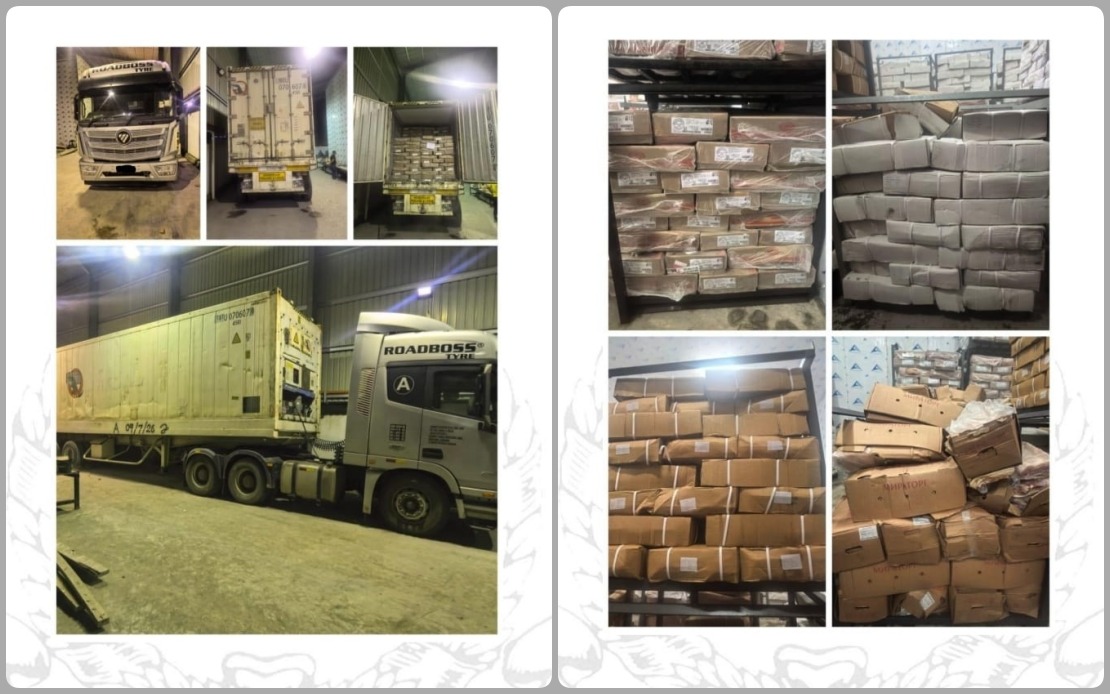
A significant smuggling operation centred on illegally imported frozen pork has been disrupted in Miri, Sarawak, with authorities seizing products valued at RM6.19 million and placing a local suspect into custody. The enforcement action, dubbed Op Taring Chiller, took place at a warehouse facility on the evening of July 9, marking another success in the Royal Malaysia Police's intensified campaign against food smuggling and undocumented commodity distribution across the country.
The arrested individual, identified as a 26-year-old Miri resident, was apprehended at 8 pm as officers executed the search warrant at the premises. According to Datuk Seri Mohd Yusri Hassan Basri, director of the Internal Security and Public Order Department (JKDNKA), the operation represents the police force's broader strategy to tackle the storage and distribution of frozen food products whose halal status cannot be verified and whose legal importation cannot be established through proper channels.
Inspectors catalogued an extensive inventory of pork cuts discovered during the raid, providing insight into the scale of the operation. Among the seizures were 30,000 kilogrammes of cooked frozen pork large intestines, 18,000 kilogrammes of pork loin divided across 15 pallets, 750 kilogrammes of pork occupying one additional pallet, multiple pallets containing bone-in pork bellies with skin attached, and frozen pork shoulder portions. The variety and volume of products suggest an operation geared toward wholesale distribution rather than personal consumption, raising questions about the intended market and supply networks.
The enforcement action involved coordinated effort across multiple agencies, with the Wildlife Crime Bureau and Special Investigation Intelligence unit of JKDNKA leading the operation. Support came from the Miri district police headquarters and the Sarawak Veterinary Services Department's Miri Division, reflecting the multi-agency approach that authorities have adopted to address smuggling networks that often involve corruption and complex distribution chains spanning state boundaries.
From a regulatory standpoint, the case carries particular weight regarding halal certification and food safety standards. The investigation proceeds under Sections 9(1) and 9(3) of the Veterinary Public Health Ordinance 1999, a framework designed to protect public health and ensure that food products entering the country meet established safety protocols. Additionally, authorities issued a RM25,000 compound notice against the suspect under the same ordinance, reflecting both the financial and legal consequences of operating outside approved import channels.
The Miri seizure represents one episode within a much broader enforcement landscape. Between January 1 and July 10, the Wildlife Crime Bureau and Special Investigation Intelligence units carried out 201 raids nationwide, resulting in the arrest of 375 individuals. These operations uncovered a diverse array of contraband spanning multiple categories, including non-duty-paid goods, diverted subsidised and controlled commodities, frozen food products, smuggled wildlife, and electronic waste. The cumulative value of seized materials across this six-month period reached approximately RM264.86 million, indicating the substantial economic scale of smuggling activities affecting Malaysia.
For Malaysian consumers, particularly those sensitive to halal compliance and food provenance, such operations address legitimate concerns about supply chain integrity. The inability to verify halal certification on undocumented imports creates uncertainty for Muslim consumers who rely on proper regulatory oversight to maintain dietary and religious standards. Beyond religious considerations, undocumented food products bypass health inspections and cold chain verification, posing potential risks to food safety and public health that extend across the entire consumer base regardless of religious affiliation.
From a broader Southeast Asian perspective, the Miri case illustrates ongoing challenges in controlling transnational smuggling networks. Sarawak's geographic position, sharing land borders and maritime access points with Brunei and Indonesia, creates vulnerabilities that criminal networks exploit. The sophistication suggested by the scale of the Miri operation indicates these are not opportunistic ventures but rather organised endeavours with established logistics, warehouse infrastructure, and likely downstream connections to retail or food service establishments.
The police statement emphasising continued intelligence gathering and monitoring suggests recognition that enforcement responses must evolve as smuggling networks adapt their methods. Traditional port and border checkpoints, while important, cannot intercept all contraband, necessitating warehouse surveillance and market-based intelligence. The involvement of the Wildlife Crime Bureau, typically associated with endangered species trafficking, demonstrates how enforcement agencies have broadened their remit to address diverse smuggling categories under unified command structures.
For legitimate food importers and traders operating through proper channels, such enforcement actions theoretically create competitive advantages by constraining the ability of illicit operators to undercut licensed businesses. However, the persistence of large-scale smuggling operations despite regular raids suggests gaps may exist between detection and prevention, or that the economic incentives driving smuggling outweigh enforcement risks. The RM6.19 million value of a single seizure indicates substantial profit margins that continue to motivate illegal activity.
Moving forward, authorities will likely scrutinise cold chain facilities and warehouse operations more systematically across Sarawak and other states, recognising that bulk storage represents a vulnerability point in smuggling networks. The case also underscores the importance of intelligence cooperation between police, veterinary services, and customs agencies, as no single institution possesses complete visibility into contraband flows. Regional cooperation mechanisms with neighbouring jurisdictions could potentially strengthen interdiction efforts, though political and operational coordination between countries remains complex.
The investigation into the Miri operation continues, and further developments may reveal the downstream distribution network and any individuals or businesses involved in purchasing or receiving the contraband products. Such revelations could extend the case's impact beyond the initial warehouse seizure and single arrest, potentially disrupting a wider supply chain. As Malaysian authorities intensify their focus on food smuggling and undocumented imports, cases like Op Taring Chiller serve as reminders of both enforcement capabilities and the persistent challenge of securing borders against organised criminal activity.

