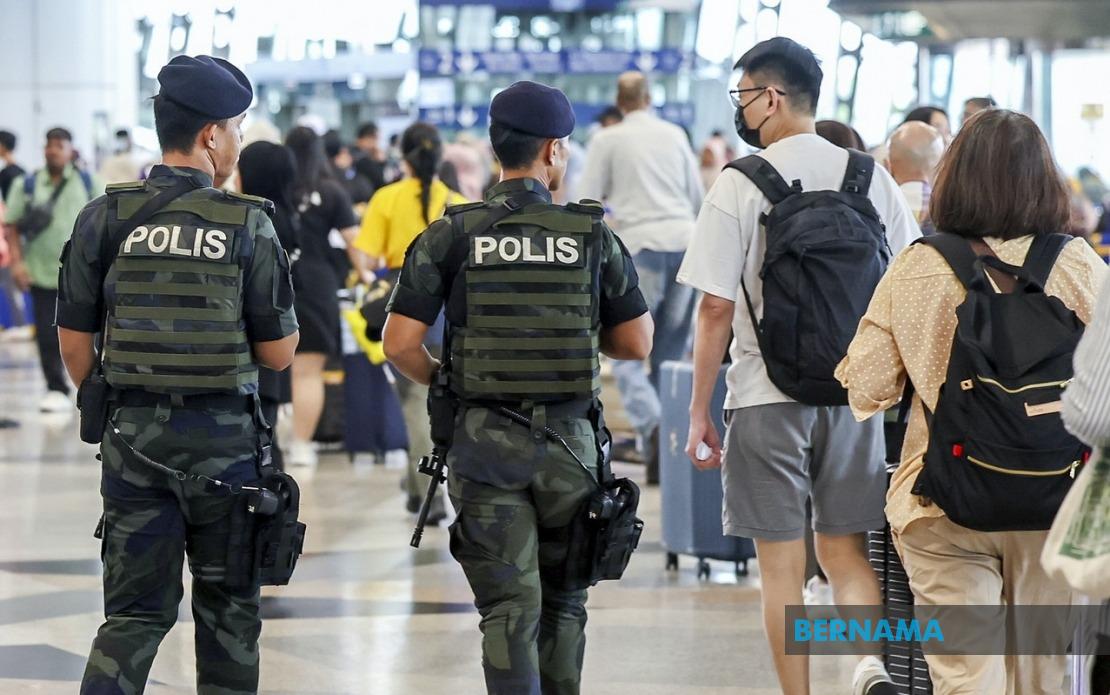
The Malaysian government has moved swiftly to tighten security protocols at the nation's airports in response to the arrest of a 39-year-old pilot by Indonesian authorities at Soekarno-Hatta International Airport on suspicion of drug smuggling. Communications Minister Datuk Seri Fahmi Fadzil announced during a weekly press conference in Putrajaya that security measures presented jointly by the Home Ministry and Transport Ministry were approved at Cabinet level on Tuesday. The coordinated government response underscores the seriousness with which authorities view the incident and reflects broader concerns about potential vulnerabilities within Malaysia's aviation security framework.
At the heart of the government's immediate action plan is the deployment of Royal Malaysia Police personnel to take over management of the Aviation Security unit, commonly known as AVSEC. Currently, the unit operates under auxiliary police staff, a arrangement that the Cabinet has determined requires upgrading. By transitioning AVSEC operations to full-fledged PDRM personnel, authorities aim to establish more rigorous oversight and operational control over security screening at Malaysia's key entry points. This structural change represents a significant organisational shift with implications for both staffing and training requirements across the country's airport network.
The incident that prompted these measures involved the discovery of substantial quantities of narcotics at Soekarno-Hatta International Airport. Indonesian National Police identified 15 packages containing approximately 70,114 capsules of ecstasy and methamphetamine during routine inspections. Based on street valuations in the Indonesian market, these narcotics carried an estimated worth of RM45 million, highlighting the scale of the operation and the potential profit motive behind the attempted smuggling. The arrest has raised uncomfortable questions about how such a large quantity of drugs could potentially have been transported through aviation channels without detection.
Beyond the immediate security restructuring, the government has instructed Malaysia Aviation Group to conduct a comprehensive review of its personnel vetting processes. The airline group will specifically re-examine background screening and health assessment protocols applicable to both pilots and co-pilots. This measure acknowledges that individual crew member integrity and fitness form a critical component of overall aviation security. The request suggests that standard hiring and ongoing monitoring procedures may require enhancement to identify potential risk factors or warning signs that current systems might miss. Such personnel-focused security improvements operate on the principle that effective aviation security depends not only on physical screening infrastructure but also on the reliability of those entrusted with aircraft operations.
Simultaneously, the Royal Malaysia Police and the Malaysian Border Control and Protection Agency have received instructions to conduct a thorough examination of existing security systems and protocols. Officials are tasked with identifying potential weaknesses or gaps that could be exploited by those intent on circumventing security measures. This systematic audit approach represents a standard security practice: understanding vulnerabilities from an attacker's perspective often reveals blind spots invisible to routine operations. The urgency of these instructions reflects Cabinet-level concern that the pilot's alleged attempt may represent a known vulnerability that has been actively targeted, or alternatively, it may suggest previously unidentified loopholes that require immediate remediation.
Fahmi indicated that the government is still in the preliminary stages of understanding the full scope of the incident and any potential complicity or assistance the pilot may have received from other individuals or networks. While Indonesian authorities continue their active investigation, Malaysian officials have adopted a cautious approach, awaiting comprehensive reports before determining whether a special dedicated investigation team should be established domestically. The Minister acknowledged that authorities need time to examine complete documentation and trace any potential links to local networks or operations. This careful approach balances the desire for swift action with the recognition that premature moves without complete information could prove counterproductive.
The implications of this incident extend beyond Malaysia's borders, reflecting broader regional challenges in combating sophisticated drug smuggling operations that leverage commercial aviation networks. Indonesia's success in apprehending the suspect at Jakarta's main international gateway demonstrates both the vulnerability of busy aviation hubs and the importance of vigilant screening procedures. For Malaysia, which operates several major regional aviation hubs including Kuala Lumpur International Airport, the incident serves as a sobering reminder that aviation security cannot be treated as a static achievement but requires constant evolution to address emerging threats and methods.
The government's focus on upgrading AVSEC personnel reflects a wider trend across the region toward professionalising aviation security roles. Many countries have similarly transitioned from auxiliary to regular military or police personnel managing critical security functions, recognising that the stakes—both in terms of potential security breaches and liability—justify the investment in full-status security personnel. Such upgrades typically entail enhanced training standards, more rigorous vetting procedures, and stronger accountability mechanisms compared to auxiliary arrangements.
For Malaysian travellers and the aviation industry, these announcements signal heightened security attention that may manifest in extended screening times and more rigorous passenger and cargo inspections in coming weeks. Airlines and ground service providers should expect closer cooperation requirements with enhanced security protocols. The measures also carry implications for crew scheduling and operations, as the transition to PDRM-managed AVSEC may initially affect processing efficiency at terminals.
Looking forward, the success of these measures will depend on effective implementation across multiple airports and sustained commitment to the enhanced protocols beyond the immediate response period. The government's willingness to examine systemic vulnerabilities suggests a recognition that isolated incidents often point to underlying structural problems. How thoroughly authorities execute the proposed security audits and whether they implement findings decisively will determine whether this incident catalyses meaningful long-term improvements or represents merely a temporary tightening that gradually relaxes once public attention wanes.
The incident also highlights the interconnected nature of regional aviation security. When Malaysian nationals engage in illegal activities using commercial aviation networks, the consequences ripple across multiple jurisdictions and aviation systems. Closer coordination between Malaysia and its Southeast Asian neighbours on aviation security intelligence and best practices will likely emerge as a logical follow-up to these domestic measures. Such regional cooperation could enhance detection and prevention capabilities more effectively than individual country measures pursued in isolation.

