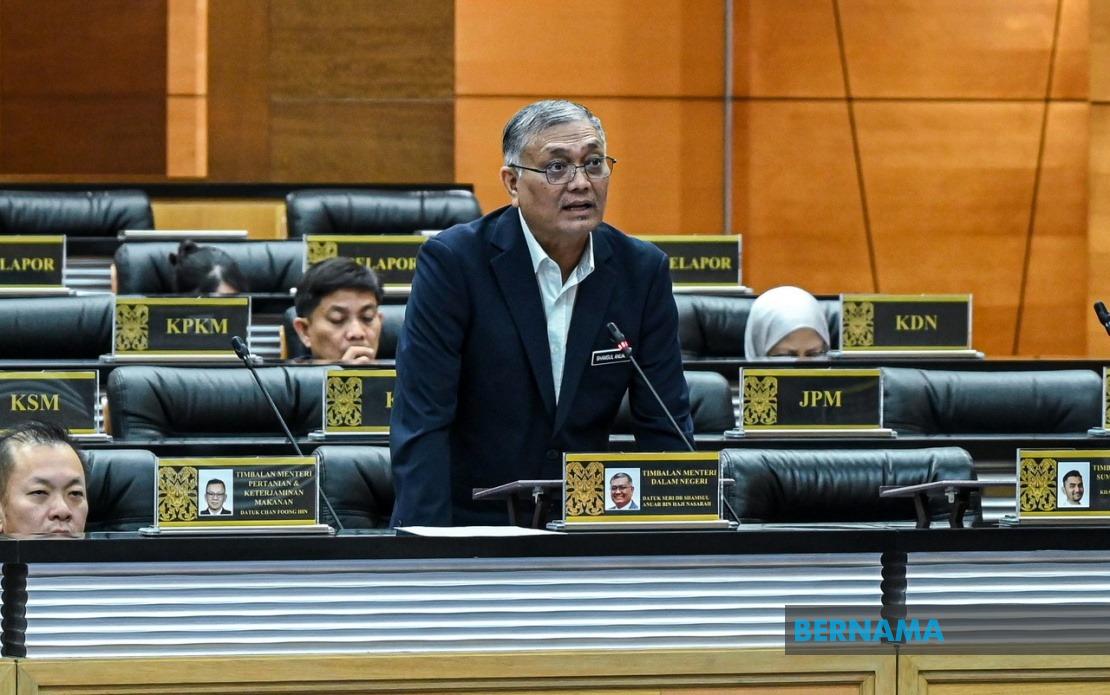
Malaysia's police force will not provide protection or preferential treatment to any individual during high-profile investigations, Deputy Home Minister Datuk Seri Dr Shamsul Anuar Nasarah declared in Parliament on July 15. The assurance came as he detailed the status of several sensitive cases currently under police scrutiny, emphasising that all inquiries are conducted with professional rigour and transparency regardless of the suspect's political affiliation or governmental position.
Among the cases under active investigation is the 2019 intimate video recording that circulated widely online and became associated with a former Cabinet member. Police are pursuing multiple avenues to identify the original source material and locate all devices and equipment involved in its creation and distribution. The complexity of digital forensics and the passage of time since the incident first surfaced have not deterred investigators from their methodical approach to establishing the complete chain of custody and identifying all parties involved in the breach of privacy.
The investigation operates under several legal frameworks simultaneously. Authorities are applying Section 292, Section 377B, and Section 504 of the Penal Code, which address obscene publications, non-consensual sexual content, and criminal intimidation respectively. Additionally, investigators are invoking Section 233 of the Communications and Multimedia Act 1998, which provides broad powers to prosecute offences related to network services and electronic communications. This multi-layered legal approach reflects the seriousness with which authorities treat privacy violations and the non-consensual distribution of intimate materials.
Shamsul Anuar's statement addresses longstanding public concerns about potential political interference in high-profile cases. The deputy minister framed the commitment to impartial investigation as a cornerstone of institutional credibility, arguing that police investigations must remain insulated from political considerations and that no individual's status should influence the scope or intensity of scrutiny. This positioning is particularly significant given Malaysia's complex political landscape, where concerns about selective prosecution occasionally surface during periods of government transition.
Separately, the deputy minister addressed another prominent case involving the son-in-law of former Prime Minister Tan Sri Muhyiddin Yassin. Rather than falling under police purview, this matter has been assigned to the Malaysian Anti-Corruption Commission (MACC), which operates as an independent agency. The MACC has already issued an arrest warrant in the case, indicating that investigators have identified sufficient grounds to believe the individual has questions to answer regarding corruption allegations. Shamsul Anuar declined to elaborate further, citing the ongoing nature of the MACC's work and respecting the commission's investigative independence.
The involvement of two separate enforcement agencies—the police and the MACC—underscores the institutional compartmentalisation designed to prevent political interference. By assigning cases to different bodies based on the nature of alleged offences, Malaysia's governance structure attempts to reduce the risk of concentrated power and partisan manipulation. The MACC's autonomy in anti-corruption matters is theoretically protected, though questions about its independence have periodically emerged in Malaysian political discourse.
Beyond domestic matters, Shamsul Anuar outlined Malaysia's international cooperation framework regarding extradition. The country currently maintains extradition treaties with eleven nations and has committed to the ASEAN Extradition Treaty, creating a multilayered network for pursuing fugitives across borders. These arrangements are governed by the Extradition Act 1992, which establishes the procedures and conditions under which Malaysia can either surrender individuals to foreign jurisdictions or request the return of suspects from abroad. The regulatory framework ensures that extradition decisions are made on legal grounds rather than political whim.
Malaysia's engagement in international extradition cooperation reflects both its commitment to regional stability and its recognition that serious crimes increasingly transcend national boundaries. The deputy minister signalled willingness to negotiate additional treaties with foreign governments, suggesting an appetite for expanding the nation's capacity to combat transnational criminal activity. For Southeast Asian readers, this development carries implications for regional security and the ease with which criminal suspects and corruption fugitives can evade justice by crossing borders within the region.
The parliamentary exchange highlighted ongoing tension between public demands for accountability and concerns about due process and political neutrality. High-profile cases inevitably attract scrutiny that can strain the credibility of investigating agencies, particularly when suspects hold or have held political office. By explicitly stating that no individual receives preferential treatment, Shamsul Anuar attempted to reassure Parliament and the public that institutional safeguards remain robust.
The timing of the deputy minister's statement also reflects broader conversations within Malaysian governance about institutional integrity. Recent years have witnessed significant transitions in power and the prosecution of several high-ranking political figures, prompting continuous examination of whether the criminal justice system operates impartially. Each new case generates public discussion about whether investigations proceed based on evidence or political calculation, making regular reaffirmations of investigative independence important for maintaining institutional legitimacy.
For Malaysian citizens and observers across Southeast Asia, these assurances matter because they touch on fundamental questions about the rule of law and equal treatment before justice. When governments can credibly commit to impartial investigation regardless of political status, they strengthen democratic institutions and public confidence in governance. Conversely, perceived partiality undermines legitimacy and breeds cynicism about official institutions.

