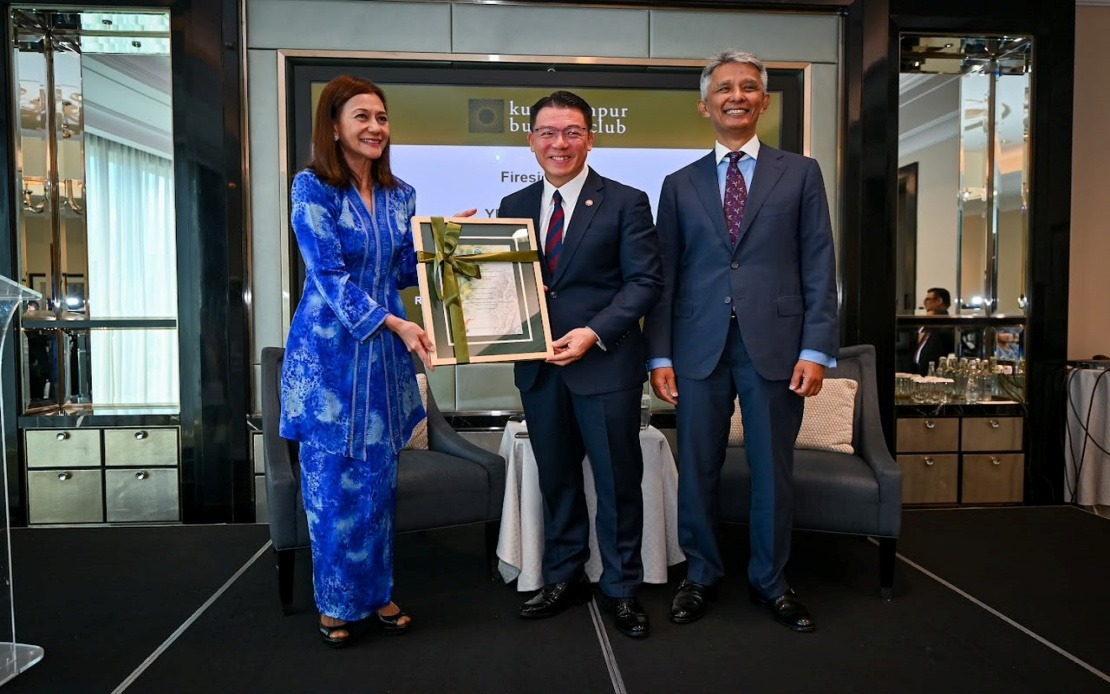
Malaysia's economic transformation requires unwavering commitment to policy consistency, according to Housing and Local Government Minister Nga Kor Ming, who believes that governmental stability is the bedrock upon which sustainable growth is constructed. Speaking at a fireside chat hosted by the Kuala Lumpur Business Club, Nga emphasised that reforms already in motion must be shielded from political disruption to realise their full potential and translate into tangible improvements across the economy.
The minister articulated a compelling case for predictability in governance, arguing that businesses and international investors require assurance that the strategic direction charted by the administration will remain steady. This consistency, he suggested, underpins Malaysia's ability to compete effectively in an increasingly complex global marketplace while maintaining the institutional resilience needed to weather economic shocks. Without such stability, even well-intentioned reforms risk fragmenting or losing momentum before their benefits materialise across society.
Nga attributed Malaysia's recent progress to the comprehensive MADANI reforms championed by Prime Minister Datuk Seri Anwar Ibrahim, noting that the government has delivered demonstrable achievements in governance overhaul, economic stewardship, and international relations. These reforms have generated measurable outcomes that extend beyond headline figures, creating a foundation of credibility with both domestic and foreign stakeholders who are evaluating Malaysia as a venue for capital deployment and long-term investment.
The minister contended that a renewed electoral mandate would furnish the government with the political capital and institutional authority needed to deepen structural changes within the economy. This extended runway would permit authorities to expand institutional capabilities, strengthen the administrative machinery through which policies are executed, and pursue ambitious economic blueprints that operate on multi-year or multi-decade horizons. Rushed or fragmented implementation, by contrast, often results in suboptimal outcomes and squandered resources.
Among the tangible improvements highlighted was Malaysia's enhanced standing on the Corruption Perceptions Index, a metric closely watched by institutional investors seeking jurisdictions with robust anti-graft frameworks. The strengthening of Malaysia's international credit ratings represents another significant achievement, signalling to global financial markets that the country's fiscal position has become more defensible and that policymakers are committed to prudent public finance management. Such improvements, though sometimes overlooked in domestic discourse, carry substantial weight in determining capital flows and borrowing costs.
The minister also pointed to Malaysia's consolidation as a preferred investment destination, underpinned by transparent policy frameworks, solid macroeconomic fundamentals, and the political stability that businesses require for confident long-term planning. In an era of geopolitical fragmentation and trade uncertainties, the ability to offer investors a predictable operating environment has emerged as a competitive advantage that distinguishes Malaysia from peers wrestling with institutional volatility or policy whiplash.
Nga referenced bilateral partnerships that exemplify Malaysia's diplomatic repositioning and openness to diverse strategic alliances, particularly highlighting a RM52.73 billion strategic partnership with Turkmenistan and expanding energy collaboration with Russia. These initiatives reflect a foreign policy approach that transcends traditional geographic or ideological alignments, instead pursuing pragmatic partnerships calibrated to serve Malaysian interests. The energy collaborations, in particular, carry implications for Malaysia's medium-term economic security and industrial competitiveness.
The foreign minister underscored how consistent governance and prudent economic management have bolstered Malaysia's trade resilience despite substantial headwinds buffeting global commerce. Malaysia's ability to maintain export dynamism and attract investment inflows while many trading partners grapple with stagflation concerns suggests that the MADANI framework has created conditions favourable to business expansion and economic diversification. This achievement is especially noteworthy given the structural vulnerabilities within Malaysia's economy and exposure to disruptions emanating from global supply chain recalibrations.
From a Southeast Asian perspective, Malaysia's experience offers instructive lessons about the utility of policy continuity in navigating the region's complex economic environment. As neighbours contend with political transitions, institutional capacity constraints, and competing developmental priorities, Malaysia's demonstration that sustained reform implementation yields measurable benefits could influence policy thinking across ASEAN. The implicit argument—that electoral stability facilitates economic progress—resonates particularly in a region where numerous economies struggle to balance democratic processes with the governance consistency demanded by globalised commerce.
The session brought together representatives from Malaysia's business establishment to evaluate how urban development initiatives and MADANI reforms reshape the domestic economy's trajectory. Cities serve as crucibles for innovation, capital concentration, and human capital accumulation, making urban economic policy particularly consequential for national prosperity. The emphasis on cities within the reform narrative reflects recognition that Malaysia's future competitiveness will be substantially determined by the dynamism of metropolitan centres such as Kuala Lumpur, George Town, and Johor Bahru.
Looking forward, Nga's remarks suggest that the government views the next electoral cycle as consequential not merely for political representation but for Malaysia's position within evolving regional and global economic hierarchies. The stakes extend beyond immediate policy implementation to encompass Malaysia's ability to position itself advantageously as other economies pursue divergent development paths and as technological disruption reshapes competitive advantage. Maintaining the policy coherence and institutional momentum that MADANI represents thus becomes a strategic imperative rather than a mere administrative preference.