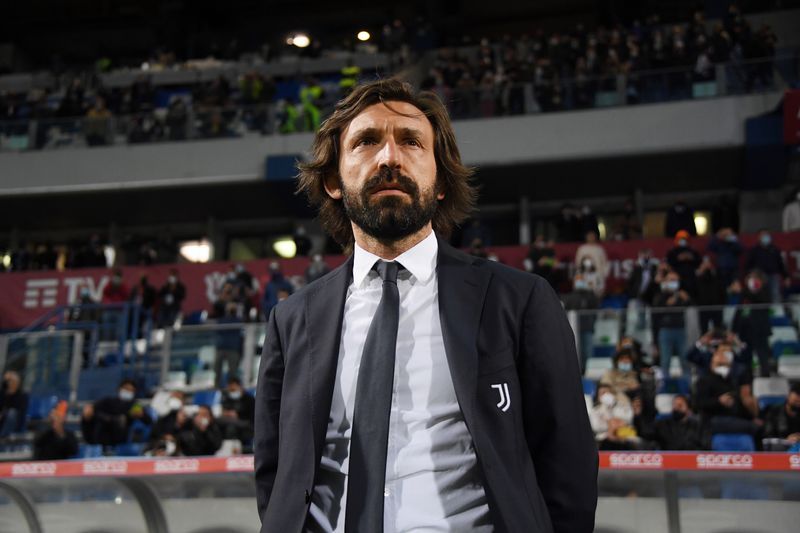
Andrea Pirlo's prospects of becoming Italy's next head coach have encountered significant political obstacles centred on his commercial relationship with a Russian gambling operator, threatening to derail what had appeared to be a straightforward appointment process. The legendary midfielder, 47, had positioned himself as the frontrunner to replace Gennaro Gattuso following Pep Guardiola's reported rejection of the role. Yet his ambassadorship deal with Fonbet, a major Russian bookmaker, has triggered vocal opposition among senior figures within the Italian Football Federation (FIGC) and prominent parliamentarians who view the arrangement as incompatible with representing the Italian national team on the global stage.
The timing of this controversy has proven particularly awkward for the FIGC's new president Giovanni Malago, who has only recently assumed leadership following his election to oversee a comprehensive restructuring of Italian football. The federation is already grappling with the fallout from a devastating third consecutive World Cup qualification failure, making the need for a stable managerial transition all the more critical. When contacted by media outlets, the FIGC maintained silence on the matter, though sources indicated that Pirlo's Russian connections were undergoing careful evaluation and that no final decision had been reached.
Pirlo's relationship with Fonbet began in October when he signed on as a global ambassador while managing United Arab Emirates Pro League side United FC in Dubai. The issue intensified considerably after he appeared alongside former Italy teammate Marco Materazzi at an event held at Moscow's Luzhniki Stadium, which had been organised by the bookmaker. The visit drew sharp criticism from observers who noted that the promotional activities occurred during a period when Russia was conducting aerial military operations against Ukraine, creating an inescapable political dimension to what Pirlo had characterized as a straightforward commercial engagement.
In his defence, Pirlo characterized his participation as entirely apolitical, attempting to separate his professional obligations from any broader geopolitical implications. However, this explanation has carried limited weight with Italian political figures, for whom the proximity to Russian commercial interests in the context of ongoing conflict with Ukraine represents a fundamental breach of acceptable conduct for anyone seeking to lead a national institution. The controversy has thrown into sharp relief deeper concerns about the ethical standards expected of those holding senior sporting positions in Europe during this period of heightened geopolitical tension.
Despite the political storm, Pirlo maintains significant institutional backing. Paolo Maldini, the FIGC's newly appointed technical director and himself an iconic figure in Italian football history, has thrown his weight behind the appointment. This support from within the federation's leadership structure suggests that from a purely sporting perspective, Pirlo remains an attractive candidate whose tactical credentials and status as a World Cup winner align with the modernisation agenda that Italian football desperately requires following the World Cup humiliation. The question now centres on whether such sporting merit can overcome the political objections being raised.
Parliamentarians have emerged as the most vocal critics of the potential appointment. Pina Picierno, vice-president of the European Parliament, articulated broader frustrations about the direction of Italian football on social media, arguing that selecting Pirlo would represent a step backwards rather than the ethical and cultural renewal that the federation requires. Her criticism reflected a wider sentiment that Italian football needed to demonstrate a fundamental shift in values and governance, particularly following repeated tournament failures. The selection of someone with Pirlo's Russian ties, she suggested, signalled precisely the wrong message to stakeholders and the international community.
Ignazio La Russa, the head of the Senate and a senior member of Prime Minister Giorgia Meloni's party, delivered more measured but equally pointed scepticism. In comments to news agency ANSA, La Russa expressed respect for Malago and Maldini while simultaneously raising doubts about Pirlo as a managerial prospect, describing his coaching appointment as "a leap in the dark." His intervention carried particular weight given his prominent position within government and the ruling coalition, suggesting that any FIGC decision to appoint Pirlo would face scrutiny at the highest levels of Italian political leadership.
Carlo Calenda, leader of the centrist Azione party, abandoned diplomatic language entirely, declaring that anyone promoting Russia after 2022 should be disqualified from holding national office. This unambiguous stance reflected a hardening of positions among some Italian politicians who viewed any engagement with Russian interests during the post-invasion period as fundamentally incompatible with European values and Italy's commitments to supporting Ukraine. The comment indicated that beyond questions of sporting competence, the appointment had become entangled in broader debates about Italy's geopolitical alignment and its role within the Western alliance.
The controversy illuminates an emerging tension within European football between the commercial globalisation that has expanded opportunities for players and coaches, and the geopolitical sensitivities that now constrain such arrangements. Pirlo's situation reflects a broader challenge facing Italian institutions as they seek to balance institutional prestige and sporting requirements against mounting pressure to demonstrate ethical consistency regarding Russian engagement during a period of active conflict. The FIGC must now navigate between honouring Maldini's technical judgment and accommodating legitimate political concerns about the optics of the appointment.
For Malaysian and Southeast Asian observers, the Pirlo controversy provides insights into how European federations handle the intersection of sporting recruitment and geopolitical responsibility. It demonstrates that even prestigious sporting positions cannot be insulated from broader political scrutiny, and that international sporting bodies increasingly face expectations to demonstrate alignment with wider political positions taken by their governments. The case also highlights how commercial ties, once viewed as purely transactional, have acquired political significance in ways that contracts signed years earlier may not have anticipated.
The situation remains fluid, with no final determination made regarding Pirlo's appointment. The FIGC faces a genuine dilemma: proceeding risks alienating political allies at a moment when the federation requires broad institutional support for its restructuring agenda, while abandoning Pirlo would represent a departure from sporting logic based primarily on political considerations. How Italian football ultimately resolves this tension will carry implications not only for Italian sport but for how European federations more broadly navigate the relationship between commercial autonomy and geopolitical responsibility in an increasingly fragmented international environment.

