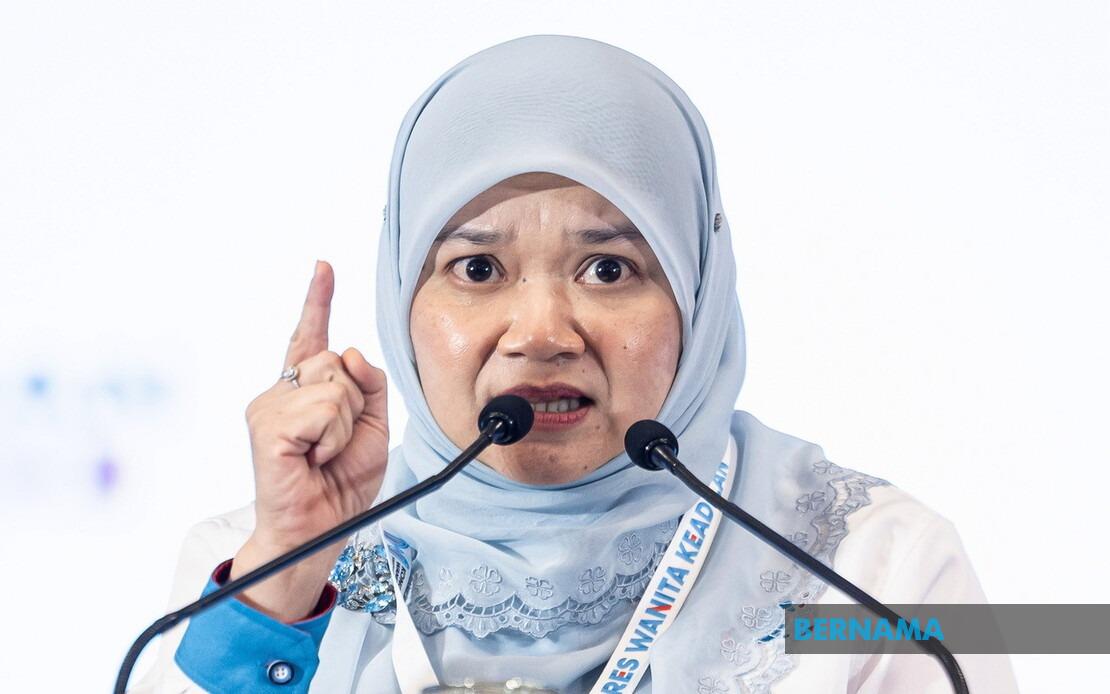
At the 2026 Wanita PKR National Congress in Melaka, party chief Fadhlina Sidek delivered a pointed message about the direction Malaysian politics must take: electoral competition should revolve around substantive policy proposals and the capacity to tackle public challenges, not the weaponisation of religious sentiment for partisan gain.
The Wanita PKR leader's remarks reflect growing concern within progressive political circles about the increasing tendency to mobilise faith-based messaging during campaign seasons. By framing the debate around "ideas, concepts, and who can offer better solutions," Fadhlina is articulating a vision of democratic engagement grounded in practical governance rather than divisive identity politics. This approach carries particular resonance in Malaysia's fractious multi-ethnic, multi-religious landscape, where communities remain sensitive to perceived slights or opportunistic religious campaigning.
Fadhlina explicitly cautioned against inciting voters through faith-based appeals or exploiting religious doctrine arbitrarily to secure electoral support. Her statement underscores a philosophical divide within Malaysian politics between those who view religion as a tool for mobilising specific voter blocs and those who believe democratic legitimacy should derive from demonstrable competence and policy platforms. In a country where religious sensitivities have historically triggered social friction, her call for restraint carries material implications for interethnic harmony and electoral integrity.
Beyond the rhetorical dimension, Fadhlina's address emphasised that competitive politics need not involve mutual disparagement or character assassination. This implicitly critiques campaign strategies that prioritise attacking opponents over advancing affirmative visions. The framing suggests that Malaysian voters deserve substantive engagement with policy alternatives rather than negative campaigning rooted in personal attacks or identity-based divisions. Such an approach, if adopted broadly across the political spectrum, could elevate public discourse and allow electorates to make decisions based on genuine choice rather than fear or sectarian loyalty.
Crucially, Fadhlina broadened her message beyond electoral mechanics to address internal party dynamics and grassroots engagement. She urged PKR leadership at all levels to strengthen direct connections with communities by identifying and responding to localised needs. This ground-level reconnection strategy reflects recognition that political parties lose relevance and legitimacy when they become disconnected from the material circumstances of ordinary citizens. Malaysian voters have increasingly punished parties perceived as aloof or detached from immediate challenges such as cost of living, employment, and infrastructure.
The emphasis on grassroots sensitivity carries particular weight for PKR, which has undergone considerable organisational transformation in recent years. By encouraging leaders to understand community contexts directly rather than relying on intermediaries or assumptions, Fadhlina is essentially advocating for a more participatory model of party function. This approach can build durable support networks that transcend electoral cycles and create genuine accountability between representatives and constituents. In Malaysia's competitive political environment, where swing voters increasingly decide electoral outcomes, such local embeddedness becomes strategically invaluable.
Fadhlina's exhortation for party members to remain committed despite "various trials and challenges" acknowledges the toll that Malaysia's fractious political climate exerts on party machines. PKR has navigated considerable turbulence in recent years, including internal disputes, shifting coalition arrangements, and electoral setbacks. Her appeal to loyalty and steadfastness signals recognition that party cohesion requires deliberate cultivation, particularly when external pressures test member commitment. The framing invokes a narrative of shared struggle that aims to bind supporters to collective purpose beyond immediate electoral prospects.
The Wanita PKR chief's comments also highlight a strategic calculation within the reform-oriented wing of Malaysian politics. By positioning PKR as the party of ideas and solutions, Fadhlina implicitly contrasts this approach with competitors who may rely more heavily on traditional bases of support or identity-based messaging. This differentiation strategy seeks to appeal to urban professionals, younger voters, and citizens motivated by policy substance rather than ethnic or religious affiliation. For PKR to expand beyond its traditional constituencies, such reframing becomes essential.
From a Southeast Asian perspective, Fadhlina's call for elevating political discourse resonates with challenges faced across the region. Indonesia, Thailand, and the Philippines have all grappled with rising populism and identity-based political mobilisation that has sometimes undermined institutional stability and minority protections. Malaysia's trajectory will partly depend on whether mainstream political actors embrace competition focused on governance capacity or revert to divisive identity politics. Fadhlina's intervention suggests that at least within PKR, there remains commitment to the former path.
The practical challenge, however, lies in translating rhetorical commitment into electoral reality. Malaysian voters respond to messaging that connects with their anxieties and aspirations, and competing on abstract ideas may prove less effective than opponents wielding emotive appeals. Fadhlina's framework requires not just that PKR leaders embrace it, but that sufficient voter segments demand this standard from all contenders. Building such constituencies for substantive politics remains a work in progress across Malaysia's diverse political landscape.
Looking forward, Fadhlina's address signals PKR's ambition to position itself as the champion of merit-based, issue-focused politics while rivals potentially rely on older mobilisation strategies. Whether this differentiation translates into sustained electoral advantage depends on broader shifts in voter preferences and the party's ability to deliver tangible results at both state and local levels. For Malaysian democracy, the outcome matters considerably.

