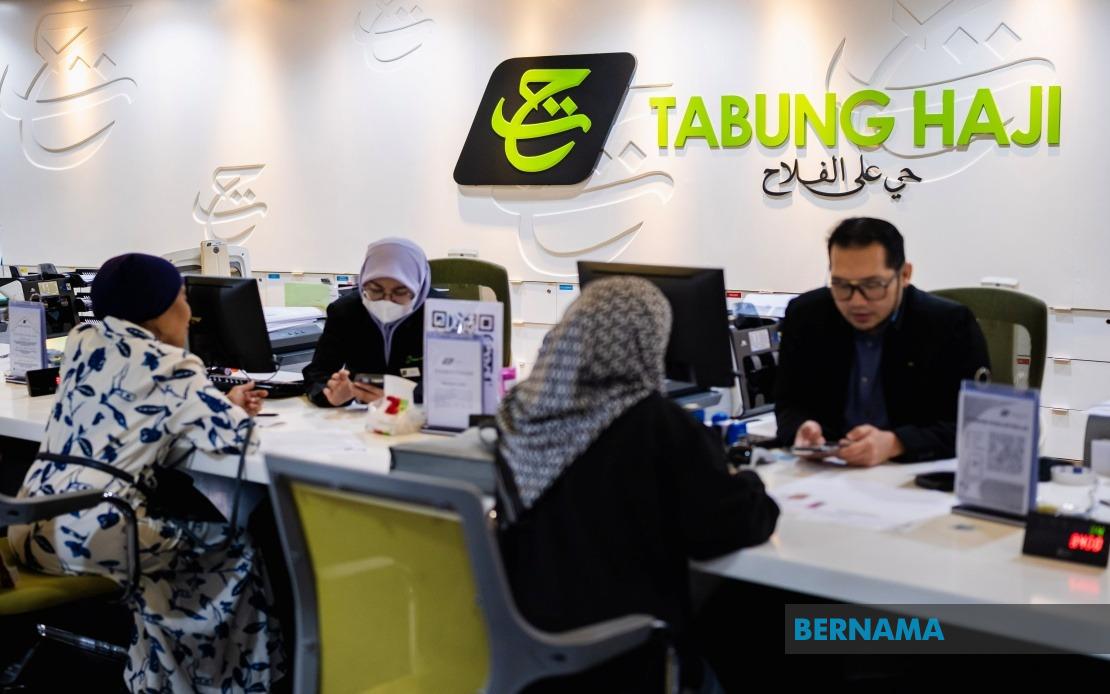
The path to restoring public confidence in Tabung Haji hinges fundamentally on insulating the institution from political meddling, according to multiple analysts assessing the fund's recovery trajectory following significant progress in implementing Royal Commission of Inquiry recommendations. With more than three-quarters of the RCI's proposed management and operational reforms now in place, the broader challenge facing Malaysia's Islamic pilgrimage fund is not technical but structural—removing the political machinery that has long constrained its professional independence.
The consensus among scholars and policy experts points to a sobering diagnosis: the catastrophic losses that prompted the RCI investigation resulted directly from political actors wielding undue influence over investment decisions and leadership appointments. This pattern exposed the profound vulnerability of a trusted institution when corporate governance is subordinated to political interests. For a fund managing the savings of millions of Malaysian Muslims preparing for the hajj—one of Islam's five pillars—such compromise strikes at the heart of its legitimacy and moral authority. The reputational damage extends beyond depositors to the broader Muslim community, whose confidence in TH's stewardship now requires demonstrable reform.
Prof Dr Azmi Hassan, a fellow at the National Council of Professors and senior fellow at the Nusantara Academy for Strategic Research, articulated the core challenge with clarity. He noted that virtually every consequential decision at TH, including even the parliamentary tabling of RCI findings, carries political undertones. The institution has become so intertwined with political interests that separating the two requires systematic structural change. For full depositor confidence to return, TH must operate visibly and transparently under professional management entirely insulated from partisan considerations. Hassan stressed that appointing leaders without political party affiliations represents a non-negotiable prerequisite for institutional rehabilitation.
Dr Mohd Amim Othman, a senior lecturer at Universiti Putra Malaysia's Faculty of Human Ecology, pointed toward instructive domestic precedents. Malaysia's track record with the Employees Provident Fund and Permodalan Nasional Berhad demonstrates that major financial institutions can thrive when freed from political interference. Yet the expertise to manage TH professionally is abundant in Malaysia. The obstacle lies not in capability gaps but in political unwillingness to relinquish control over substantial institutional assets and influence. Implementing specific RCI recommendations—including constraints on ministerial powers, reformed board oversight mechanisms, and strengthened regulatory supervision—provides the concrete pathway toward this necessary separation.
Beyond governance restructuring, TH faces an urgent challenge in rebuilding its membership base. The crisis has already triggered declining contribution rates among existing members, directly threatening investment fund capacity. Younger Malaysians particularly require incentives to regard TH membership as attractive and contemporary rather than obsolete. Dr Amim advocated for aggressive product diversification, including expanded property-linked offerings, combined with proactive membership engagement. The post-crisis period demands that TH adopt forward-looking strategies that acknowledge demographic shifts and evolving investment preferences among Malaysian Muslims.
Dr Saizal Pinjaman, director of Universiti Malaysia Sabah's Centre for Economic and Policy Development, illustrated the concrete consequences of political interference through the Al-Rawda investment debacle. This Saudi Arabian venture, which became TH's most severe loss among multiple troubled investments, proceeded despite incomplete due diligence processes. The RCI documentation exposed how political pressure overrode professional caution when investment risk assessments suggested circumspection. Such decisions underscore why management boards require genuine autonomy to prioritise rigorous analysis and comprehensive risk evaluation over external political pressure. Yet independence cannot become a pretext for unaccountable decision-making; transparency and oversight mechanisms must accompany enhanced managerial autonomy.
The reputational imperative extends beyond technical financial recovery. Dr Noor Nirwandy Mat Noordin, a security and political analyst at Universiti Teknologi MARA's Centre for Media and Information Warfare Studies, framed TH's challenge in civilisational terms. For Malaysian Muslims, TH represents institutional embodiment of Islamic heritage and communal identity. The fund must be rehabilitated not merely as a financial entity but as a custodian of Muslim Malaysian values and aspirations. Public perception must shift decisively toward viewing TH as serving Malaysian interests rather than narrow political or factional agendas. Enhanced transparency in all management decisions represents a foundational reform enabling this perceptual transformation.
Dr Noordin additionally suggested that TH could strengthen its institutional capacity and competitive positioning by engaging external specialists. Access to expert perspectives on investment incentives, economic trends, and financial innovation would enable TH to maintain relevance in dynamic markets while maintaining internal independence. Such external partnerships, properly structured, enhance professional capacity without compromising autonomous decision-making. This model acknowledges that institutional independence need not mean isolation but rather selective engagement with expertise deployed under TH's strategic direction rather than external pressure.
The analytical consensus converges on a singular diagnostic conclusion: TH's crisis and its path toward restoration illuminate the broader governance vulnerability when political interests penetrate institutional structures meant to serve public financial interests. Malaysia's Muslim community, as depositors entrusting life savings to TH, deserves assurance that decisions affecting their funds reflect professional judgment and rigorous analysis rather than political calculation. The government's demonstrated commitment to implementing RCI recommendations must extend beyond technical compliance toward fundamental institutional reorientation. Until political actors genuinely cede control over TH management to credentialed professionals operating under transparent frameworks, public confidence will remain conditional and fragile. The fund's financial recovery, while necessary, remains insufficient without parallel reforms establishing unambiguous institutional autonomy.

