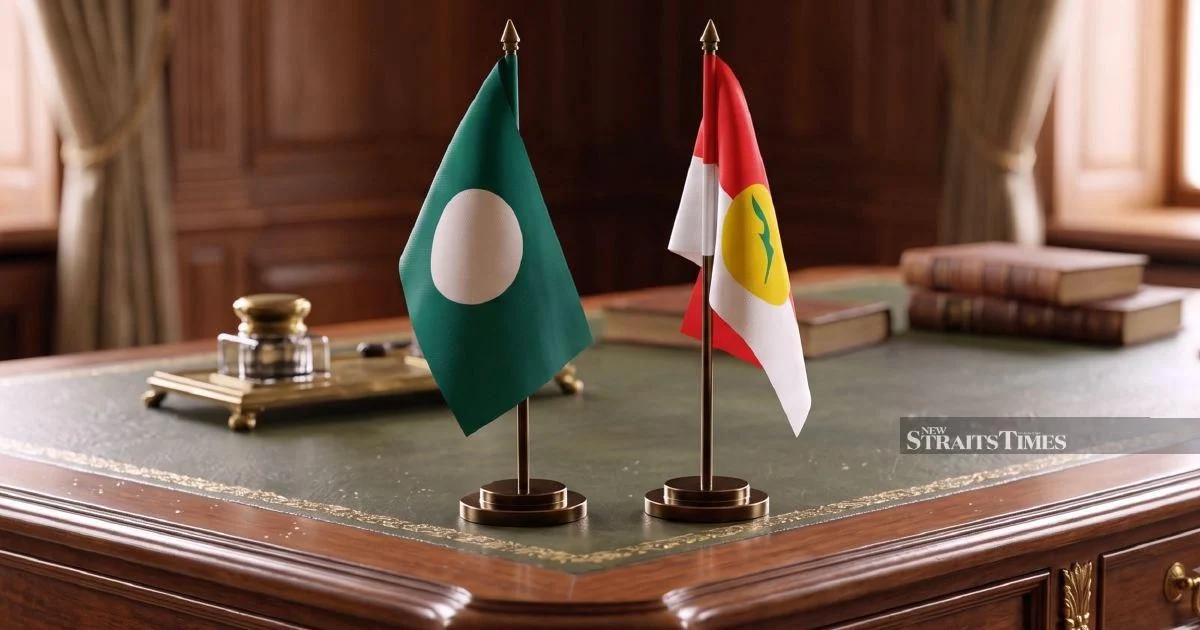
The prospect of a formal political union between Umno and Pas appears to have dimmed considerably in the lead-up to Negri Sembilan's state elections, according to assessments from political analysts tracking the Malaysian political landscape. The two parties, which have maintained a complicated relationship spanning decades marked by periodic cooperation and deep ideological disagreements, seem unlikely to formalise an electoral coalition for the Negri Sembilan contest, observers suggest.
This reassessment follows the Barisan Nasional coalition's commanding performance during the recent Johor state election, where the traditional ruling coalition demonstrated substantial voter support and secured a decisive electoral mandate. The strength of that outcome has reshaped calculations within both Umno and Pas regarding their strategic positioning and electoral needs, analysts note. Having consolidated its position through the Johor victory, Barisan Nasional may feel sufficiently confident to contest upcoming state ballots without requiring additional formal partnerships or institutional arrangements with other major political forces.
The historical relationship between Umno and Pas reflects the broader fragmentation within Malaysian Islamist and Malay-centric politics. While the two organisations have occasionally found common cause on specific issues related to Islam and Malay interests, they have remained fundamentally separate entities with distinct organisational cultures, support bases, and strategic visions. Umno, rooted in the post-independence nationalist movement and the original Merdeka social compact, approaches governance primarily through a secular-nationalist lens tempered by constitutional protections for Islam and Malay-Muslim prerogatives. Pas, by contrast, advocates for a more explicitly Islamic framework within Malaysia's political system and has developed a strong base among rural and semi-urban Malay constituencies.
The divergence between these two constituencies and philosophical orientations has repeatedly surfaced as an obstacle to sustained cooperation. Previous attempts at closer alignment, particularly during the Sheraton Move period and its aftermath, demonstrated the fragility of arrangements between organisations with such fundamentally different worldviews and power bases. Analysts observing this pattern note that absent acute electoral pressure or existential political threats, the incentive for either party to subordinate its distinct identity through formal merger arrangements remains comparatively weak.
Barisan Nasional's success in Johor has particular significance for Negri Sembilan because it suggests the traditional coalition retains sufficient appeal and organisational capacity to perform effectively without requiring bolstered numbers or expanded partnerships. The Johor result demonstrated that Umno-led coalitions can still generate commanding electoral victories under contemporary Malaysian political conditions, potentially obviating arguments that formal expansion or alliance-building represents a strategic necessity.
Moreover, analysts highlight that formal alliance structures carry internal political costs within both organisations. For Umno, closer institutional integration with Pas could complicate its positioning relative to other coalition partners and potentially alienate segments of its own membership that prefer secular governance frameworks. Conversely, Pas leadership must consider whether formal subordination to or merging with a larger Umno-dominated coalition would dilute its own institutional autonomy and distinct political identity, both crucial elements in maintaining party cohesion and attracting its core voter base.
The timing of Negri Sembilan's elections within Malaysia's broader electoral calendar also influences calculations. State-level contests, while locally significant, do not carry the same structural weight as federal parliamentary elections in shaping long-term strategic alliances. Political forces may therefore approach Negri Sembilan more tactically, making pragmatic seat-sharing or electoral coordination arrangements without committing to formal institutional structures that would require negotiation and acceptance at higher party levels.
Regional observers note that Pas has particularly benefited from maintaining independence and clear organisational boundaries, allowing the party to pursue expansion in areas where Umno's traditional dominance might prove less effective. A formal alliance could constrain this tactical flexibility. The party's growing presence across Malaysia beyond its traditional Kelantanese stronghold depends partly on its ability to present a distinctive political option while remaining available for tactical cooperation with other Muslim-majority political formations when circumstances warrant.
For Malaysian readers assessing the state's evolving political architecture, this analysis suggests that the next phase of electoral competition may feature temporary, issue-specific cooperation between Umno and Pas rather than the kind of institutional merger that would represent genuine structural reorganisation of the country's Malay-dominant political ecosystem. Such an arrangement would preserve both organisations' strategic flexibility while enabling operational coordination on select matters of mutual interest.

