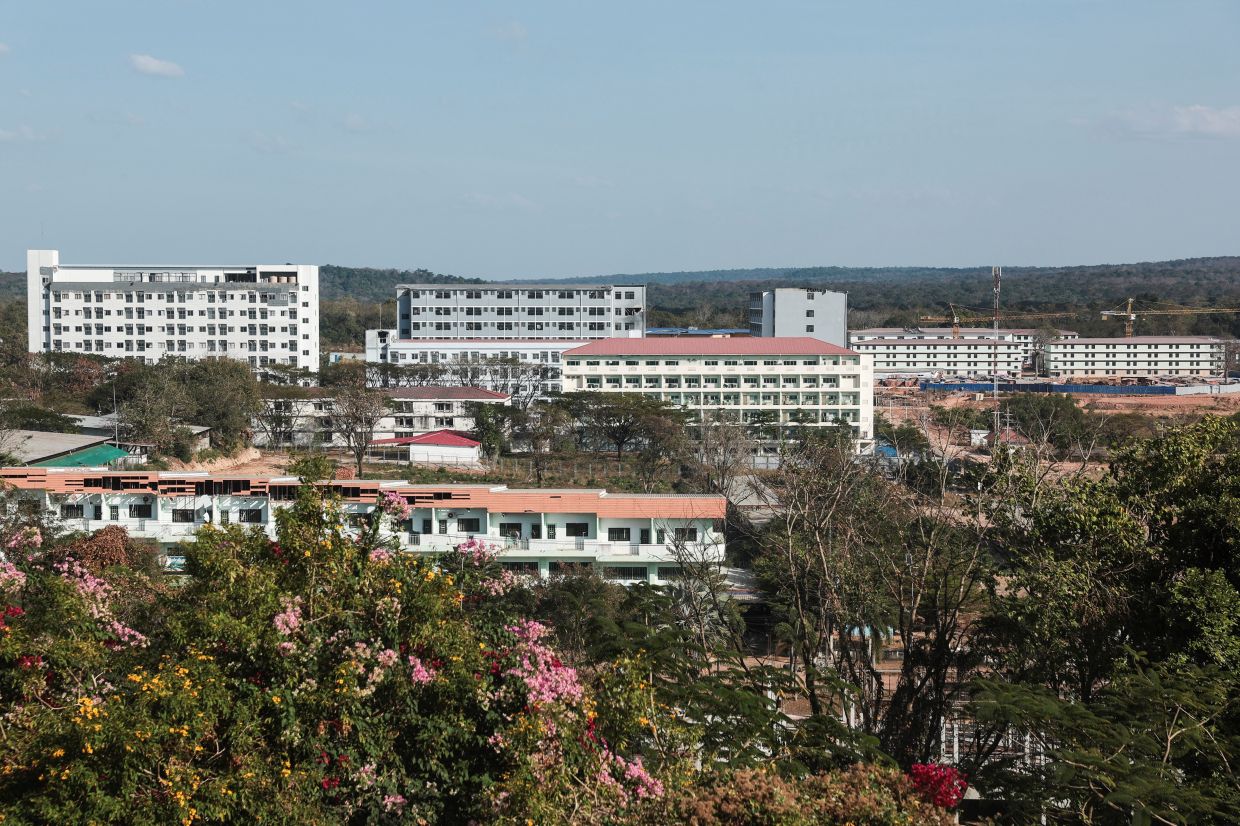
A sprawling casino controlled by one of Cambodia's most politically connected businessmen served as the landlord for a major industrial fraud and human trafficking operation, according to a Reuters investigation that raises uncomfortable questions about regulatory oversight in Southeast Asia's booming gaming sector. The Lim Heng Group leased multiple buildings within its Royal Hill casino compound on the Thai-Cambodian border to operators running what security officials characterise as a sophisticated scamming enterprise. While the company itself has not been implicated in orchestrating the criminal activity, the arrangement illustrates how Cambodia's casino industry has become entangled with transnational crime networks that victimise people worldwide.
The revelation emerges from a rental agreement dated March 2024 that laid out remarkably steep terms for the lease of three buildings to a Chinese national: US$200,000 monthly for a two-year period. For context, this price point dwarfs legitimate commercial rates in border towns. A comparable property in upscale Phnom Penh was advertised that same year for just US$25,000 per month, suggesting the Royal Hill lease commanded a significant premium—either reflecting the property's specialised use or the operators' confidence in their profitability. The contract was signed by the tenant and Seng Chanthy, then an employee of Royal Hill, who has not responded to inquiries about the agreement.
Inside these buildings, Reuters reporters discovered a chilling infrastructure of fraud. Rooms had been meticulously designed to impersonate police stations and bank offices from multiple countries, complete with appropriate backdrops and furnishings. These fake environments served as the stage for what security officials and trafficking survivors describe as romance scams, police impersonation schemes, and other confidence tricks targeting victims scattered across the globe. The scale is staggering: American authorities estimate that scammers operating from Southeast Asia alone defrauded US citizens of US$10 billion in 2024, with many operations concentrated in Cambodia's largely unregulated casino zones. The Royal Hill compound housed at least four buildings used for criminal purposes, according to Thai security officials and a trafficking survivor who worked at the site.
Lim Heng himself represents a fascinating case study in how political connections and business wealth converge in contemporary Cambodia. The tycoon has been photographed alongside senior military generals, holds a royal title equivalent to a duke, and donated US$20,000 to Cambodia's military in the year preceding the discovery of the scam operations at his property. Such proximity to power structures suggests he operates within elite networks that might theoretically offer both protection and political influence. Yet precisely this web of connections raises scrutiny about whether authorities possessed the will or independence to investigate the Royal Hill compound's activities before Thai military forces occupied the site in December following a brief border skirmish.
Cambodian legal experts note that landlords can face prosecution if investigations establish they knew about criminal use of their property and permitted it to continue. Whether Lim Heng Group met such a threshold remains unclear, though the timeline raises questions. The company filed legal complaints against two Cambodian publishers in September 2024 alleging incitement to discrimination over articles reporting that foreign nationals were confined at Royal Hill. These complaints came months after the March 2024 lease agreement, and weeks before Thai forces seized the compound. One publisher, Penn Nuon, confirmed the legal action and noted he removed his article following attorney advice, though Reuters could not confirm whether the complaints were subsequently dropped. The Phnom Penh court involved did not respond to inquiries. This sequence suggests either that Lim Heng Group was previously unaware of the operations—an explanation straining credibility given the obvious criminal infrastructure—or that the company became defensive once public reporting emerged.
The Royal Hill situation exemplifies a broader pattern across Southeast Asia where casino ownership and scam operations have become inextricably linked. International organised crime researchers at the Global Initiative against Transnational Organized Crime observe that casinos provide sophisticated money-laundering infrastructure for fraud syndicates, allowing them to convert illicit proceeds into seemingly legitimate gambling winnings and transfers. An Amnesty International investigation found that Cambodian casino owners were in direct control of at least a dozen scam centres, drawing on gambling regulator records and witness testimony. Many of these establishments are controlled by businesspeople with deep political ties, according to academic observers of Cambodian governance, creating inherent conflicts of interest in any regulatory framework. The government's official position—that Royal Hill is merely a hotel rather than acknowledging its casino operations and the criminal infrastructure discovered within—strains credibility and underscores the political sensitivities surrounding the sector.
Cambodia's government has launched rhetorical offensives against scamming, pledging to eradicate such operations and passing legislation that directly targets fraud perpetrators. The country even extradited casino owner and alleged scamming kingpin Chen Zhi to China as part of its stated crackdown. Chhay Sinarith, a senior minister tasked with combating online fraud, told Reuters that the government remains committed to international cooperation on the issue and is investigating alleged fraud operations in the area surrounding Royal Hill. Yet the persistence of such large-scale criminal infrastructure at a major casino property suggests that rhetorical commitments have not translated into effective enforcement, particularly where politically connected businesspeople are concerned. The minister also characteristically requested that Thai security forces return control of seized locations to Cambodia to facilitate investigations—a request that implicitly acknowledges Thailand's effective takeover of evidence gathering.
The Thai military's December 2024 bombing of Royal Hill during brief cross-border hostilities fundamentally altered the investigative landscape. Thai officials claimed they targeted the casino because Cambodian forces had commandeered the buildings and were using them for drone and sniper attacks. Following the military action, Thai security forces occupied the compound and subsequently invited Reuters journalists to document the scam infrastructure—suggesting Thailand views evidence of Cambodian criminality as diplomatically useful in framing the border incident. Thai security agency reports explicitly identify Lim Heng's ownership of the site, and General Thatchai Pitaneelaboot of the Royal Thai Police confirmed that Chinese gangsters perpetrated scams at Royal Hill without elaborating on their identities or operational structure. This foreign investigation and documentation occurred while Cambodian authorities moved slowly or not at all.
The Royal Hill case illuminates persistent vulnerabilities in how Southeast Asian governments address transnational organised crime within their borders. Strong political connections and legitimate business interests can shield individuals and companies from scrutiny even when evidence of massive criminality emerges. The industrial-scale trafficking and fraud operations discovered at Royal Hill victimised vulnerable individuals coerced into perpetrating scams against targets worldwide, yet the compound operated relatively openly for years, its fake police stations and bank offices representing a brazen mockery of law enforcement. For Malaysian and other regional readers, the case underscores the necessity of strengthening cross-border enforcement mechanisms independent of individual governments' political relationships, and of ensuring that anti-scam operations target not merely the perpetrators but the landlords and gatekeepers who profit from providing infrastructure to criminal networks.

